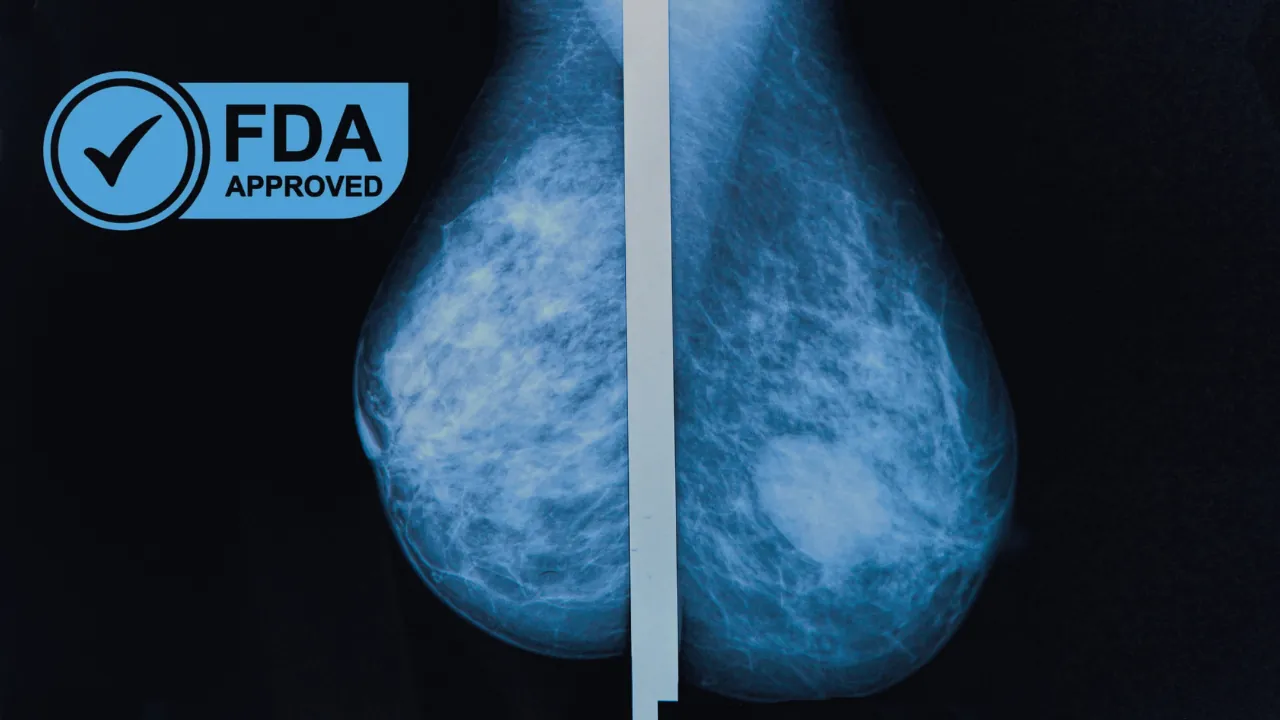
AI is moving deeper into breast cancer care, and a newly cleared risk prediction tool now gives physicians a faster way to estimate the chance of distant metastasis after surgery.
The U.S. Food and Drug Administration clearance for ArteraAI Breast marks a notable step for digital pathology, where scanned tumor slides and clinical data can help guide treatment conversations in early-stage breast cancer.
The tool, developed by Artera, received FDA clearance for use in adults with early-stage, hormone receptor-positive, HER2-negative invasive breast cancer.
According to the company, ArteraAI Breast is the first FDA-cleared digital pathology-based risk stratification tool for breast cancer, using artificial intelligence to help place patients into low-risk or high-risk groups based on the likelihood of distant metastasis.
The clearance was announced by Artera on May 6, 2026, two days after the FDA reached a substantially equivalent decision for the device. The FDA decision summary for K254115 describes ArteraAI Breast as a software-only device that analyzes scanned histopathology whole-slide images from breast resection specimens, along with physician-provided clinical variables.
FDA Clearance Brings AI Risk Prediction Into Breast Cancer Workflows

ArteraAI Breast is designed for patients who have already had surgical tumor resection and who are candidates for standard adjuvant therapy. In plain terms, the tool enters the care pathway after diagnosis and surgery, when oncologists and patients are weighing the intensity of follow-up treatment.
The FDA summary says the device uses H&E-stained breast tissue slides from formalin-fixed, paraffin-embedded specimens.
The AI system also uses age, tumor size and nodal status, then produces a patient-specific report with an ArteraAI risk score, a low or high risk category, and observed 5-year and 10-year distant metastasis risk estimates from the clinical validation dataset.
According to FDA materials, the model uses deep learning methods to assess features extracted from whole-slide images. The algorithm is locked, meaning it is not a continuous-learning model that changes on its own during routine clinical use. Breast cancer treatment after surgery can involve endocrine therapy, radiation, chemotherapy or a combination depending on the patient profile. For HR-positive, HER2-negative disease, clinicians already use tumor stage, nodal status, pathology findings and other tests to decide whether chemotherapy should be added to endocrine therapy. Genomic assays have become part of that discussion for many patients, yet they can add cost, tissue handling and wait time. MedTech Dive reported that Artera designed the tool to offer faster and more cost-effective insights without consuming biopsy tissue, using digitized pathology images and clinical variables instead. Artera says its breast cancer test can typically return results within 1 to 2 days after specimen receipt. For oncologists, that timing could allow the report to be included sooner in tumor board review, follow-up visits and shared treatment planning. For hospitals considering AI tools like ArteraAI Breast, the next step includes the digital setup around the software: secure movement of pathology images, oncology records and patient data between clinical teams. To see how healthcare IT services support AI, automation, interoperability and connected clinical workflows, visit http://dxc.com/industries/healthcare-solutions The FDA review describes a retrospective clinical performance study that included 1,271 patients from three U.S. clinical sites. The study population included patients with HR-positive, HER2-negative early-stage invasive breast cancer diagnosed from 2006 through 2019, with no clinically or pathologically defined metastatic disease at diagnosis or surgery. The gap between the low-risk and high-risk groups is the clinical basis for the product story. In the FDA dataset, patients placed in the low-risk group had a 0.9% estimated 5-year risk of distant metastasis, while patients placed in the high-risk group had an 8.7% estimated risk. At 10 years, the risk estimates were 2.8% for the low-risk group and 16.6% for the high-risk group. FDA clearance does not mean the software replaces oncologists, pathologists or existing standards of care. The FDA decision summary says ArteraAI Breast should be used with a complete standard-of-care evaluation, and the patient report should be used by trained physicians after release by the pathology laboratory. The tool is also limited to a specific patient population. It is intended for adult patients with HR-positive, HER2-negative, N0 or N1 early-stage invasive breast cancer after surgical tumor resection, without clinically or pathologically defined metastases, and with eligibility for standard adjuvant therapy. Digital pathology gives AI systems a rich data source already present in cancer care: the tissue slide. A pathologist reviews slides to diagnose and characterize disease, while AI models can evaluate image patterns at scale and combine them with clinical variables. ArteraAI Breast fits into a wider shift toward multimodal oncology tools. Multimodal AI uses more than one type of input, in this case pathology images and clinical data. The model does not rely only on a single visual scan or a single clinical feature. It brings several signals into one risk estimate. AI in breast cancer is not limited to diagnosis. Some tools focus on mammogram screening. Others support image interpretation, triage, density assessment or future cancer risk prediction. ArteraAI Breast sits in a different category because it is used after cancer has already been diagnosed and surgically treated, with the goal of estimating future distant metastasis risk. The distinction is important. Screening AI may help detect or prioritize possible cancers. ArteraAI Breast is a prognostic tool for a defined breast cancer population. Its output is meant to help physicians place risk in context after pathology and surgery have already confirmed the disease. The clearance gives Artera a path into regulated breast cancer decision support, yet adoption will depend on more than regulatory status. Hospitals and oncology groups will likely evaluate workflow fit, payer coverage, turnaround time, digital pathology readiness, clinician confidence and comparative usefulness against existing risk tools. ArteraAI Breast arrives as oncology AI shifts from image detection alone toward treatment planning, prognosis and risk-guided care. For breast cancer, that shift matters because patients and physicians face difficult tradeoffs. Chemotherapy can reduce recurrence risk for selected patients, yet it also brings toxicity. A faster risk estimate may help make those tradeoffs clearer during the treatment window after surgery. Several companies and research groups are now working on AI systems that predict future cancer risk, recurrence risk or treatment benefit. The direction of travel is clear: AI is being tested as a tool for earlier insight, more precise stratification and better use of existing clinical data. For patients, the period after surgery can bring uncertainty. Questions about chemotherapy, recurrence and long-term outlook can arrive quickly, while test results and consultations may take time. A risk report available within days could help physicians explain the next step sooner. The value of the tool will depend on how clearly clinicians present the result. A low-risk classification does not mean zero risk. A high-risk classification does not automatically determine treatment. The report gives another data point for a physician-led discussion about likely benefit, possible harm and patient preference. We have received FDA clearance for #ArteraAI Breast, expanding our AI platform into #breastcancer. A key step in bringing personalized, data-driven insights to more patients. Learn more: https://t.co/XHpelJuUPL#AIinHealthcare #PrecisionMedicine — ArteraAI (@arteraAI) May 6, 2026 FDA clearance for ArteraAI Breast gives oncology teams a regulated AI tool that can estimate distant metastasis risk in a defined group of early-stage breast cancer patients. The product uses digital pathology images and clinical variables to generate a risk score, low or high risk classification, and 5-year and 10-year risk estimates. The main promise is speed. A 1 to 2 day report could place risk information into the care plan earlier, especially after surgery when treatment decisions need to move forward. The main caution is clinical context. ArteraAI Breast is a decision-support tool, not a replacement for standard evaluation, physician judgment or patient-centered treatment planning. As digital pathology, AI infrastructure and oncology decision support continue to converge, ArteraAI Breast may become an important test case for how faster, software-driven risk prediction can fit into day-to-day cancer care.Highlights
How ArteraAI Breast Works
The system begins with a standard pathology slide. A laboratory scans the H&E-stained breast tissue slide through a validated whole-slide imaging scanner. The software then evaluates the digital slide and combines image-based information with clinical variables supplied by the physician.Inputs Used By The AI Tool
Outputs Sent To Physicians
Why Faster Results Could Change Treatment Conversations
Clinical Validation Data Behind The FDA Decision
Measure
Low Risk Group
High Risk Group
Total Cohort
Number of patients
827
444
1,271
Share of cohort
65.1%
34.9%
100%
Estimated 5-year distant metastasis risk
0.9%
8.7%
3.6%
Estimated 10-year distant metastasis risk
2.8%
16.6%
7.6%
What The Clearance Does And Does Not Mean

Important Guardrails
Why Digital Pathology Is Becoming A Bigger Part Of Oncology AI
Why The Pathology-Based Approach Is Drawing Attention
How ArteraAI Breast Compares With Other Breast Cancer AI Tools
AI Use Case
Typical Input
Main Question
Clinical Stage
Screening support
Mammogram image
Is there a suspicious finding?
Before diagnosis
Future risk prediction
Mammogram and clinical risk factors
Who has elevated future breast cancer risk?
Before diagnosis
Pathology risk stratification
Digitized tumor slide and clinical variables
What is the risk of distant metastasis after surgery?
After diagnosis and surgery
What Physicians May Watch Next
Questions For Clinical Adoption
Industry Context: AI Is Moving From Detection To Risk Prediction
Patient Impact: Faster Answers During A Stressful Window
How Patients May Hear The Result Explained
Bottom Line