
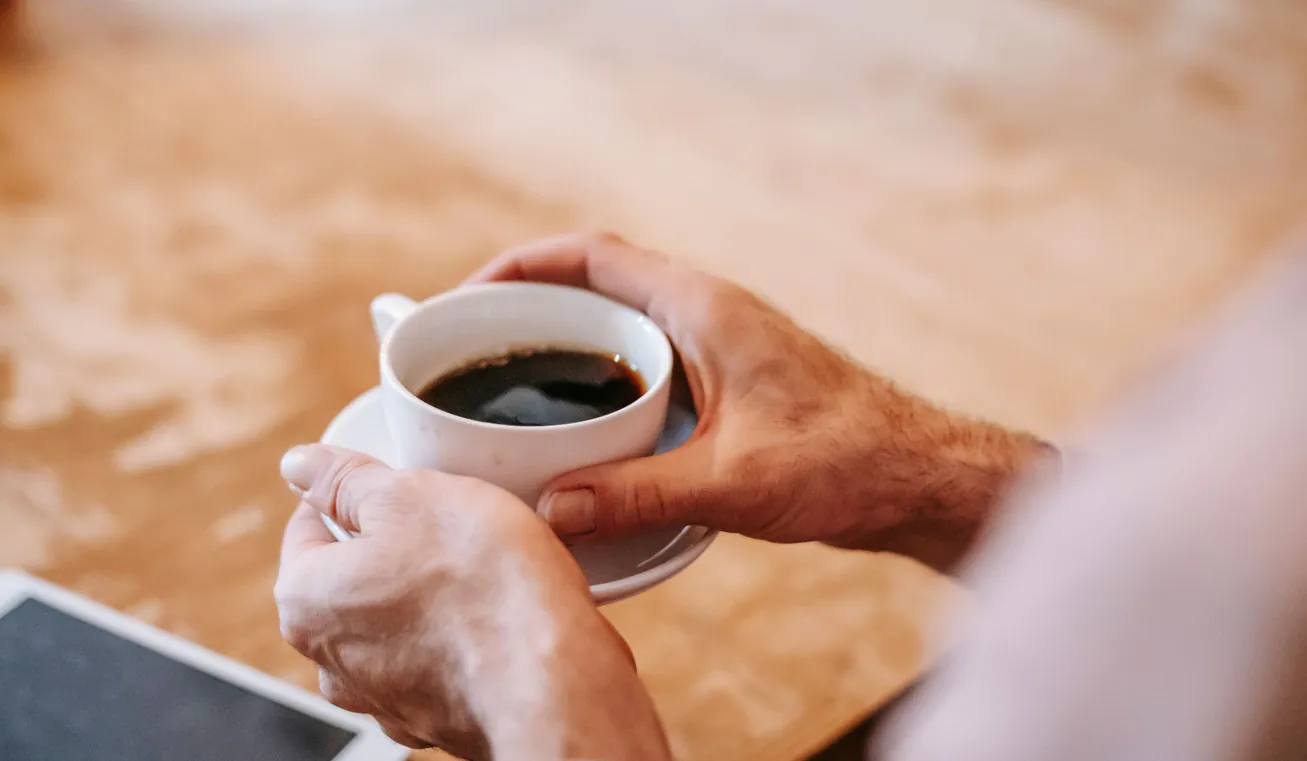
If you need a second cup of coffee before you are ready to deal with the day, you can stop feeling guilty about it. Having several cups may not be as dangerous as people once assumed. For most healthy adults, it may even come with some benefits.
A major review published by the American Heart Association found that moderate coffee consumption is generally safe for the heart. Regular coffee drinkers also appear to have lower rates of coronary artery disease, stroke, heart failure and type 2 diabetes.
The findings are particularly reassuring for people who drink two, three or four cups a day. That range has repeatedly been linked to favorable health outcomes. It does not prove that coffee prevents heart disease, but it gives regular drinkers little reason to abandon a habit they enjoy.
The new review, discussed by The Wall Street Journal, also challenges the old idea that caffeine is automatically bad for the heart. Coffee can briefly raise blood pressure and make the heart beat faster. Those short-term effects do not appear to translate into a higher long-term risk for most adults.
How Much Coffee is Safe?
View this post on Instagram
The number to remember is 400 milligrams of caffeine a day.
The Food and Drug Administration says that amount is not generally associated with harmful effects in most healthy adults.
Translating 400 milligrams into cups is where things become confusing. A standard eight-ounce cup of brewed coffee often contains 80 to 100 milligrams of caffeine. Four cups could therefore keep you within the recommended daily limit.
Most people do not drink coffee from eight-ounce cups anymore. A regular mug at home may hold 12 or 14 ounces.
A large drink from a coffee shop can contain several espresso shots or a strong cold brew concentrate. Two large café drinks may provide more caffeine than four small cups made at home.
Eight-ounce brewed coffee
80 to 100 milligrams
One espresso shot
60 to 75 milligrams
Eight-ounce instant coffee
60 to 80 milligrams
Eight-ounce black tea
30 to 50 milligrams
Energy drink
Varies widely by brand and size
Anyone trying to stay below 400 milligrams should look at the serving size and caffeine content, not simply count cups.
That Second or Third Cup Could Be Good for You
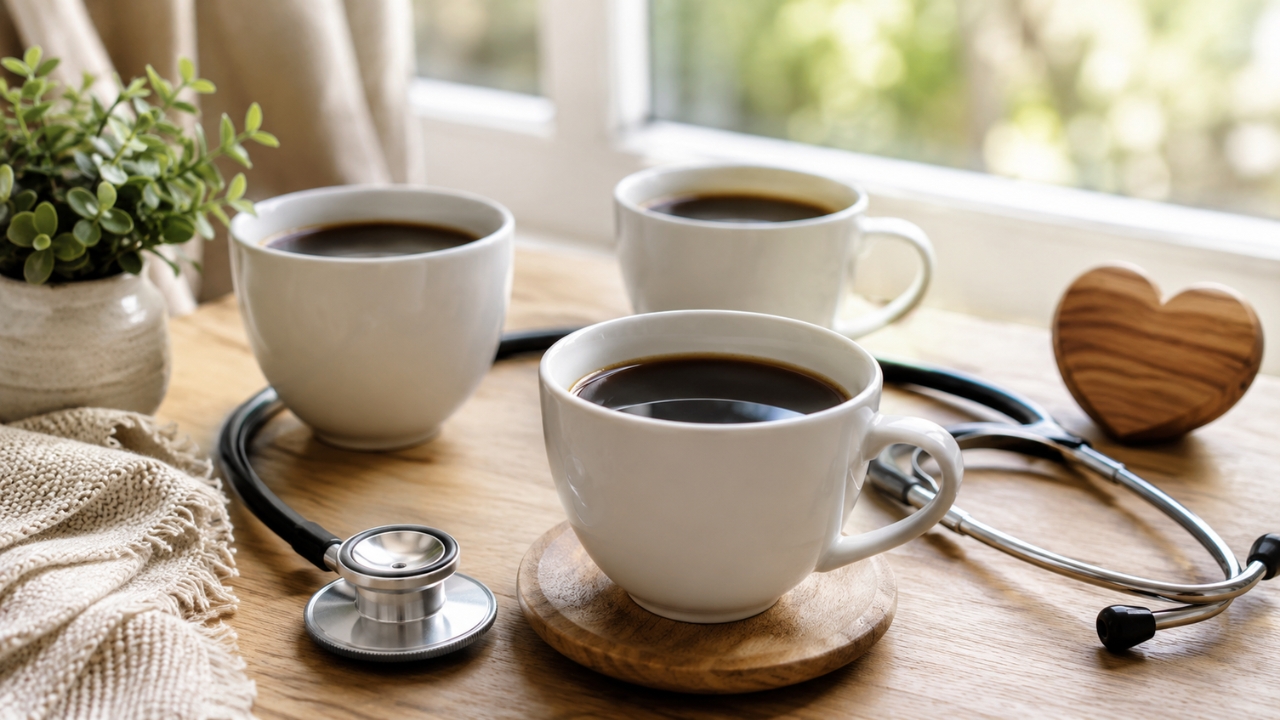
Researchers have not found a perfect dose that applies to everyone. Still, the most favorable results often appear among people drinking two to four cups per day.
A 2026 analysis covering 656,666 participants found that drinking two to four cups a day was associated with a 7.5% lower risk of developing heart failure. The largest benefit appeared around one or two cups. The association became weaker at higher levels of consumption, according to the published heart failure analysis.
Moderate coffee consumption has also been associated with a lower risk of coronary artery disease and stroke. That is relevant in a country where heart disease remains the leading cause of death.
Coffee contains more than caffeine. It also provides polyphenols and other plant compounds that may influence inflammation, blood vessel function and the way the body processes sugar. Researchers are still working out how much of the apparent benefit comes from caffeine and how much comes from the coffee itself.
Most available evidence comes from observational research. Scientists follow large groups of people, record how much coffee they drink and compare their health outcomes over time. Such studies can identify strong patterns, but they cannot prove that coffee caused the lower risk.
Coffee drinkers may differ from non-drinkers in their diet, work routines, exercise habits and access to health care. Researchers adjust for those differences, yet no adjustment is perfect. The honest conclusion is that moderate coffee appears safe and may be beneficial. It should not be presented as a treatment for heart disease.
Your Second Cup Is Not a Prescription for a Fifth
Good news about coffee has an obvious danger. People can hear that several cups are associated with better health and assume that more must be better.
The research does not support that conclusion. Benefits often level off as consumption rises. Some studies have found less favorable results above four or five drinks a day.
High doses can also bring familiar problems such as shaking hands, a racing heartbeat, anxiety, headaches, stomach discomfort, and a night spent staring at the ceiling.
If one or two cups leave you feeling good, there is no health reason to force down more. A person who becomes jittery after one strong coffee should not use the 400-milligram limit as a daily target. It is an upper reference point for most adults, not a challenge.
Timing deserves attention as well. Caffeine can remain in the body for hours. An afternoon coffee may still affect sleep at night, especially if it is large or unusually strong.
Poor sleep can raise blood pressure, increase hunger, and make it harder to exercise. Any theoretical benefit from coffee becomes less impressive if the drink regularly ruins your sleep.
Some People Still Need to Be Careful
Pregnant women are generally advised to consume less than 200 milligrams of caffeine per day. That is equal to about one 12-ounce cup of coffee, although the exact amount depends on the brew. The American College of Obstetricians and Gynecologists recommends staying below that limit.
People with severe or poorly controlled high blood pressure should also speak with a doctor about their coffee habits.
One observational study found that drinking two or more cups per day was associated with twice the risk of cardiovascular death among people whose blood pressure was at least 160/100. A single daily cup was not linked to an increased risk in the same group.
Anyone who notices palpitations after coffee should pay attention to the pattern. Caffeine does not affect every heart rhythm in the same way.
Some research suggests that coffee may not increase episodes of atrial fibrillation in regular drinkers. Higher intake may still trigger premature ventricular contractions in susceptible people.
People receiving treatment for an abnormal heartbeat, including those who have undergone cardioversion for atrial fibrillation, should discuss caffeine with the clinician managing their condition. Personal symptoms are more useful than a general population average in that situation.
Coffee and Energy Drinks Are Not the Same Thing
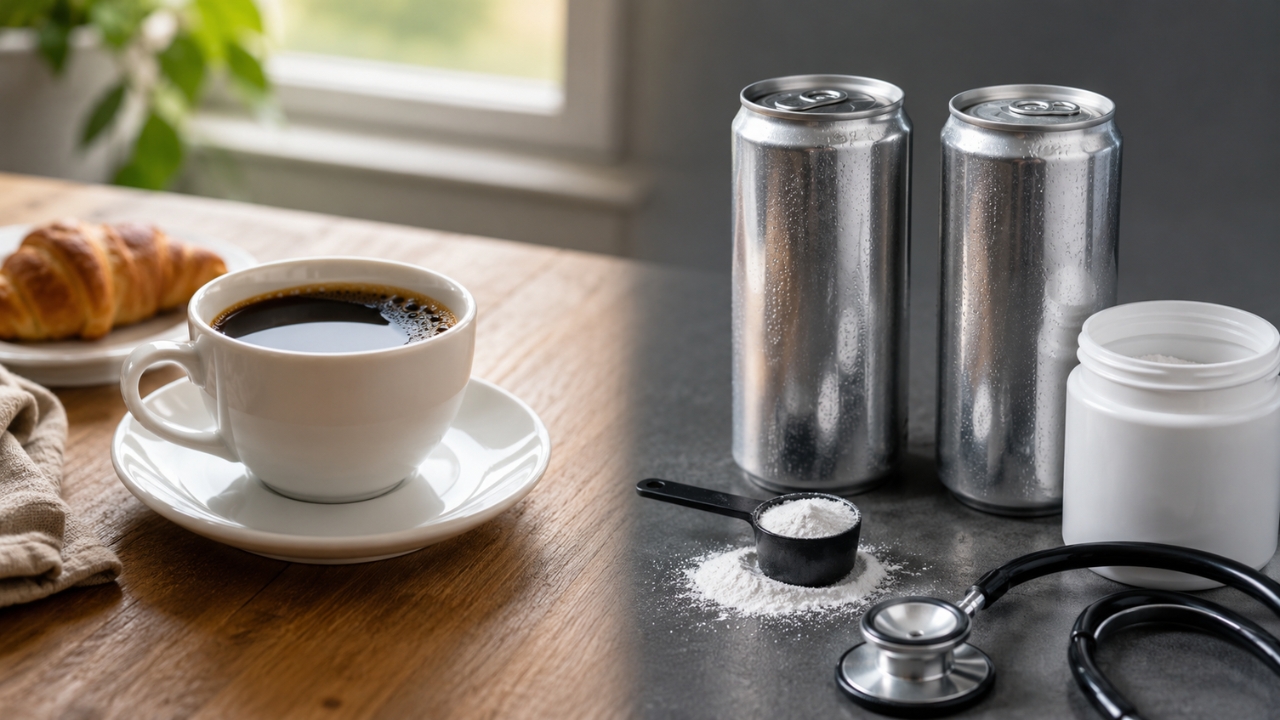
The reassuring findings apply mainly to coffee. They should not be stretched to cover energy drinks, caffeine powders, or heavily concentrated supplements.
Energy drinks can deliver a large amount of caffeine very quickly. They may also contain stimulants that are not present in regular coffee.
Case reports have connected high consumption with dangerous heart rhythm problems, especially when several cans are consumed in a short period or mixed with alcohol.
Pure and highly concentrated caffeine is riskier. A small measuring error can deliver a toxic dose. The calm routine of drinking a cup of coffee over breakfast is very different from swallowing a large dose of caffeine powder before a workout.
Your Coffee Changes Once You Load It With Sugar and Cream
Black coffee contains very few calories. The situation changes once the cup includes flavored syrup, whipped cream, sweetened creamer, and several spoonfuls of sugar.
A little milk or sugar will not erase every possible benefit. A large specialty drink can contain more sugar than a dessert, however. Drinking one every morning adds a significant amount of sugar and calories to the diet.
Unsweetened coffee has shown the strongest association with lower cardiovascular risk in some studies. Drinks loaded with sugar have not produced the same consistent result. The coffee may be fine. The liquid caramel sundae built around it is a different story.
So, Should You Pour Yourself Another Cup?
@abcnewsDrinking up to five cups of coffee per day may potentially lower heart disease risk according to a statement from the American Heart Association.♬ original sound – ABC News
If you enjoy two or three cups of coffee throughout the day, there is no reason to feel guilty about it.
For most people, another cup is not a bad habit.
It may even be good for your heart.