

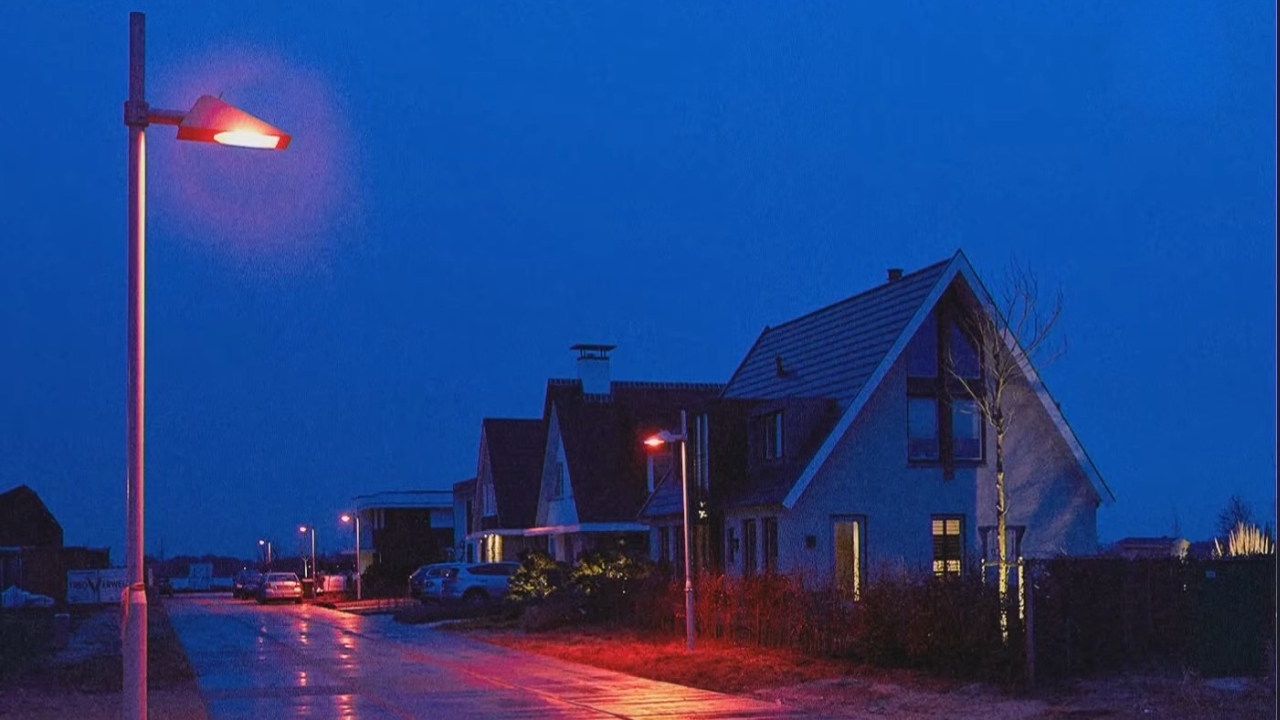
A small but noticeable change is happening in parts of Denmark, and urban planners around the world are paying attention. In the municipality of Gladsaxe, near Copenhagen, standard white streetlights have been replaced with red LED lighting in certain areas.
The goal is not aesthetic or experimental design; it is environmental. Officials are trying to reduce light pollution and protect wildlife, particularly bats, while still maintaining safe streets for drivers and pedestrians.
This approach reflects a broader shift in how cities think about infrastructure. Lighting is no longer only about visibility and safety. It is increasingly viewed as part of environmental management, energy efficiency, and urban sustainability.
Why Red Light Instead of White?
Traditional street lighting often uses white or blue-rich LED light. These wavelengths are efficient for visibility, but they can disrupt nocturnal ecosystems.
Bats, insects, and many other night-active species rely on natural darkness for feeding, navigation, and reproduction. Artificial lighting interferes with these behaviors.
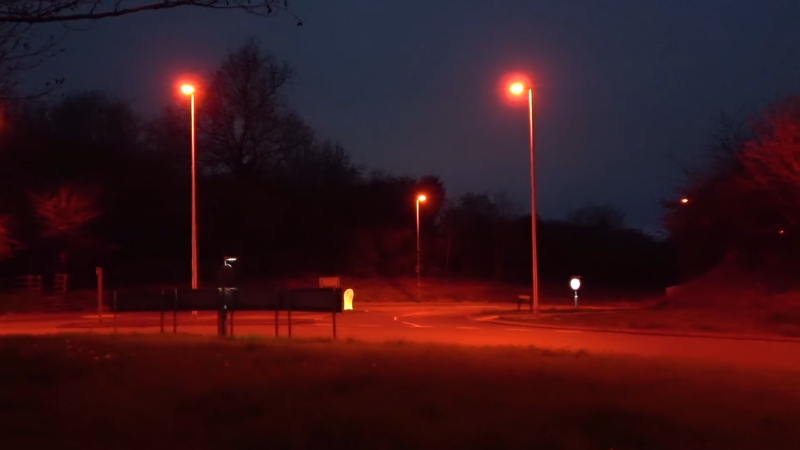
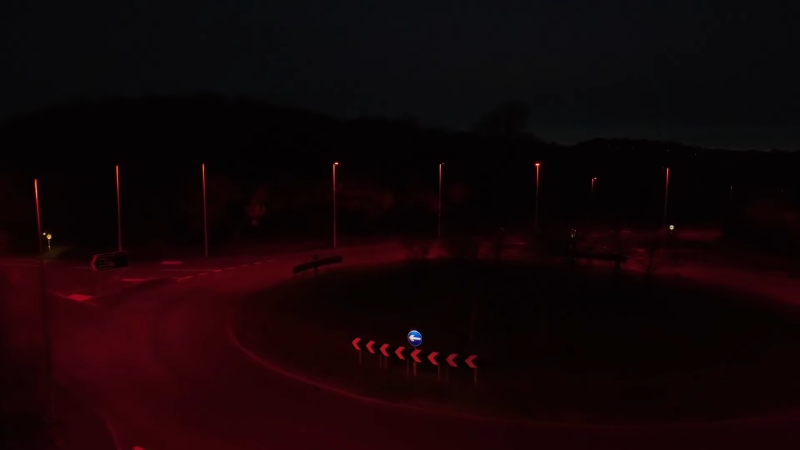
Scientific research shows shorter-wavelength light, especially blue and white, affects wildlife the most. Red-spectrum lighting appears far less disruptive. That is why Danish authorities chose red LEDs along Frederiksborgvej, a roadway near known bat habitats.
Species particularly affected include:
By reducing disruption to insects, the lighting indirectly supports bats that rely on them for food.
This is not theoretical. Studies from European environmental agencies and transport authorities have documented measurable changes in bat activity depending on light color and intensity.
The Larger Environmental Context
This project is part of a broader EU-backed initiative called Lighting Metropolis – Green Mobility, which includes cities across Denmark and Sweden. The program focuses on reducing environmental impact while maintaining functional urban infrastructure.
Key goals include:
Objective
Practical Impact
Lower light pollution
Better wildlife protection
Energy efficiency
Reduced electricity use
Smart infrastructure
Adjustable lighting levels
Climate goals alignment
Lower carbon emissions
Modern LED systems can also adjust brightness based on traffic patterns, time of night, or weather conditions. That means less wasted energy and fewer unnecessary emissions.
How This Compares With US Cities
The Danish experiment highlights a challenge many American cities are already facing: balancing urban growth with environmental concerns.
Several US cities have experimented with LED lighting upgrades, but most changes focused on energy savings rather than ecological impact. For example:
City
Lighting Approach
Key Result
Los Angeles
Large-scale LED conversion
Reduced energy costs ~by 60%
Tucson
Lower color-temperature LEDs
Less skyglow, better astronomy visibility
Seattle
Smart LED streetlight networks
Adaptive brightness control
Chicago
Citywide LED rollout
Improved efficiency, mixed public reaction
However, very few US cities have specifically adopted wildlife-sensitive lighting strategies at scale.
One reason is geography. Many US cities expanded before environmental lighting concerns were widely recognized. Retrofitting older infrastructure can be costly and politically complicated.
Another factor is urban density. High-density US metro areas often prioritize brightness for safety perception, even when actual crime reduction effects are debated.
Public Reaction Matters More Than Expected
View this post on Instagram
Lighting changes can be surprisingly controversial. In some American cities, residents complained when LED lights first replaced older sodium lamps. Common concerns included:
Denmark’s red lighting experiment addresses this by limiting the change to targeted areas rather than entire cities. That makes it easier to evaluate ecological benefits without triggering widespread public resistance.
Initial feedback from residents in Gladsaxe has generally been neutral to positive, although long-term perception studies are still ongoing.
Energy Efficiency Is Still a Major Driver
Environmental protection is only part of the equation. Modern LED systems, including red-spectrum lighting, consume significantly less energy than older technologies.
Typical comparisons:
Lighting Type
Approximate Energy Use
High-pressure sodium lamps
Higher consumption
Standard white LEDs
~40–60% savings
Smart adaptive LEDs
Additional savings possible
Reduced maintenance costs also matter. LEDs last longer, require fewer replacements, and integrate easily with digital monitoring systems.
For cities under budget pressure, this financial angle often determines whether lighting upgrades move forward.
Symbolism and Urban Messaging
@frank.zhang50today in wealth 20260209 Red streetlights help protect wildlife while still keeping streets safe. Denmark tested red LED lights in a suburb near Copenhagen to cut light pollution and avoid disturbing animals like bats, which are very sensitive to bright white light. The new lights still let people walk and bike safely, but they create a calmer environment for nature. Cities around the world are watching this experiment because it offers a simple way to reduce environmental harm without giving up visibility at night.
One interesting side effect of red lighting is psychological. It creates a visible reminder that certain urban areas overlap with natural ecosystems.
In Gladsaxe, the red lights signal:
This symbolic aspect may sound minor, but urban design research shows that visual cues can influence public behavior and awareness.
Some US cities already use colored lighting for messaging, for example, green lights for environmental campaigns or blue lights in certain public safety initiatives.
Challenges and Open Questions
Despite promising early results, several questions remain:
- Will long-term wildlife benefits be measurable?
- Do drivers adapt comfortably to red lighting?
- Are there unforeseen psychological or safety impacts?
- Can the approach scale economically to large cities?
Denmark is continuing to monitor bat activity and ecological changes. Updated data is expected in the coming years.
What This Could Mean for Future Cities
The Danish experiment reflects a broader evolution in urban planning. Cities are increasingly judged not just on economic performance but also eon nvironmental responsibility.
Lighting, once considered purely functional, is becoming part of:
If the data continues to support benefits, red-spectrum lighting or similar approaches could expand to more regions.
For American cities dealing with light pollution, rising energy costs, and environmental regulation, Denmark’s approach offers a practical test case rather than a theoretical idea.
Bottom Line
Denmark Just Switched to Red Streetlights, Solving a Problem Every Modern City Deals With. Superb! https://t.co/O3AEZjv8xS
— Mehul Gohil (@mehulgohil) February 9, 2026
Denmark’s red streetlight initiative is not simply a design choice. It represents a shift toward environmentally conscious urban infrastructure.
While still experimental, it highlights how relatively small changes in city planning can influence wildlife protection, energy efficiency, and public awareness.
Other cities, especially in North America, are watching closely because they face similar challenges balancing development with sustainability.