Elon Musk’s major companies are now worth a combined $3.6 trillion, driven mostly by Tesla and SpaceX. After SpaceX went public this June, Musk’s personal fortune climbed past $1 trillion, making him the first trillionaire in history.
Because most of his wealth is tied up in company stock, his exact net worth changes quickly, but he is still the richest person in the world by a massive margin.
Tesla is trying to move from cars into autonomy, energy storage and robots. SpaceX is the leading private launch company and runs Starlink.
xAI gives Musk a direct AI business. X gives that AI business a large social platform.
Neuralink is testing brain implants in patients. The Boring Company is trying to prove that its tunnel model can work outside a limited Las Vegas system.
For all of you interested in electric vehicles, artificial intelligence, space launches, social media or simply the life of Elon Musk, following the actions by his companies is the best way to learn more about all that.
Everything Elon Musk Owns, Leads Or Controls In 2026
Company
Main Business
Musk’s Role
Started Or Acquired
Current Position
Tesla
Electric vehicles, batteries, energy storage, autonomy, robotics and solar products
CEO and major shareholder
Musk invested in 2004
Public company and the main source of Musk’s public-market wealth
SpaceX
Rockets, spacecraft, Starlink satellite internet and Starship
Founder, CEO and CTO
2002
Private company and the most valuable private business in Musk’s portfolio
xAI and X
Artificial intelligence, Grok and the X social platform
Founder of xAI and controlling figure behind the combined structure
xAI founded in 2023, X acquired in 2022, xAI acquired X in 2025
Musk’s main AI and social media business
Neuralink
Brain-computer interfaces
Founder
2016
Private medical technology company in human clinical trials
The Boring Company
Underground tunnel systems
Founder
2016
Private infrastructure company focused mainly on the Vegas Loop
All valuations in this article should be read carefully. Tesla is public, so its market value changes every trading day. SpaceX, xAI, Neuralink and The Boring Company are private, so their values come from funding rounds, share sales, tender offers or transaction statements. Those are useful markers, but they are not the same as a public stock price.
Tesla
Elon Musk joined Tesla in 2004 as an early investor. He became chairman, then later became CEO in 2008. Tesla started as a high-risk electric vehicle company. It is now the public company most closely tied to Musk’s wealth.
Tesla’s core business is still selling cars. Model 3 and Model Y remain its most important products by volume. Cybertruck added a new category, but the company’s future valuation depends heavily on other bets: Full Self-Driving, robotaxis, Megapack energy storage, the Supercharger network and the Optimus robot.
In its 2025 annual report filed with the U.S. Securities and Exchange Commission, Tesla reported $94.83 billion in total revenue. That was down from $97.69 billion in 2024. Net income attributable to common stockholders fell to $3.79 billion.
The same filing showed why Tesla is no longer only a car story. Automotive revenue declined, but energy generation and storage revenue rose to $12.77 billion. Tesla also said it deployed 46.7 GWh of energy storage products in 2025.
In the first quarter of 2026, Tesla reported more than 408,000 vehicles produced and more than 358,000 vehicles delivered. It also deployed 8.8 GWh of energy storage products.
Tesla is also the company where Musk faces the most direct pressure from public investors. Car deliveries, margins, regulatory credit revenue, energy storage growth and autonomy promises all affect the stock.
That makes Tesla different from SpaceX or Neuralink. Musk can make long-range bets inside Tesla, but every quarter still has to answer a simpler question. Are people buying the cars, and is the company making enough money from them?
SpaceX
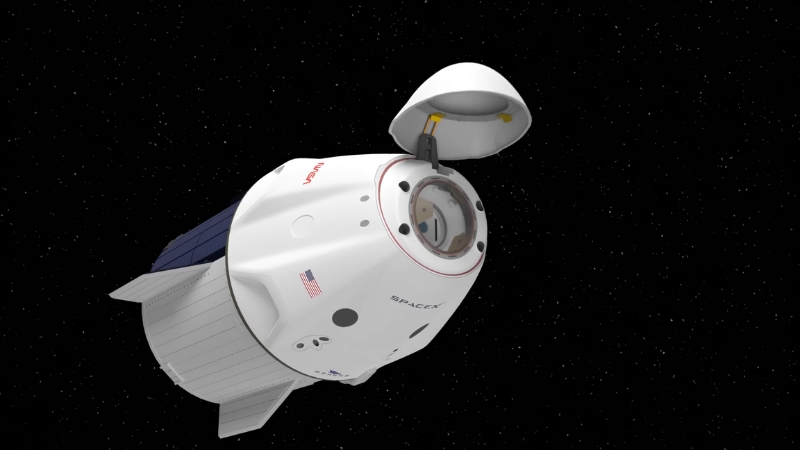
SpaceX is the company that made Musk more than a car executive. He founded it in 2002 after the PayPal sale. The goal was to cut launch costs and make reusable rockets normal.
That goal is no longer theoretical. Falcon 9 made reusability routine. Dragon carries cargo and astronauts. Starlink sells satellite internet. Starship is the long-range bet for large payloads, lunar missions, Mars plans and heavier satellite deployment.
SpaceX is private, so there is no public market price. In 2025, reports said the company was in talks around a private share sale at a valuation near $400 billion. That figure should be treated as a private-market estimate.
SpaceX also has a deep government business. NASA uses SpaceX for crew and cargo transportation. The Department of Defense uses the company for national security launches. Starlink has become important for remote internet access, disaster response and military communications.
SpaceX is valuable because it controls more of the chain than older aerospace companies. It designs the rockets, builds engines, launches payloads, operates spacecraft and sells satellite internet service.
The risk is also clear. Starship still has to become reliable. Starlink has to keep adding capacity. Regulators have to approve launches, spectrum use and orbital activity. SpaceX has already changed the launch market, but its next stage depends on execution at a much larger scale.
X And xAI
Musk bought Twitter in October 2022 for $44 billion. He later renamed it X. The deal was expensive, messy and heavily criticized. It also gave Musk something most AI companies do not have: a major social platform that can distribute an AI product directly to users.
That became more important in 2025, when Musk said xAI acquired X in an all-stock deal. Musk said the deal valued xAI at $80 billion and X at $33 billion.
xAI was founded in 2023. Its main product is Grok, an AI chatbot integrated into X. The company competes with OpenAI, Google, Anthropic and Meta in a market where talent, data centers and chips are extremely expensive.
The merger gives xAI three things: distribution, data and attention. X gives Grok a built-in audience. Grok gives X a product that can be placed inside search, posts, news, subscriptions and creator tools.
Tesla’s own filings show how close the overlap has become. Tesla said it recognized $430 million in revenue from xAI in 2025 for Megapack purchases. Tesla also said it entered into an agreement in January 2026 to invest about $2 billion in xAI preferred stock.
That detail matters. Musk’s AI company is not sitting away from his other businesses. It is now financially and commercially connected to Tesla, and it is tied to X through ownership.
The business test for xAI is simple. It has to prove that Grok can become more than a feature inside X. It needs durable revenue, strong models and enough infrastructure to compete with better-funded rivals.
Neuralink
Neuralink was founded in 2016. Its main focus is brain-computer interface technology. The company wants implanted devices to help people with paralysis and severe neurological conditions control computers and other digital tools.
The company moved into human testing after years of animal research and regulatory review. Its first public human implant was announced in 2024. In June 2025, Neuralink announced a $650 million Series E funding round.
The public discussion around Neuralink often jumps quickly to science fiction. The near-term business is more grounded. Neuralink is trying to build a medical device. The first realistic market is assistive technology for people who cannot move or communicate normally because of serious medical conditions.
Neuralink may be Musk’s highest-risk company. A car can be recalled. A rocket can be redesigned. A medical implant has to work inside the human body for long periods with a very different safety standard.
If Neuralink succeeds, its first major impact will likely be medical. Wider consumer use remains far away. The company has funding, attention and technical ambition, but it still has to prove long-term safety and useful outcomes in patients.
The Boring Company
The Boring Company started in 2016 after Musk complained about traffic. Its core idea is that tunnel construction is too slow and too expensive. If tunneling can be made cheaper, cities could move people underground without taking more surface space.
The company’s only high-profile operating system is in Las Vegas. The Boring Company says Clark County and the City of Las Vegas have approved 68 miles of tunnel and 104 stations for the Vegas Loop. The system is operational in parts, with more tunnels under construction.
The current Loop uses Tesla vehicles in tunnels. That is very different from the early vision of high-speed pods or a new mass transit system. The system is convenient for some convention traffic, but it has also drawn criticism from transit experts and scrutiny over safety and environmental issues.
The Boring Company remains harder to judge than Tesla or SpaceX. It has a working project, but not yet a clear proof that its model can reshape transportation in major cities.
For now, Las Vegas is the test case. If the system expands smoothly, Musk can argue that the company has a real infrastructure model. If it stays limited, The Boring Company will look more like a niche tunnel operator than a transit breakthrough.
Companies Often Wrongly Listed As Elon Musk Companies
Several companies are often included in Musk lists because he helped start them or had a past role. They should not be counted as companies he currently owns or controls.
Company
Why People Mention It
Current Reality
PayPal
Musk co-founded X.com, which later became part of PayPal
He no longer controls PayPal
Zip2
Musk co-founded it before PayPal
It was sold to Compaq in 1999
SolarCity
Musk was chairman and his cousins founded it
Tesla acquired SolarCity in 2016
OpenAI
Musk was one of its early founders
He left years ago and does not own OpenAI
Starlink
It is one of Musk’s most important businesses
It is part of SpaceX, not a separate Musk company
How Much Are Elon Musk Companies Worth?
There is no clean single number.
Tesla is public. Its market value changes by the hour. SpaceX, xAI, Neuralink and The Boring Company are private. Their values come from share sales, funding rounds and reported deals.
That is why viral claims about Musk owning companies worth a fixed amount can be misleading. Many of those numbers mix public market value, private valuation, debt, funding round pricing and Musk’s personal net worth.
| Company | Estimated Worth |
| Tesla | About $1.46 trillion |
| SpaceX | About $800 billion |
| xAI and X | About $113 billion combined |
| Neuralink | About $9 billion to $10 billion |
| The Boring Company | About $5.7 billion |
| Total Estimated Value | About $2.39 trillion |
Bottom Line
Elon Musk’s current companies in 2026 are Tesla, SpaceX, xAI and X, Neuralink, and The Boring Company.
Tesla remains the public centerpiece. SpaceX is the largest private company in the group. xAI and X are now tied together as Musk’s AI and social media play. Neuralink is the medical technology bet. The Boring Company is the tunnel project still trying to prove its model at city scale.
The old version of the Musk story was simple. He had a car company, a rocket company, a tunnel company and a brain-chip company.
The 2026 version is more complicated. Tesla is moving toward AI and robots. SpaceX is also an internet provider. xAI now owns the social platform Musk bought in 2022. Tesla has a financial relationship with xAI. The Boring Company uses Tesla vehicles. Neuralink is still separate, but it fits Musk’s long-running argument that humans will need better tools in an AI-heavy world.
That makes Musk’s companies unusually powerful and unusually exposed. Their success depends on engineering, regulation, capital markets, public trust and Musk’s own ability to keep several difficult businesses moving at once.