
President Donald Trump’s apparent difficulty staying awake during some public events is drawing renewed scrutiny after cardiologist Dr. Jonathan Reiner said the pattern deserves a medical explanation.
Reiner, a George Washington University professor who previously treated Vice President Dick Cheney, stressed that he is not diagnosing Trump, but questioned why repeated daytime drowsiness has not been addressed in the president’s publicly released medical reports, according to the Daily Beast report.
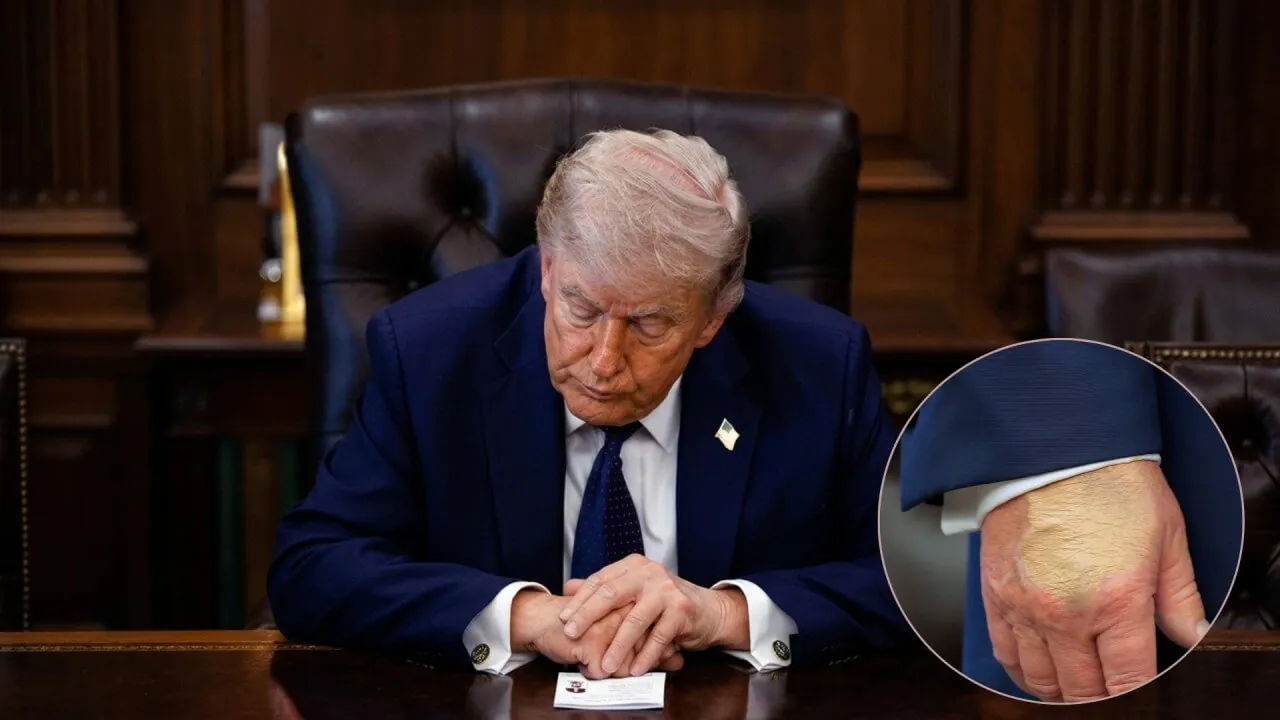
The concern intensified after an August 10, 2026, Oval Office event on childhood vaccine policy, during which Trump was photographed and reported at times appearing drowsy with his eyes closed while other officials spoke.
The White House confirms that Trump held the vaccine event that day, while Reuters reported that he announced changes to federal childhood vaccine recommendations.
Reiner Focuses on Trump’s Daytime Alertness
Reiner described Trump’s apparent tendency to doze during meetings as particularly unusual because it has occurred while the president is surrounded by officials and reporters. He told CNN that Trump has long been known as a night owl, but said the repeated difficulty remaining alert during daytime public appearances appeared to be a more recent development.
Importantly, Reiner has not examined Trump and has explicitly rejected suggestions that he is making a diagnosis from television footage. Instead, he has argued that the visible episodes raise questions that Trump’s medical team is better positioned to answer. He raised similar concerns in a New York Times opinion article published this week, according to additional Daily Beast reporting.
There is also earlier independent reporting documenting similar appearances. The Associated Press photographed Trump with his eyes closed during a December 2, 2025, Cabinet meeting and described drowsiness as one of the notable features of that event. A photograph alone, however, cannot establish whether someone was asleep or explain why.
White House Says Trump Is Fully Fit
The administration disputes suggestions that Trump is medically impaired. His physician, Dr. Sean Barbabella, said after a May 26 examination at Walter Reed National Military Medical Center that the president was in “excellent health” and “fully fit” to perform his duties. The examination involved 22 specialists and included cardiac imaging, cancer screening and neurological evaluation, according to the Associated Press.
Trump also received the Montreal Cognitive Assessment and was reported to have scored 30 out of 30. Barbabella wrote that Trump’s cognitive and physical performance was excellent and cited his schedule of meetings and public appearances as supporting his overall well-being.
In July, Trump again promoted those results, saying he had completed a “perfect physical” and had received perfect scores on cognitive tests. The White House clarified that he was referring to the May examination rather than a new medical visit, Reuters reported.
Existing Diagnoses Do Not Explain the Sleep Questions
Trump’s publicly documented health issues include chronic venous insufficiency, which can cause swelling in the lower legs, and recurring hand bruising. The latest medical report said his leg swelling had improved since 2025 and attributed the bruising to frequent handshaking combined with aspirin therapy.
Those explanations address visible swelling and bruising, but the publicly disclosed May medical findings cited by the White House did not identify a condition explaining episodes of apparent daytime drowsiness. Reiner has focused on that gap rather than claiming to know its cause.
The White House responded sharply to his criticism, accusing him of engaging in politically motivated “armchair diagnosis.” Reiner replied that he was asking questions about publicly visible symptoms rather than diagnosing the president.
Trump’s Age Keeps Presidential Health in Focus
Trump turned 80 on June 14 and is the oldest person ever to serve as U.S. president. Questions about the health and stamina of aging presidents have received greater attention following the debate over former President Joe Biden’s fitness before he withdrew from the 2024 presidential race.
Presidents are not legally required to release their complete medical records, and administrations have historically disclosed varying amounts of health information. Trump’s medical team therefore remains the only source capable of providing a clinically grounded explanation for any persistent change in his daytime alertness.
For now, the verified record supports two separate conclusions: Trump’s physician says he remains medically fit for office, while Reiner believes the repeated public signs of drowsiness warrant a clearer explanation. No publicly released evidence establishes a diagnosis behind the episodes.
Related Posts:
- Trump Hand Bruising Back In Focus After White House Event
- Graduate Nursing, Therapy And Public Health Students…
- Hospitals Added 15,000 Jobs in March, but Nurse…
- Donald Trump State Approval Map 2026 - Where His…
- House Passes Bill to Make Daylight Saving Time Permanent
- New Pancreatic Cancer Drug Daraxonrasib Raises Hope…