
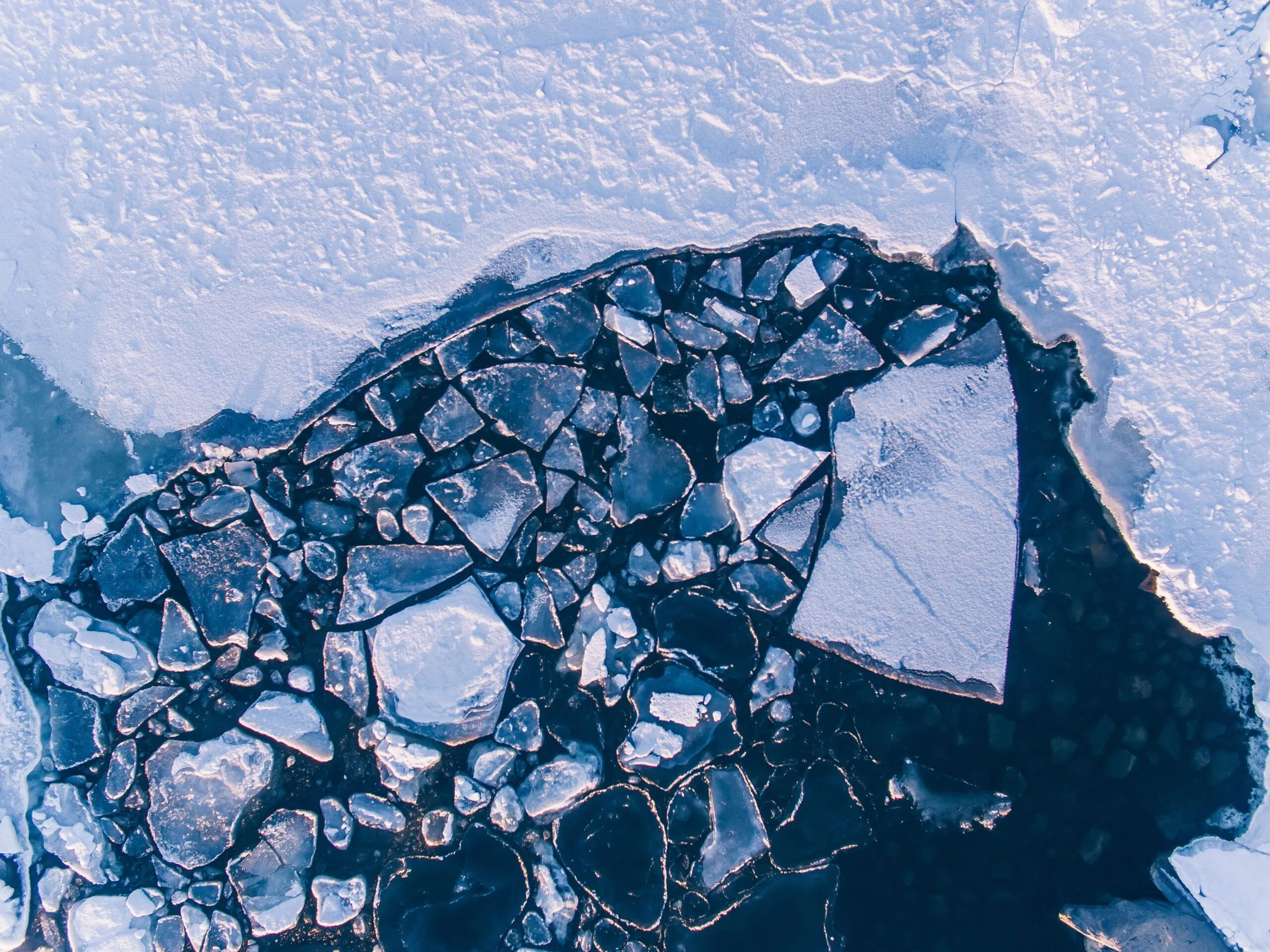
Decades of sea ice decline in the Arctic Ocean have triggered a major shift in the water’s chemical makeup. Recent data shows the ocean is losing nitrate, a primary nutrient required to sustain plankton populations at the base of the marine food chain.
A study published in Communications Earth & Environment tracks this shift back to roughly 2009. Researchers found that nitrate concentrations in the Polar Surface Water flowing out of the Arctic through the Fram Strait dropped sharply after 2009 and have remained low ever since.
These findings update the current understanding of Arctic climate change. The impact of warming extends beyond surface ice melt, as changes to sub-surface ocean chemistry threaten to alter plankton, fish populations, seabirds, marine mammals, carbon sequestration, and commercial fisheries in the North Atlantic.
What Changed In The Arctic Ocean
Initial models predicted that declining sea ice would allow more sunlight to penetrate the water, leading to higher plankton production. During the early stages of ice loss, observations in several Arctic regions supported this theory because more open water increased light availability and expanded photosynthesis.
However, the new data indicates the ecosystem has entered a different phase. While open water remains widespread, sunlight alone cannot sustain historical growth rates or species composition when nitrate supplies are depleted.
The research team analyzed nutrient data collected between 1998 and 2023 in the Fram Strait, which serves as the primary exit channel for Arctic water moving into the Atlantic. Prior to 2009, average nitrate concentrations in the Polar Surface Water were measured at 3.1 micromoles. After 2009, that average fell to 1.7 micromoles, with baseline values regularly approaching zero.
Scientists classify this transition as a regime shift, meaning the Arctic Ocean has shifted from an ecosystem limited primarily by sunlight to one limited by available nitrogen.
How Melting Ice Can Remove Nitrate From The Sea
This nutrient loss is driven by a direct physical link between surface ice cover and seafloor sediment chemistry.
Historically, thick sea ice blocked sunlight from reaching the shallow continental shelves of the Arctic for most of the year. As ice cover decreased, increased sunlight triggered large, rapid plankton blooms. When these blooms died off, the organic matter sank to the shallow seafloor.
On these shallow shelves, microbes consume the sinking organic material and deplete the oxygen within the sediment. Under these low-oxygen conditions, the microbes convert nitrate into nitrogen gas through a process called benthic denitrification.
Because most marine plankton cannot absorb nitrogen gas directly, this chemical conversion permanently removes usable nutrients from the marine food web.
The study identifies the Chukchi Sea and the East Siberian shelf as the primary zones for this nitrate removal. Investigators estimate these two shelf areas remove approximately 12 teragrams of nitrogen annually, which offsets a substantial portion of the nutrients entering the Arctic from the Pacific Ocean.
The ice melting is even slowing earth’s rotation by tiny bits.
Why The Food Chain Feels The Shock First
Phytoplankton, the microscopic algae at the bottom of the food web, depend directly on nitrate. Larger, nutrient-dense plankton types like diatoms efficiently transfer energy upward to zooplankton, fish, and larger marine predators.
When nitrate levels drop, smaller plankton species gain a competitive advantage. While these smaller cells can survive in nutrient-starved water, they transfer far less energy up the food chain, reducing the overall food supply available to fish, seabirds, and marine mammals.
The published paper states that this biological reorganization is already occurring, noting documented shifts in plankton populations across the Chukchi Sea and the Fram Strait. Researchers warn that these baseline changes closely align with broader ecological disruptions currently being recorded in higher-level Arctic wildlife species.
Why Fram Strait Is Important
The Fram Strait, located between Greenland and Svalbard, is the primary export route for Arctic water moving into the North Atlantic. Water passing through this strait carries chemical indicators from across the entire polar basin, including the expansive shelf regions connected by the Transpolar Drift.
Data from the Fram Strait provides a representative look at the region. The measurements do not reflect a localized issue in a single bay, but rather record the collective changes occurring across major Arctic transit pathways.
By combining physical water samples with ocean circulation models and sediment data, the research team determined that a combination of reduced ice, increased light, high shelf productivity, and altered currents are actively draining nitrate from the water leaving the Arctic.
The Carbon Question
The drop in nutrients could also impact global carbon storage. Phytoplankton pull carbon dioxide out of the atmosphere during photosynthesis. When they die, some of that carbon sinks into the deep ocean or settles into seafloor sediment, a process called the marine biological pump.
Parallel studies have already raised concerns regarding how ice loss alters this carbon storage. A separate Nature Communications study predicted that ice-free summer conditions will eventually weaken the biological pump due to changing plankton populations.
The new nitrogen data adds more context to these projections. If a lack of nitrate slows down overall plankton growth or forces a permanent shift toward smaller species, the Arctic Ocean’s capacity to store carbon will change, though the exact scale of this shift requires further monitoring.
Why Scientists Say Recovery Is Unlikely
While calling an environmental change permanent sounds severe, the study bases its conclusion on straightforward physical logic. The drop in nutrients is tied directly to the loss of sea ice. As long as shallow continental shelves remain clear of ice for extended periods each year, the conditions driving nitrate removal will persist.
The impacts will vary by region. Areas influenced by Atlantic currents, like the Barents Sea, still receive nutrient inputs from outside water sources, and localized upwelling can bring deeper nitrate to the surface. However, the data shows that the historical Arctic system characterized by multi-year ice and high baseline nutrient levels is declining.
Data from NOAA highlights the speed of this transition. In the 2025 Arctic Report Card sea ice assessment, NOAA stated that the March 2025 winter sea ice maximum was the lowest recorded since satellite monitoring began 47 years ago. By the end of summer 2025, the remaining Arctic ice pack was thinner, younger, and 28 percent smaller in total area compared to 2005 numbers.
What Comes Next
The primary focus for researchers now is determining how far these ecosystem disruptions will spread. The Arctic Ocean connects directly to the North Atlantic through currents, wildlife migration routes, and commercial fishing grounds.
The research team at the University of Edinburgh stated that more work is required to determine how this nutrient loss will impact marine populations outside the immediate Arctic, specifically within commercial fishing zones in the North Atlantic. The University of Edinburgh summarized the findings as a structural disruption affecting the entire food web from the bottom up.
The final takeaway is clear. The changes in the Arctic Ocean have moved well past the surface layer. Melting ice has increased light penetration, altered the timing of seasonal blooms, shifted seafloor sediment chemistry, and reduced the nutrient supply that supports regional marine life.
While open water was once expected to increase Arctic biological productivity, the current data shows a different outcome. The ocean has gained sunlight, but it is losing the fundamental nutrients required to turn that light into biological growth.
Also Read: What Is The Cold Blob Scientists Are Warning About?