
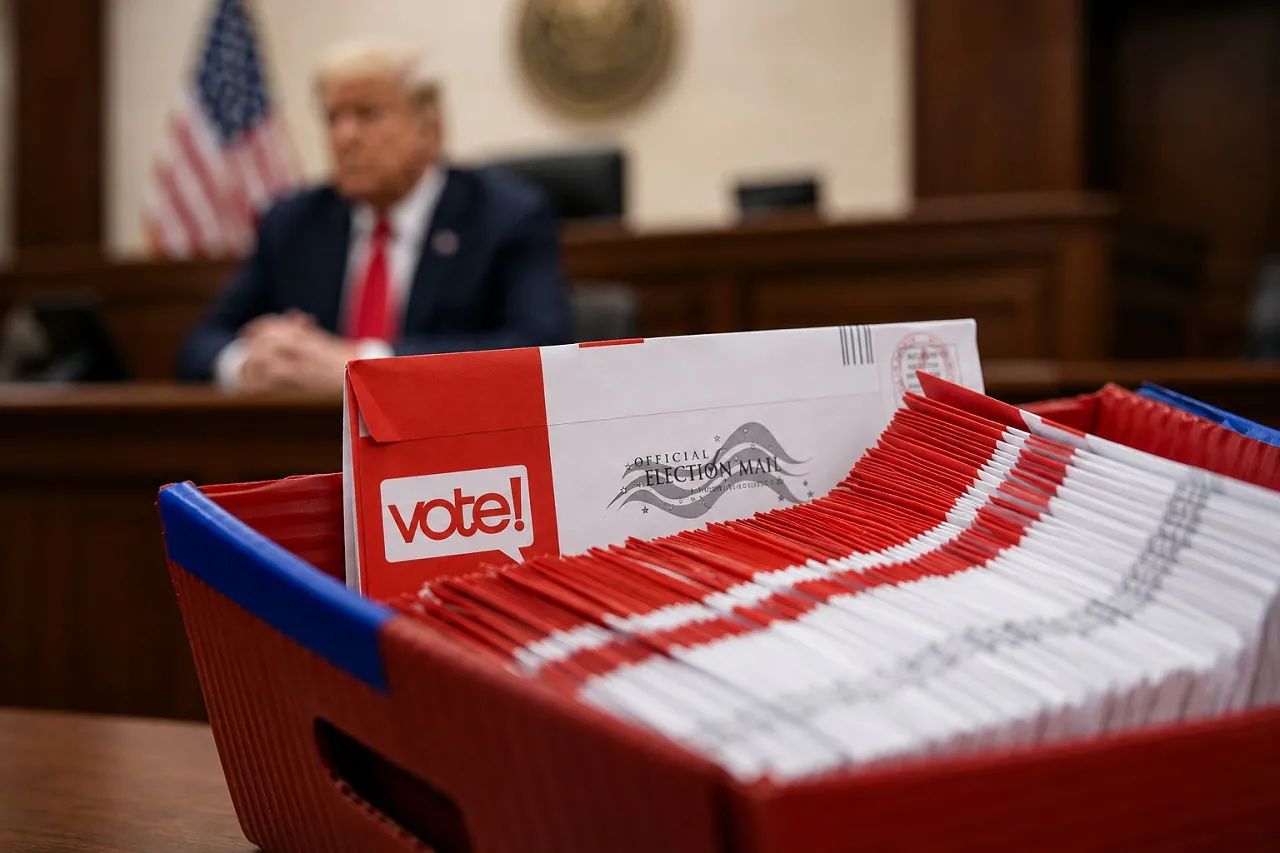
A federal judge in Washington has allowed President Donald Trump’s executive order on mail voting to remain in place for now, leaving one of the biggest election fights of the 2026 cycle unresolved as states prepare for the midterms.
U.S. District Judge Carl Nichols declined to temporarily block the order on Thursday, according to NPR. The ruling gives the Trump administration room to keep moving forward with early preparations, but it does not settle the broader legal battle over how much power a president has over federal elections.
The case centers on Trump’s executive order, published in the Federal Register, which directs federal agencies to help check voter citizenship and calls for changes to how mail and absentee ballots are handled. The order asks the Department of Homeland Security and the Social Security Administration to work on lists of voting-age citizens and directs the U.S. Postal Service to begin a rulemaking process tied to mail ballot delivery.
Table of Contents
ToggleJudge leaves the order in place for now
Nichols did not give the White House a final victory. His ruling focused on timing. The court found that the plaintiffs had not yet shown the kind of immediate harm needed for an emergency block, because federal agencies have not finished the rules or taken the steps that could affect voters directly.
That means the order can stay active for now, but opponents can return to court if the Postal Service issues a final rule, if federal lists are sent to states, or if eligible voters face removal, rejection or delays because of the system.
The Associated Press also reported that the ruling leaves the door open for future challenges once implementation becomes concrete. In practical terms, the legal fight has moved from an immediate emergency request to the next phase of agency action and court review.
What Trump wants to change
The order directs federal agencies to support citizenship checks for voter registration and election administration. It also pushes the Postal Service toward a system in which mail and absentee ballots could be tied to voter lists and ballot-envelope identifiers.
The White House says the order is designed to protect election integrity and prevent noncitizen voting. A White House fact sheet argues that federal databases can help states verify voter eligibility and improve public confidence in elections.
Voting-rights groups, Democratic officials and several states argue that the order goes beyond presidential authority. Their position is that the Constitution gives election rulemaking power to states and Congress, not to the White House. They also warn that federal databases were built for other purposes and may contain gaps that could affect eligible voters.
The Brennan Center for Justice, one of the groups challenging the policy, has argued that the order could create confusion for election officials and put eligible voters at risk if state records and federal data do not match.
Why the mail voting fight is politically charged
Mail voting remains one of the most disputed parts of the U.S. election system. Trump has spent years attacking mail ballots and claiming they are vulnerable to fraud. Courts, audits and state reviews after the 2020 election found no evidence of fraud on a scale that changed the result.
The issue still carries major political weight. Millions of voters used mail ballots in recent national elections, and the MIT Election Data and Science Lab reported that mail voting remained a major method of participation in 2024.
For election officials, the timing matters. Primary elections are already underway in several states, and local offices are preparing for November while federal agencies consider rules that could affect ballot handling, voter lists and mail delivery procedures.
California moves to protect election materials
The Washington ruling came on the same day California moved in the opposite direction. Gov. Gavin Newsom signed a law that took effect immediately and restricts unauthorized access to voter rolls, voting systems and election materials, according to AP.
NEW: Today, @CAGovernor Gavin Newsom signed a new law to strengthen California’s election protections ahead of the June primary.
The new law safeguards voters, election workers, and ballots from intimidation, interference, and unauthorized law enforcement activity.
Democracy… pic.twitter.com/yBRZwVjKJh
— Governor Newsom Press Office (@GovPressOffice) May 27, 2026
The California law makes it a crime to knowingly remove voted ballots from the custody of election officials without legal authority. It also limits outside access to election technology and voter data unless there is a court order or another lawful basis.
The move followed rising concern about attempts to seize or inspect election materials. A same-day WIRED report detailed ballot seizures and demands for election records in multiple states, including Georgia, Arizona, Michigan and California.
What happens next
The Trump order remains alive, but the legal risk around it has not disappeared. The most important next step will likely come when federal agencies begin issuing final rules or sending information to states.
Related lawsuits are also moving in Boston, where courts are considering similar challenges. A ruling there could create a new legal path, especially if another judge reaches a different conclusion about presidential authority over election administration.
For now, the White House has avoided an immediate court block. Election officials, voting-rights groups and state governments are watching for the first concrete agency actions that could turn the order from a political directive into an election system change.
Also read: Red vs Blue States 2026
Related Posts:
- Federal Judge Blocks Trump Administration $100,000…
- A USPS Proposed Mail Ballot Rule Would Require…
- Mail-In Voting Rules for the 2026 Midterms Remain…
- Graduate Nursing, Therapy And Public Health Students…
- Trump Administration Asks Supreme Court to Allow New…
- Will Birthright Citizenship In The US Change As…