
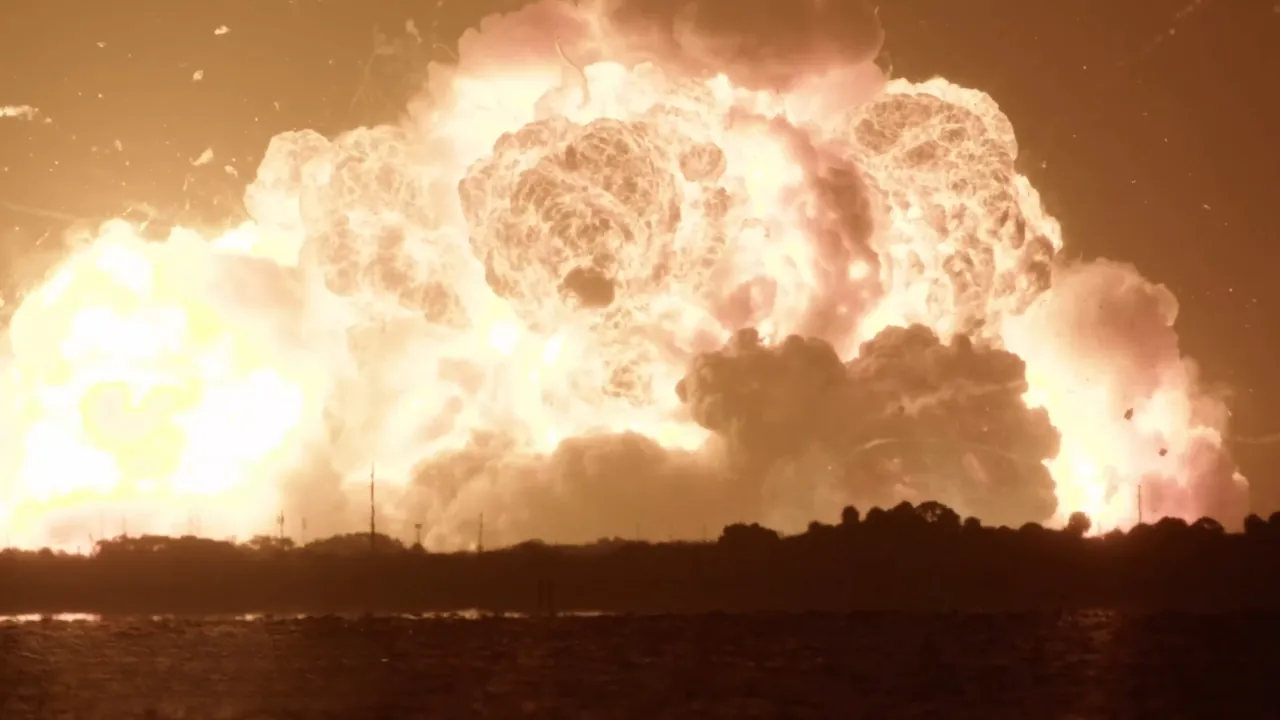
A ground test for Blue Origin’s New Glenn rocket ended in a large explosion at Cape Canaveral Space Force Station on Thursday night, raising new questions about the company’s heavy-lift program, its launch schedule and the condition of one of its most important launch pads.
The incident happened during a static-fire test at Launch Complex 36, where New Glenn was being prepared for a future mission connected to Amazon’s satellite internet network.
A video published by BBC News showed a sudden fireball rising from the pad after engine activity began.
According to San Francisco Chronicle, nearby homes shook as the explosion lit up the sky over Florida’s Space Coast. Blue Origin said all personnel were safe. Cape Canaveral Space Force Station also said no injuries or fatalities had been reported.
What Happened During the New Glenn Test?
A Blue Origin rocket exploded during a “hotfire test” at Cape Canaveral Space Force Station on Thursday night.
Everyone has been accounted for and is safe, Jeff Bezos, the company’s founder, said.
NASA Administrator Jared Isaacman said he was aware of the incident, which he… pic.twitter.com/fEqyxl3eit
— Fox News (@FoxNews) May 29, 2026
The test was a static fire, a procedure in which a rocket stays fixed to the launch pad while its engines ignite. Engineers use this type of test to check engines, propellant systems, software timing and ground equipment before a full launch attempt.
During a static fire, the rocket is fueled and placed under launch-like conditions. That gives engineers valuable data, but it also means any failure can unfold quickly. In this case, the test produced a major explosion before the rocket ever left the ground.
Blue Origin described the event as an anomaly and said the company had started work to determine the cause. Jeff Bezos, who founded Blue Origin, said after the incident that personnel were safe and that the investigation was underway.
One important detail has already emerged. According to GeekWire, the Amazon Leo satellites expected to fly on a future New Glenn mission were not on the rocket during the test. That means the immediate loss appears to involve the vehicle and launch infrastructure, rather than a loaded customer payload.
The Cause Is Still Unclear
No final explanation has been made public. A failure during a static-fire test can begin in several places: the rocket, the engines, the ground systems, the propellant lines, the software, sensors or the connection points between the vehicle and the pad.
Investigators will need to examine telemetry, pressure readings, engine data, video, debris patterns, and launch-pad systems before they can say where the failure began. The visible explosion is only the final part of the sequence. The first abnormal reading may have appeared only fractions of a second earlier.
The timing is difficult for Blue Origin because New Glenn had only recently returned from a separate issue. The Federal Aviation Administration said the earlier NG-3 mishap investigation found that a cryogenic leak froze a hydraulic line and led to a thrust anomaly during a second-stage engine burn.
The FAA said Blue Origin identified nine corrective actions before the vehicle could move back toward flight.
Thursday’s explosion appears to involve a different phase of operation, because it happened during a ground test rather than in flight. Even so, the sequence leaves Blue Origin facing another serious technical and public test in a short period of time.
The Importance of Launch Complex 36
View this post on Instagram
Launch Complex 36 is central to the New Glenn program. Blue Origin describes LC-36 as the main launch site for New Glenn, with integration facilities, first-stage refurbishment capability, propellant systems and launch infrastructure built around the vehicle.
That makes pad damage one of the largest unanswered questions. A rocket can be rebuilt or replaced. A damaged heavy-lift launch pad can take longer to inspect, repair, certify and return to service.
The company has not yet released a detailed public assessment of the damage. Until that happens, the wider schedule impact remains uncertain.
The Amazon Leo Connection
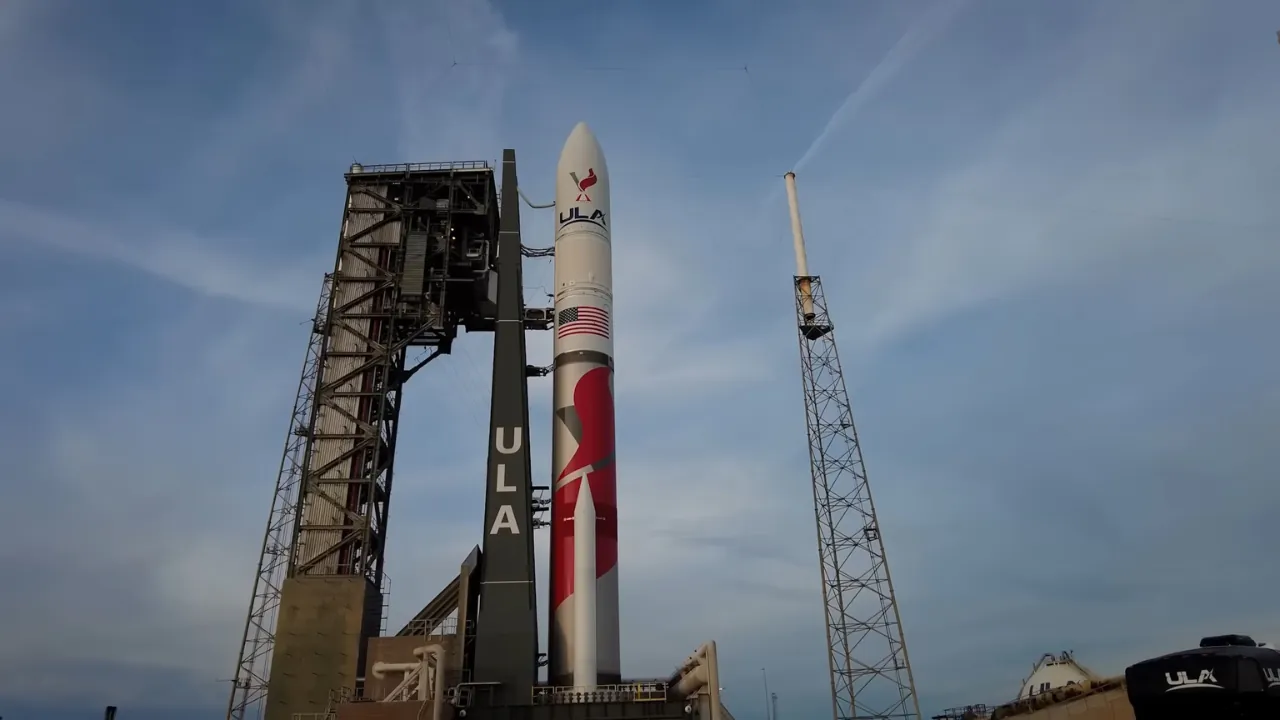
The planned mission was linked to Amazon Leo, the satellite broadband project previously known as Project Kuiper. Amazon has said that initial New Glenn missions are expected to carry 48 Leo satellites inside the rocket’s wide fairing.
Amazon has contracts with several launch providers, including United Launch Alliance, Arianespace and SpaceX, so the Leo program does not depend on New Glenn alone.
Still, New Glenn offers valuable payload capacity. Any extended delay can affect launch planning, satellite deployment and the pace at which Amazon builds out its low Earth orbit network.
That is why the explosion matters beyond Blue Origin. It touches a satellite program that is already working under pressure to deploy large numbers of spacecraft and compete in the broadband market.
New Glenn also has a role in Blue Origin’s lunar plans. Blue Origin says the Blue Moon Mark 1 lander is designed to use New Glenn’s 7-meter fairing and deliver up to three metric tons of cargo to the lunar surface.
NASA has not announced a revised schedule because of the explosion. Public comments from agency leadership point to an investigation and a review of possible near-term mission effects.
That careful language is important. There is no confirmed change yet to any NASA mission timeline because of this incident. The concern is more practical: lunar and commercial programs depend on repeated, reliable heavy-lift launches.
New Glenn will now have to clear technical, regulatory and schedule questions before customers can treat it as available again.
Public Safety and Debris Warnings
@6abcactionnews A Blue Origin rocket exploded on the launch tower in a fiery blast during a test of its engines on Thursday night, the company said. The static fire test at the Cape Canaveral Space Force station in Florida came in preparation for the company’s upcoming launch of its New Glenn rocket, which aimed to send 48 Amazon satellites into low-earth orbit. In a statement on social media, Blue Origin said the rocket “experienced an anomaly during today’s hotfire test.” In a separate post, Blue Origin owner Jeff Bezos, said: “All personnel are accounted for and safe. It’s too early to know the root cause but we’re already working to find it. Very rough day, but we’ll rebuild whatever needs rebuilding and get back to flying. It’s worth it.” #blueorgin #explosion #rocket #fyp ♬ original sound – 6abc Action News
Local officials said there was no immediate public safety threat from fumes after the explosion. Emergency crews responded to the incident, and residents along Florida’s Space Coast reported feeling the blast.
Officials also warned that debris from the anomaly could wash ashore and should not be touched. That warning is standard after major launch and test incidents. Rocket debris can include sharp fragments, composite material, propellant residue or other hazardous material.
The public instruction is simple: stay away from any suspected debris, record the location from a safe distance and contact local authorities.
What We Know so Far
The investigation will now focus on where the failure began and how much damage was done to the pad. Blue Origin will need to determine whether the problem came from the vehicle, engines, ground systems or the connection between them. The FAA will also play a central role because commercial launch operations require regulatory clearance. If the agency treats the event as a mishap with safety or licensing implications, Blue Origin may need to complete corrective actions before New Glenn can move toward another launch attempt. For now, the facts are limited but serious. A major rocket test ended in an explosion. Personnel were safe. The payload was reportedly not on board. The cause remains unknown. The schedule impact is still being measured. Blue Origin built New Glenn to become a major heavy-lift competitor. After Thursday night, the company has to show not only that it can repair the damage, but that it understands why the pad erupted before the rocket ever left the ground.