
Federal officers visiting Americans over online posts and emails about Immigration and Customs Enforcement (ICE) has moved a familiar immigration dispute into a more basic question. How much room do people still have to criticize the government before a knock on the door turns political speech into a law enforcement matter?
The question grew sharper after two New Yorkers said they were confronted or warned by federal officers after criticizing ICE. The cases are not identical. One involved an email to a senior ICE official. Another involved a social media post about an ICE officer. Yet together, they have opened a larger fight over free speech, doxxing, threats, privacy, and the power of federal agencies to track critics.
Table of Contents
ToggleTwo New York Cases Turned a Local Warning Into a National Speech Issue
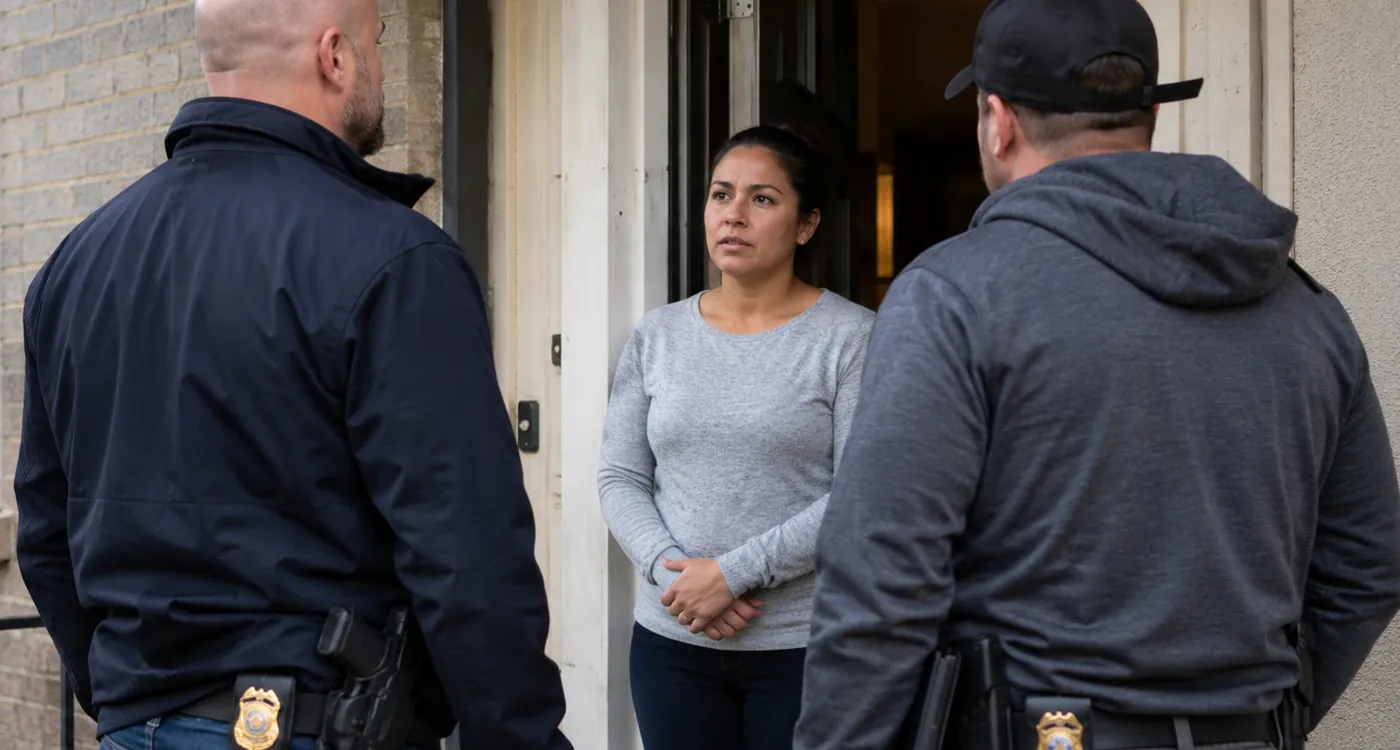
David Streever, a Rochester resident, said federal officers came to his home in June after an email he sent months earlier to Todd Lyons, then acting director of ICE. Streever was not home at the time.
According to Fox News, officers gave his wife a warning notice saying the email had been treated as a threat.
Streever had written the email after the fatal shooting of Renee Good in Minneapolis by an ICE officer. His lawyer, Adam Steinbaugh of the Foundation for Individual Rights and Expression, argued that the message was political speech, not a true threat.
The Streever case came days after Paigelynne Gonyea, a Syracuse poll worker, said two federal officers approached her at a polling place during New York primary voting. The officers questioned her over a social media post criticizing the ICE officer involved in the Minneapolis shooting. The Department of Homeland Security said the matter involved alleged doxxing because it said an officer address had been posted.
That difference matters. Posting a law enforcement officers home address can create real safety risks. At the same time, criticizing an officer, calling for accountability, or sending a harsh message to a public official has long been part of protected political speech in the United States.
The Line Between Threat Investigation and Intimidation
Federal agencies have a duty to investigate credible threats against officers. No serious debate exists over that point. Officers and their families should not be exposed to targeted violence or private address campaigns.
The harder question is what counts as a credible threat. If the government treats angry political speech as suspicious by default, the result can reach far outside one email or one post. People may begin to avoid criticism not because a court ruled against them, but because they do not want agents at their home, hotel, workplace, or polling place.
That is why civil liberties groups reacted so strongly. The issue is not only whether one warning letter leads to prosecution. The issue is the chilling effect. A warning from federal officers can change behavior even when no charge is filed.
Ice Criticism Is Becoming Part of A Wider Surveillance Debate
The new incidents arrived after months of scrutiny over how DHS and ICE monitor online speech related to immigration enforcement.
NPR reported on federal tracking of an ICE critic, adding to concern that immigration enforcement now reaches into online political activity, anonymous accounts, and people who share information about agency operations.
Free speech groups have also challenged DHS efforts to obtain identifying information about critics from technology platforms. In February 2026, the ACLU said it moved to block a DHS administrative subpoena seeking Google subscriber records tied to a man who criticized DHS conduct online.
The government position is that officer safety is not optional. The civil liberties response is that officer safety cannot become a broad excuse to identify, visit, or warn people whose speech is angry but lawful.
First Amendment Law Protects Harsh Criticism, But Not True Threats
The First Amendment does not protect every statement. True threats, direct incitement, harassment, and unlawful disclosure of private information can fall outside protected speech. The Supreme Court has said a true threat involves a serious expression that a speaker means to commit unlawful violence.
Political speech gets stronger protection. People can condemn officials. They can demand firings. They can call for investigations. They can use sharp language. Democracy depends on that space, especially when citizens are criticizing agencies with police power.
The legal and public question in the ICE cases is therefore narrow but important. Did officers respond to specific, credible safety threats, or did the government use law enforcement pressure against people who were criticizing its conduct?
A Polling Place Visit Raised an Extra Concern
The Syracuse incident had another layer because it happened at a voting location. Election officials said voting was not disrupted. That detail does not erase the concern. Polling places carry special meaning in American civic life. Federal officers entering that space to confront a poll worker over political speech invites a separate fear about intimidation, even when no voters were present.
Government agencies can say an incident was unrelated to the election process. Voters and poll workers may still read it differently. Public trust depends not only on legal authority, but also on restraint.
The Immigration Debate Is Already Tense Enough Without Speech Crackdowns
Immigration enforcement sits at the center of national politics. We shared more about that in our pieces about U.S. border crossing data and the debate over birthright citizenship in the United States. Those issues divide voters, states, courts, and federal agencies.
That makes speech protection more important, not less. The stronger the political dispute, the more carefully the government must separate real threats from public anger. Federal power should be used against crime, not against embarrassment, criticism, or dissent.
What the Public Still Needs to Know?
Several basic questions remain unanswered.
- What exact standard did ICE or DHS use before sending officers to Streevers home?
- Who approved the warning notices?
- How often has DHS contacted people over criticism of ICE?
- What records are kept about critics?
- How does the agency separate protected speech from threats?
- Are social media posts about ICE handled differently from criticism of other federal agencies?
Clear answers would help both sides. Officers need protection from real threats. Citizens need protection from political surveillance. A public standard would make it harder for dangerous conduct to hide behind free speech, and harder for government pressure to hide behind officer safety.
Final Thoughts
The danger in a case like this is not only one warning letter. The danger is a quiet change in public behavior. A citizen sees what happened to another person and decides not to email an official. A local organizer stops recording an encounter. A voter deletes a post. A poll worker keeps quiet.
Free speech rarely disappears all at once. It weakens when people decide that speaking is not worth the risk.
ICE and DHS can investigate real threats. They can protect officers from doxxing. They can enforce federal law. Yet federal agencies must also accept a basic rule of democratic government. People are allowed to criticize them, sometimes harshly, and the government should not make ordinary Americans feel watched for doing it.
That is the story now. Not only immigration, ICE, or which side you take. The bigger issue is whether public criticism of powerful agencies still feels safe enough for ordinary people to use.