
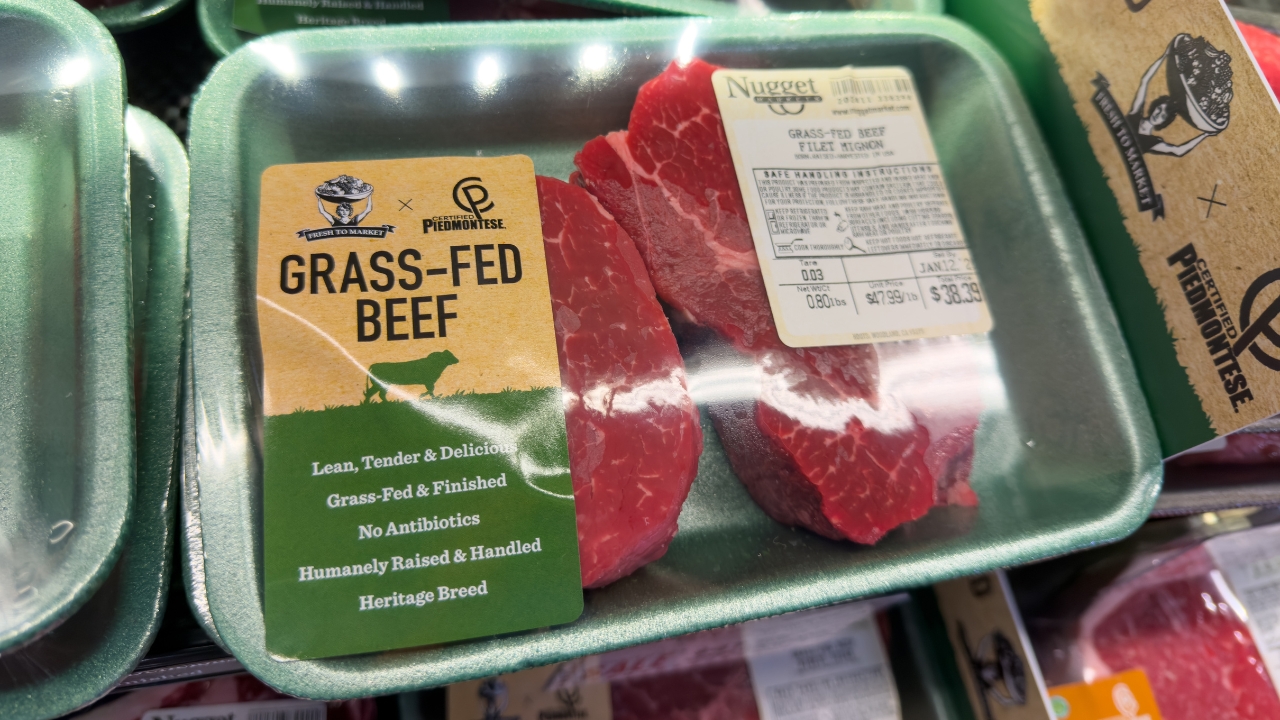
Growing interest in grass-fed beef has made many shoppers look more closely at how cattle’s diet affects meat quality.
Many consumers now see grass-fed beef as a nutrient-dense alternative to conventional grain-fed beef, especially because cattle raised on pasture often produce it with a better fat profile and higher levels of certain beneficial compounds.
Evidence points to several important advantages tied to grass-based cattle diets. Recent comparisons show that grass-fed beef usually has a stronger nutritional profile than grain-fed beef, especially in omega-3 content and fat balance. One of the clearest differences appears in omega-3 fatty acids, which are consistently higher in beef produced by cattle finished on grass and forage. Several data points show how large that omega-3 gap in beef can be: Another finding placed grass-fed beef at more than 40 mg of long-chain omega-3 per 100 g of meat. That level qualifies it as a source of omega-3, giving grass-fed beef a meaningful advantage over many conventional beef options. Fat balance also shows a major difference. Reviewed studies reported an average omega-6 to omega-3 ratio of 1.53 for grass-fed compared with 7.65 for grain-fed. Lower ratios are generally considered more favorable because many modern diets already contain high levels of omega-6 fats. Shoppers who want the highest omega-3 content and best fat profile should look for clear label claims. A simple “grass-fed” label may not always mean the animal was finished on grass. Some cattle may eat grass earlier in life but receive grain later during finishing. That finishing stage can strongly affect the final fatty acid profile. Consumers looking for maximum omega-3 content should prioritize 100% grass-fed and grass-finished. Pasture-raised claims can also be helpful, especially when backed by credible certification labels. Beef produced by animals finished on 100% grass or pasture-based diets is more likely to deliver the best lipid profile and antioxidant content. Similar label awareness can also help when choosing other animal-based protein products. For people comparing clean protein options outside whole-food beef, naked nutrition whey protein includes grass-fed whey and grass-fed whey isolate options made for everyday use. For shoppers focused on nutrition, finishing practices are just as important as the broader grass-fed claim. Cattle diet directly affects the nutrients that end up in beef. Grass and forage naturally contain alpha-linolenic acid, also known as ALA. ALA is a plant-based omega-3 precursor that contributes to the higher omega-3 content often seen in grass-fed beef. Fresh grass supplies cattle with more omega-3 precursors. Grass-fed cattle can convert some ALA into longer-chain omega-3 fatty acids such as EPA and DHA through natural metabolic processes. Grain-fed cattle receive fewer omega-3 precursors, which often leads to a less favorable fatty acid profile. Finishing practices matter for that reason. Beef labeled grass-fed may not reach the same nutritional quality as beef produced by cattle finished entirely on pasture. Higher omega-3 content is one of the main benefits. Grass-fed beef is repeatedly reported to contain 2 to 4 times more omega-3 fatty acids than grain-fed beef. Although beef is not usually the highest omega-3 food in the diet, grass-fed beef can contribute more omega-3s than conventional beef. A better omega-6 to omega-3 ratio is another major advantage. Grass-fed beef is often reported at around 2:1 or 3:1, while grain-fed beef can be much higher. The reviewed data gives a clearer look at that difference: Grass-fed beef also tends to contain more CLA. Reports state that grass-fed beef contains 3 to 5 times more CLA than grain-fed beef. Research also shows grass-fed beef is higher in total CLA and trans-vaccenic acid, both of which are fatty acids linked to the way cattle process forage-based diets. Antioxidants and vitamin precursors also tend to be higher in pasture-fed beef. Beta-carotene and vitamin E data show some of the clearest nutrient differences: Grass-fed beef is also typically leaner overall. It often contains less total fat than grain-fed, and grass-finished tends to contain more cholesterol-neutral stearic acid, along with lower levels of cholesterol-elevating myristic and palmitic acids. Mineral content may also be better in some grass-fed, especially when animals graze on healthy pasture with strong soil quality and varied forage. Nutrient density can change based on pasture quality, forage variety, soil health, season, cattle breed, and finishing method. Not all grass-fed beef is nutritionally identical. Grass-fed cattle raised on high-quality pasture and finished fully on grass are more likely to produce meat with the strongest nutrient profile. Grass-fed beef generally offers a better nutrient profile than grain-fed beef. Evidence supports several key advantages, including more omega-3 fatty acids, a lower omega-6 to omega-3 ratio, more CLA and trans-vaccenic acid, higher vitamin A precursors, higher vitamin E, greater antioxidant activity, and often lower total fat. For people who monitor their daily adult protein intake, grass-fed beef can also provide a nutrient-dense protein source with a more favorable fat profile. Nutritional quality still depends heavily on how the animal was raised and finished. Pasture quality, forage variety, soil health, season, breed, and finishing system can all affect the final beef profile.
What the Latest Research Shows
What Consumers Should Look For
Why Grass-Fed Beef Has a Better Fat Profile

Key Nutritional Benefits of Grass-Fed Beef
Grass-fed beef offers several important nutritional advantages when compared with grain-fed beef.
FAQs
Summary