
A patch of unusually cold water in the North Atlantic is drawing new attention because scientists say it may be linked to a weakening system of ocean currents that helps control weather and climate in parts of Europe, North America and the tropics.
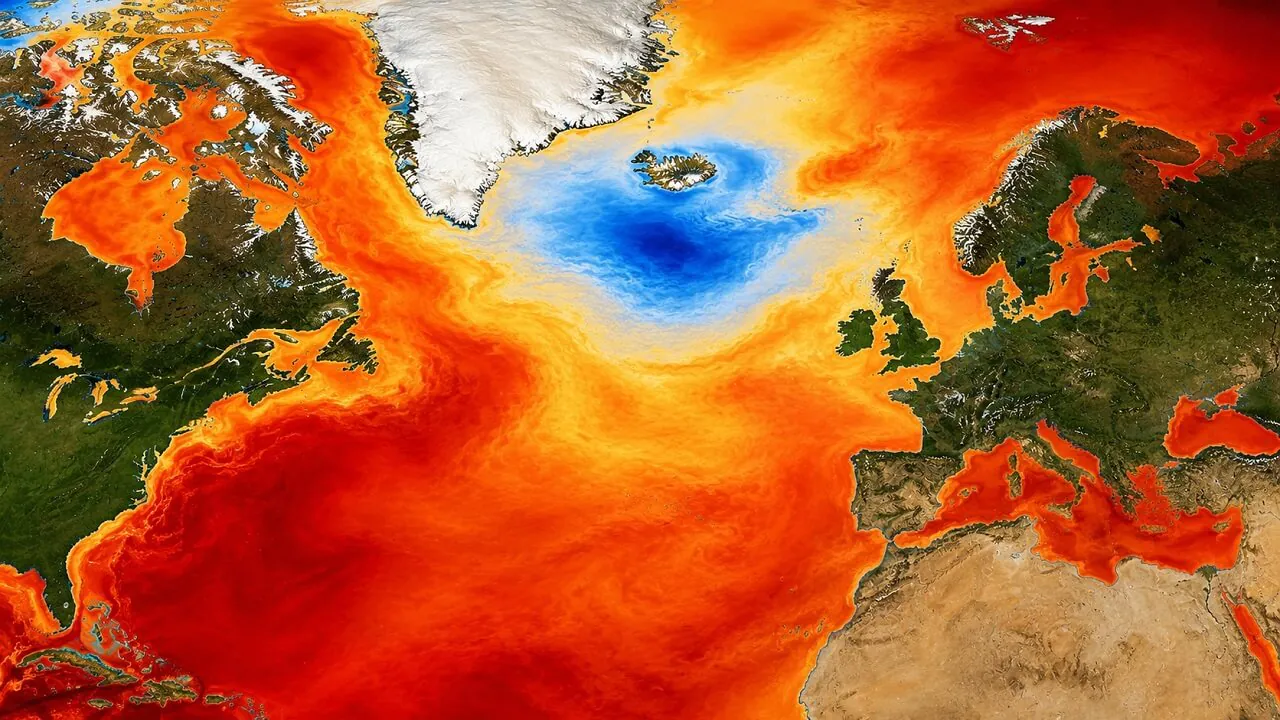
The area is known as the North Atlantic cold blob, or the North Atlantic warming hole. It sits south of Greenland and Iceland, in a part of the ocean where warm surface water normally gives off heat before colder, denser water sinks and moves southward through the deep Atlantic.
Most of the ocean has warmed during the past century. The cold blob has moved in the opposite direction. The Washington Post shared that an area of below-average sea surface temperatures has persisted in the North Atlantic east of Newfoundland for about a year, in a region scientists already watch for signs of change in the Atlantic Meridional Overturning Circulation.
The Atlantic Meridional Overturning Circulation, known as AMOC, is the larger current system behind the concern. It carries warm water north near the surface and moves colder water south at depth. The AMOC represents a system that circulates water through the Atlantic, moving warm water north and cold water south.
| Term | Meaning |
|---|---|
| Cold blob | A cold patch in the North Atlantic south of Greenland and Iceland |
| Warming hole | Another name for the same cool region because it stands out against wider ocean warming |
| AMOC | The Atlantic current system that moves warm water north and cold water south |
| Main concern | The cold blob may show that less heat is reaching the North Atlantic |
Where is The Cold Blob Located?
The cold blob is centered in the subpolar North Atlantic, south of Greenland and Iceland. That region sits near the end of the northward heat transport path, where the AMOC delivers warm Atlantic water into higher latitudes.
Because the area normally receives heat from the ocean circulation system, persistent cooling there attracts scientific attention. A one-season cool patch can come from short-term weather. A multiyear or multidecade cold pattern in the same region points to a deeper ocean process.
The region has appeared for years on global temperature maps as one of the few ocean zones with long-term cooling. NASA GISS describes the same feature as the North Atlantic warming hole, a region of relative cooling in the subpolar North Atlantic that has become important for studying atmosphere and ocean responses.
Why Scientists Are Linking It To A Weaker AMOC
The new attention comes from research arguing that the cold blob is caused mainly by reduced ocean heat transport, rather than the ocean simply losing extra heat to the air.
A Geophysical Research Letters paper “Warming Hole” found that the cold region represents a decline in ocean heat content through depth. The paper also says the cooling area does not match a region of increased surface heat loss.
If the cold blob is losing heat through the full water column, the explanation points toward a change in ocean circulation, not only weather above the ocean.
What AMOC Does For The Climate?
The AMOC acts as one of the main heat-moving systems in the Atlantic. Warm, salty water moves north near the surface. In the high-latitude North Atlantic, that water cools, becomes denser and sinks. Deep water then moves south.
The Met Office explains that the system carries warm water from the tropics into the North Atlantic. The AMOC includes the Gulf Stream and the subpolar gyre, though the Gulf Stream and AMOC are not identical.
| If AMOC Weakens | Possible Effect |
|---|---|
| Less heat reaches the subpolar North Atlantic | The cold blob can persist or grow |
| Ocean circulation slows | Weather patterns can shift around the Atlantic basin |
| Water piles up along some coastlines | Sea level can rise faster along parts of the U.S. East Coast |
| Heat balance changes between hemispheres | Rain belts and regional temperature patterns can shift |
| North Atlantic ecosystems change | Fisheries and marine food chains can face new stress |
What Would Happen If The Cold Blob Persists?
A persistent cold blob would not mean the planet is cooling. It would mean one part of the North Atlantic is resisting the wider warming trend because the ocean is moving heat differently.
The most direct effects would fall near Greenland, Iceland and northern Europe. A cooler ocean surface can change air temperature, storm tracks and the position of pressure systems. Marine ecosystems can also shift as temperature and salinity patterns change.
Does The Cold Blob Mean AMOC Collapse Is Happening Now?

No. The cold blob is a warning sign, not proof of an active collapse.
Scientists are still debating how fast the AMOC is weakening, how much natural variability is involved and how close the system is to any tipping point. Some studies find signs of weakening. Other model work suggests a full collapse this century is less likely than the most alarming scenarios.
That debate is why the cold blob has become so important. It is an observable feature in the ocean, not only a model projection. It gives scientists another way to compare theory, measurements and long-term climate patterns.
As we already covered in our report on Arctic Ocean chemical changes, warming can alter ocean systems below the surface, not just melt ice at the top. The cold blob fits that larger problem because the signal is tied to ocean heat, depth, salinity and circulation.
AMOC depends on density differences in the Atlantic. Warm, salty water moves north. When it cools, it becomes denser and sinks. That sinking helps drive the return flow southward.
Fresh water from Greenland ice melt can interfere with that process because fresher water is less dense than salty water. If too much fresh water enters the North Atlantic, the surface water has a harder time sinking. That can weaken the overturning motion.
The cold blob is therefore linked to two physical changes at once: less heat transport into the region and changing salinity in the North Atlantic. Scientists do not treat every cool anomaly as a disaster signal, but a persistent cooling patch in that location carries more meaning than a temporary cold spell.
Does it Affect the US?
The cold blob is far from most U.S. cities, but AMOC changes can still affect the United States.
NOAA says a continued AMOC slowdown could contribute to sea level rise along the U.S. East Coast. Changes in Atlantic temperature patterns can also influence storms, rainfall zones and marine ecosystems.
U.S. coastal planning already depends on ocean heat, sea level and storm behavior. A weaker AMOC would add another source of risk for Atlantic coastal states, especially places already dealing with flooding, insurance pressure and hurricane exposure.
We previously looked at how climate pressure is changing U.S. movement patterns in our climate migration analysis. AMOC is not the same issue, but it belongs in the same category of slow-moving climate systems that can eventually change where people build, insure, farm and live.
What Scientists Are Watching Next
Scientists need sustained ocean measurements to separate short-term swings from a long-term AMOC decline. The cold blob is visible in temperature data, but AMOC itself has to be tracked with ocean instruments, ships, floats, satellites and reanalysis systems.
NOAA Atlantic Oceanographic and Meteorological Laboratory says a complete understanding of meridional overturning circulation requires an observational network that spans the Atlantic basin. The NOAA meridional overturning circulation program tracks heat, salt and transport through the ocean system.
Researchers will be looking at several indicators:
- Whether the cold blob remains in place for multiple years
- How much heat exists below the surface, not only at the surface
- Whether salinity keeps changing south of Greenland and Iceland
- How direct AMOC measurements compare with model projections
- Whether North Atlantic storm tracks and pressure systems shift with the cold area
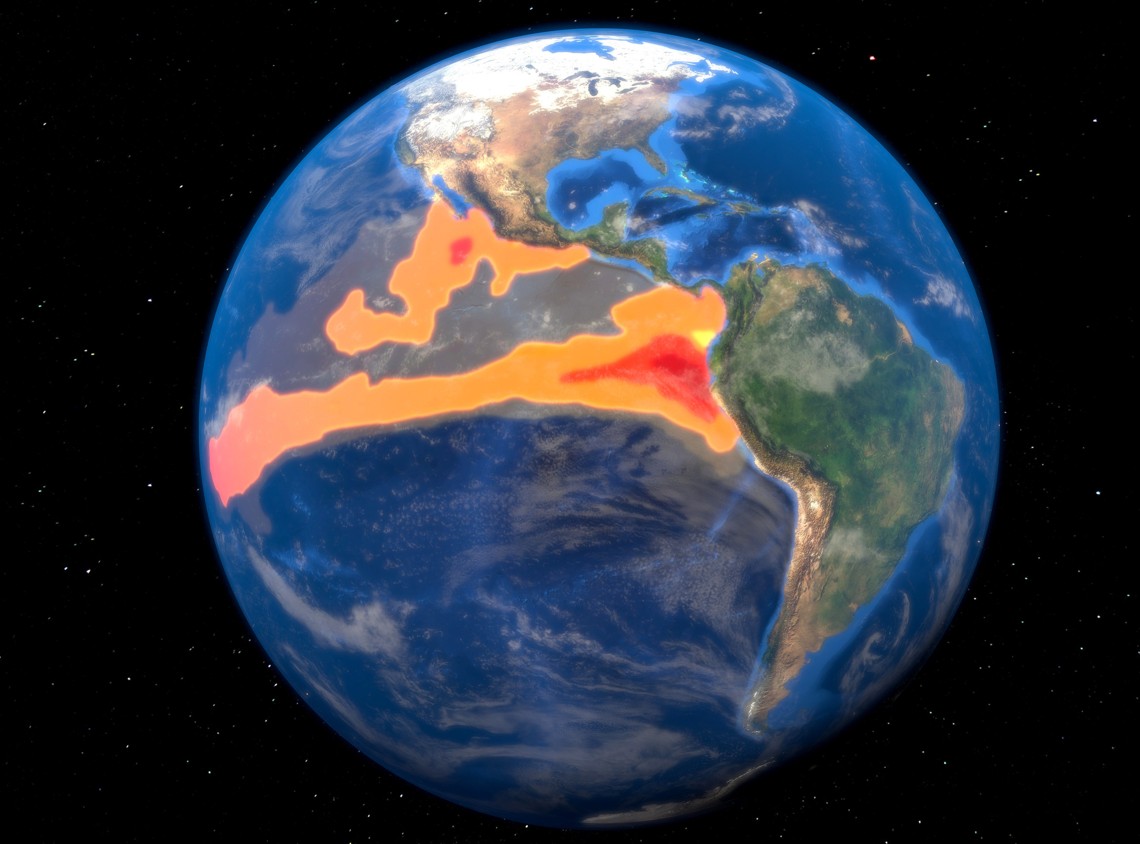
Actualmente tenemos dos anomalías que llaman la atención a nivel mundial en la temperatura superficial del mar. Una es el incipiente evento de ElNiño , el cual se prevé que sea fuerte a muy fuerte, en el que el Pacífico tropical se calienta bastante por encima de su media. Las… https://t.co/OvSHSGijXr pic.twitter.com/SGS1mm9IL8
— ☈ Meteosureste (@meteo_sureste) June 4, 2026
Bottom Line
The cold blob is a persistent region of cooler water in the North Atlantic south of Greenland and Iceland. Scientists are watching it because it may show that the AMOC is delivering less heat into the subpolar Atlantic.
The cold patch does not prove that the AMOC is collapsing now. It does show why ocean circulation is one of the most important climate systems to monitor. In a warming world, a region that keeps getting colder can be a signal that the planet is redistributing heat in a different way.