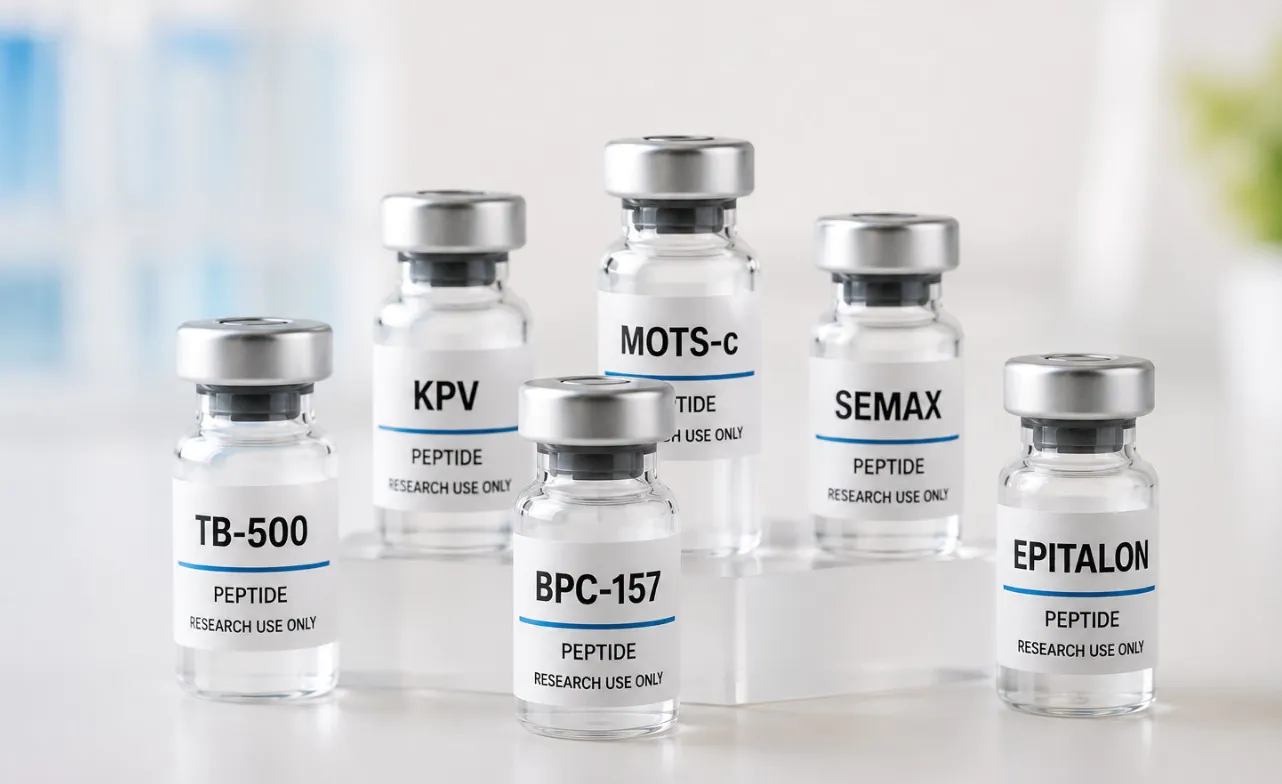
Six peptides promoted for injury recovery, inflammation, weight loss, sleep and other health problems have moved closer to legal use through U.S. compounding pharmacies. They have not received FDA approval, and people cannot assume that the recent vote makes online peptide products legal or safe.
An FDA advisory committee voted in favor of BPC-157, KPV, TB-500, MOTS-c, Epitalon and Semax during a two-day meeting on July 23 and 24. The panel rejected a seventh peptide, emideltide, also known as DSIP.
The decision drew attention because several of the substances have become popular through wellness clinics, bodybuilding forums and social media.
However, the committee vote reported after the FDA meeting was only a recommendation. The FDA still has to decide what happens next.
What Did the FDA Committee Actually Approve?
The committee recommended that six peptides be considered for inclusion on the federal 503A Bulks List. That list identifies certain ingredients that licensed pharmacists and physicians may use to prepare customized medicines for individual patients.
| Peptide | Medical use reviewed | Committee decision |
|---|---|---|
| BPC-157 | Ulcerative colitis | Recommended |
| KPV | Wound healing and inflammatory conditions | Recommended |
| TB-500 | Wound healing | Recommended |
| MOTS-c | Obesity and osteoporosis | Recommended |
| Epitalon | Insomnia | Recommended |
| Semax | Several neurological conditions | Recommended |
| Emideltide or DSIP | Sleep disorders and opioid withdrawal | Rejected |
The official meeting agenda shows that the panel examined specific proposed medical uses. It did not confirm every claim being made online about faster muscle growth, sports recovery, anti-aging or improved energy.
Are the Six Peptides Legal Now?
The committee advises the FDA, but it does not write the final rule.
The agency could accept the recommendation, reject it or request more information. No deadline has been announced for a final decision.
Several of the peptides are already sold online as research chemicals. Sellers often place “not for human consumption” on the package. That wording does not give a company permission to market an unapproved product as a treatment for injuries, obesity, insomnia or disease.
The main legal issue is not simply owning a vial. Federal rules govern who can manufacture, prescribe, compound and advertise substances intended for human treatment.
What Would Change if the FDA Accepts the Vote?
If the six peptides are added to the 503A list, a licensed compounding pharmacy could prepare them for an identified patient who has a valid prescription and a genuine medical need.
Patients would not be able to walk into a supplement store and buy unrestricted peptide injections. Pharmacies would also not receive permission to mass-produce the products for general sale.
Federal rules for pharmacy compounding place limits on the ingredients, prescribers and circumstances involved. State pharmacy and medical boards may add further requirements.
A legal compounding route would give some patients access through a doctor and licensed pharmacy. It would not create the same approval that applies to a standard prescription drug sold nationwide.
Compounded Peptides Would Still Not Be FDA-Approved
FDA-approved drugs normally go through clinical trials that examine dosage, effectiveness, side effects and manufacturing quality. Compounded products do not pass through that same approval process.
The FDA states clearly that compounded medicines are not reviewed for safety or effectiveness before sale. They can be useful when an approved drug cannot meet a particular patient’s needs, but they also carry additional risks.
The same distinction has caused confusion around compounded versions of popular weight-loss medicines. A pharmacy may be allowed to prepare a product under limited circumstances without the product becoming an FDA-approved treatment.
FDA Scientists Opposed All Seven Peptides
The committee’s recommendation went against the FDA staff position. Agency scientists argued that the available evidence did not support adding any of the seven substances to the compounding list.
The FDA raised concerns about limited human trials, inconsistent chemical information, possible immune reactions and difficulty confirming the purity of finished products. Its current list of substances with possible safety risks includes peptides that the agency believes may expose patients to serious harm.
Supporters told the committee that doctors already use some of the substances and that controlled pharmacy access would be safer than leaving patients to buy unknown products online. Committee members accepted that argument for six peptides, although several votes were close.
Why BPC-157 and TB-500 Remain Controversial?
BPC-157 and TB-500 are widely promoted for healing muscles, tendons and other injuries. Most public enthusiasm comes from animal studies, laboratory findings and personal reports rather than large controlled trials involving people.
A recommendation to study or compound BPC-157 for ulcerative colitis does not prove that it repairs a torn tendon. The proposed use reviewed by the committee was much narrower than the claims commonly found on clinic websites.
MOTS-c is often promoted for metabolism and weight loss, but it should not be placed in the same category as approved weight-loss injections with established clinical evidence.
What Patients Should Know?
The vote is an important step for the peptide industry, but it is not permission to begin injecting products bought from an anonymous website.
People considering a peptide should ask who prescribed it, which licensed pharmacy prepared it and what human evidence supports the proposed treatment. They should also ask about possible side effects, contamination risks and interactions with other medicines.
Products promoted as supplements may still fall under drug laws when sellers claim they can treat disease or change how the body functions.
Our explanation of FDA rules for supplements and health claims shows why a product’s advertising can be as important as the label on its bottle.
Last Words
The FDA will now review the committee’s recommendations and decide if any of the six peptides should be formally added to the 503A Bulks List.
Until that happens, the legal position has not changed. BPC-157, KPV, TB-500, MOTS-c, Epitalon and Semax remain unapproved drugs. They may be closer to restricted pharmacy compounding, but they have not become ordinary prescriptions, supplements or over-the-counter treatments.