
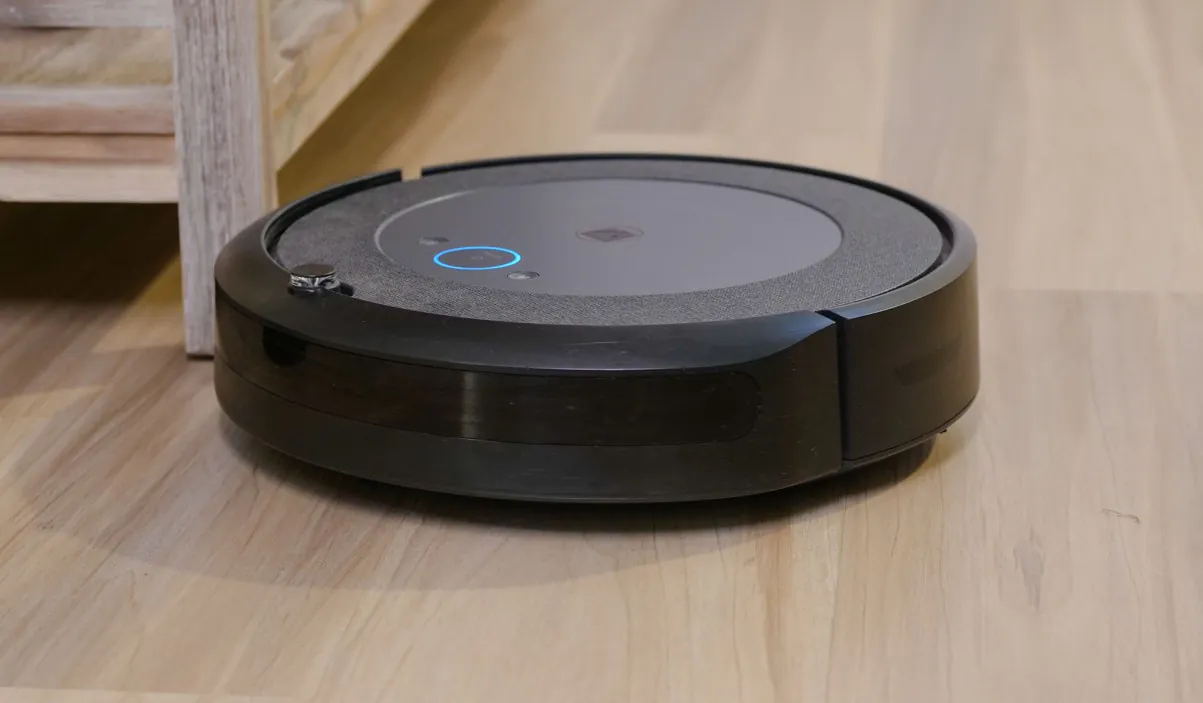
The U.S. government just blocked the next wave of foreign-made Roombas and other robot vacuums from entering the American market.
The restriction is not limited to humanoid robots or four-legged machines designed for factories and military work. It reaches ordinary devices that map living rooms, cut lawns, carry food along sidewalks and move packages through warehouses.
No one is coming to confiscate the Roomba already moving around your home. Previously approved models can remain in stores, and owners can continue using devices they already bought.
New foreign-made models face a different reality. Many will no longer qualify for the federal authorization needed to be imported and sold in the United States.
The Robot Ban Includes Vacuum Cleaners
The Federal Communications Commission announced on July 28 that it had added foreign-produced “advanced robotic devices” to its Covered List.
Products on the list are considered an unacceptable risk to U.S. national security or the safety of Americans. New covered equipment generally cannot receive FCC authorization, which connected electronic devices usually need before entering the American market.
Initial coverage centered on humanoid robots. Yet the government’s definition is broad enough to include far less dramatic machines.
The FCC confirmed to The Verge that robot vacuum cleaners are covered.
A robot does not need arms, legs or a human-shaped body to qualify. It can be covered when it:
- Uses software to control movement or collect information
- Moves across the ground or avoids obstacles
- Contains sensors that perceive its surroundings
- Has wired or wireless communication capabilities
- Weighs more than 4.4 pounds, including its dock or ground station
Most modern robot vacuums easily meet those conditions. They move independently, map rooms, detect objects, connect to home Wi-Fi and send data through mobile applications.
Your Current Roomba Is Not Going Anywhere
Americans do not have to stop using their current robot vacuums. The government is not ordering retailers to remove every Roomba, Roborock or Ecovacs device from store shelves.
Models that already received FCC approval may continue to be imported and sold. Manufacturers can also provide certain software, security and compatibility updates for existing equipment.
The restriction takes aim at new products that still need federal authorization. A company preparing its next robot vacuum may now be unable to bring that model to the United States when the device is produced abroad.
Small changes to an existing model may not always require a completely new authorization. A major redesign, new wireless system or substantially different device is more likely to trigger another federal review.
The result may not be visible overnight. Current inventories will remain available, and previously approved products will not disappear immediately. The real effect will emerge as companies attempt to introduce their next generation of machines.
Roomba Is Caught in a Much Larger Crackdown
The FCC action is not directed only at iRobot or the Roomba name. It applies to foreign-produced robotic devices meeting the government’s technical definition, regardless of brand.
Chinese manufacturers such as Roborock, Ecovacs, Xiaomi and Narwal are likely to face some of the greatest disruption because they hold a major position in the global robot vacuum industry.
Roomba is no longer insulated from the foreign-production question. Its original American manufacturer, iRobot, entered bankruptcy proceedings in December 2025 and was acquired by China-based contract manufacturer Picea Robotics.
The change means one of America’s best-known home robot brands may now have to prove that future products meet domestic manufacturing requirements or qualify for an exemption.
Robot Lawnmowers and Delivery Bots Are Included Too
Vacuum cleaners are only one part of the rule.
The same definition can cover autonomous lawnmowers that map yards and return to charging stations. Sidewalk delivery robots carrying restaurant meals or groceries may also qualify.
Mobile warehouse robots can be affected when they use sensors, software and network connections to transport inventory.
The restriction could therefore reach machines operating in homes, residential neighborhoods, university campuses, distribution centers and retail facilities.
Atlanta recently expanded the operating rules for delivery robots using city sidewalks. New foreign-produced machines used by those services could now face an additional federal barrier before they reach American streets.
Several types of equipment are treated separately or excluded, including drones, road vehicles and certain medical devices. A self-driving car is not automatically covered simply because it uses similar sensors and autonomous software.
The Government Says Connected Robots Create Security Risks
The government’s concern is not that a robot vacuum will suddenly attack its owner.
Connected robots can collect detailed information about the places where they operate. Cameras, microphones, lidar sensors and mapping software may reveal room layouts, objects, human activity and the location of other connected equipment.
The national security determination behind the decision argues that foreign-produced robots could provide access to sensitive data, create surveillance risks or allow outside actors to interfere with important systems.
Similar questions already surround robotaxis. A recent incident involving live video review inside a driverless vehicle raised concerns about privacy and human monitoring inside autonomous vehicles.
Robot vacuums operate on a smaller scale, but the underlying issue is related. A connected machine moving through a private space can observe far more than a traditional vacuum cleaner.
Companies Can Avoid the Ban, but It Will Not Be Easy
The rule provides a path for conditional approval.
A manufacturer may seek an exemption by submitting information about where its products are designed, assembled and manufactured. The government can then decide whether the device presents an acceptable security risk.
Domestic production will become increasingly important. Robot companies that want reliable access to the American market may have to move assembly, sourcing or other parts of their operations to the United States.
That transition could raise costs and delay new product launches. It may also reduce the number of models available to American consumers, particularly in lower price ranges dominated by overseas manufacturers.
The FCC did not ban every robot currently operating in the country. It did something more gradual and potentially more consequential.
It closed the door to many of the foreign-made robots that companies planned to sell next.