
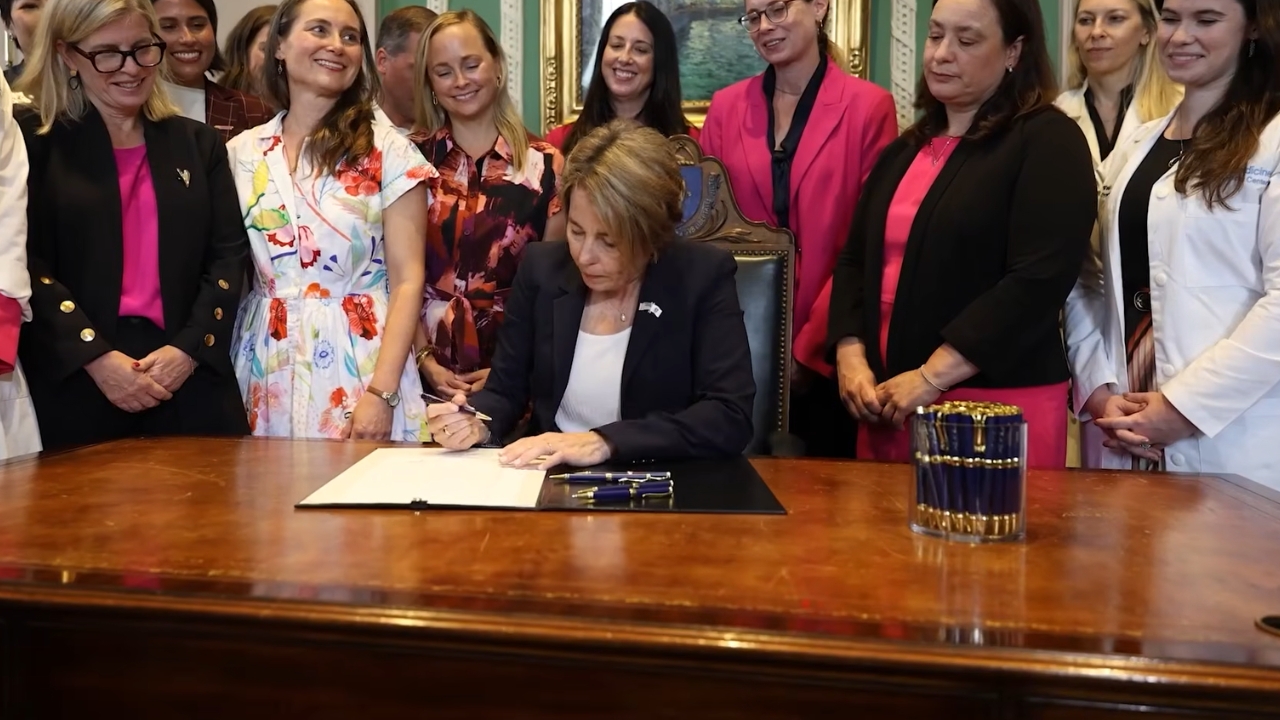
Massachusetts has ignited a new abortion fight after Gov. Maura Healey signed a law expanding physician discretion over abortions later in pregnancy, now known as the Massachusetts Abortion Bill.
Supporters call it a safeguard for patients facing severe medical complications, while critics say it removes crucial limits and raises serious political and religious concerns.
Table of Contents
ToggleHealey Signs Massachusetts Abortion Bill Sweeping Abortion Measure
Massachusetts Governor Maura Healey Signs Law Removing Gestational Limits on Abortion
On August 10, 2026, Democratic Gov. Maura Healey signed the Prioritizing Patient Access to Care Act (H.5595) into law at a State House ceremony in Boston. Surrounded by lawmakers, physicians,… pic.twitter.com/Fiwa5T7Tin— Tevin Macharia Mukabana (@TevinMacharia) August 11, 2026
Massachusetts Gov. Maura Healey signed the Prioritizing Patient Access to Care Act, H.5595, on August 10, 2026, changing state rules for abortions later in pregnancy.
Set to take effect 90 days after signing, the law gives physicians greater authority when determining if an abortion is medically appropriate. Healey said the measure is intended to keep abortion safe, legal, and accessible, particularly for patients facing severe pregnancy complications who might otherwise need to travel out of state for care.
Law Removes Previous 24-Week Restrictions
Massachusetts previously allowed abortions after 24 weeks only in specified circumstances. Those conditions included threats to a patient’s life or health, along with certain serious or fatal fetal diagnoses.
H.5595 replaces those listed exceptions with a standard centered on a physician’s professional judgment.
Hospital committees and medical review procedures also cannot override a decision reached by a physician and patient under the new framework.
Massachusetts is now the 10th state to eliminate a specific gestational-age limit on abortion.
Supporters Cite Medical Access and Patient Protection
Healey and abortion-rights advocates say the law addresses rare cases involving serious maternal health complications, fatal fetal diagnoses, and other severe medical circumstances.
Patients confronting such diagnoses have sometimes faced long-distance travel and substantial costs when seeking later-pregnancy care. Supporters argue those decisions belong with patients, families, and doctors rather than elected officials.
Healey has also presented H.5595 as part of Massachusetts’ effort to safeguard abortion access against possible future federal restrictions.
Critics Warn of Expanded Late-Term Abortion
Opponents say removing the prior post-24-week conditions strips away an important legal safeguard and gives doctors much wider discretion.
Critics have described the law as allowing abortion “up to birth,” a phrase that has become central to the political dispute. Statutory language does not use that wording. Instead, legal authority turns on a physician’s professional judgment when determining appropriate care.
Catholic officials and anti-abortion groups argue that the change significantly expands access to abortion during later stages of pregnancy. Catholic activists, including CatholicVote, have urged Massachusetts bishops to consider possible Church disciplinary action tied to Healey’s decision to sign the law. Canon law concerning abortion has been cited in those calls, though authority over any excommunication decision rests with Church officials. Debate now reaches abortion policy, public office, religious teaching and Healey’s political identity. Supporters portray H.5595 as protection for patients and physicians confronting rare, devastating medical situations. Opponents view it as one of the nation’s broadest expansions of access to abortion later in pregnancy. Massachusetts now occupies a prominent place in the continuing post-Roe v. Wade fight over state abortion laws. Arguments surrounding the measure also capture a wider 2026 political conflict involving abortion rights, state authority, medical judgment, and religion in public life.
Catholic Backlash Intensifies Political Fight
Healey’s public identification as a “proud Catholic” has added a religious dimension to the controversy.
Massachusetts Becomes Flashpoint in Post-Roe Debate
Related Posts: