

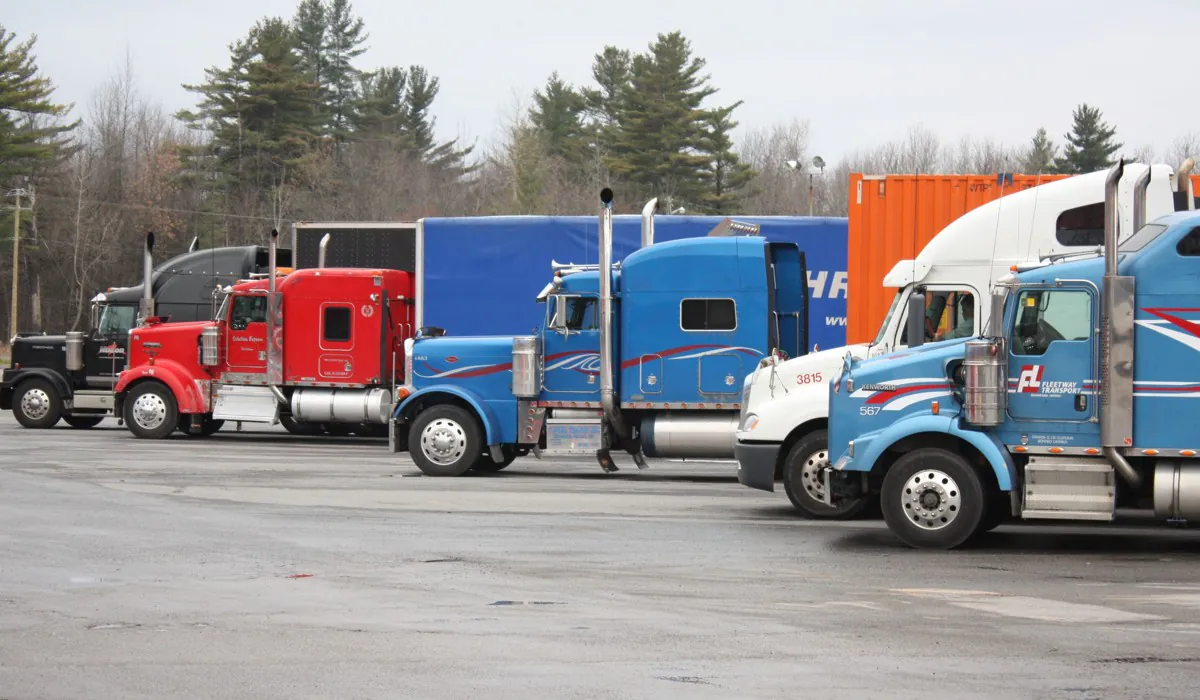
Calls for truck drivers to park their rigs on October 1 are spreading across the United States as diesel prices remain above $6 per gallon and small trucking businesses struggle with sharply higher fuel costs.
Some independent drivers say they plan to stop hauling freight Thursday, but there is an important distinction for anyone following the story. No major national trucking organization has confirmed or organized a nationwide strike. The October 1 action remains a loose shutdown call spreading among individual drivers and through social media rather than a coordinated national walkout.
Table of Contents
ToggleSome Truckers Say They Will Park Their Rigs on October 1
Discussion of an October 1 shutdown has grown during the second half of September. Drivers have shared posts calling for owner-operators to park their trucks, with diesel prices, weak freight rates, insurance costs and pressure on small carriers among the main complaints.
Truckers interviewed on September 29 described fuel costs eating into already thin margins, and at least one driver said he planned to shut down on October 1.
Overdrive also spoke with independent drivers who intend to participate. The publication found no central organizer, agreed list of demands or reliable count of participating trucks. Viral claims that 50,000 drivers will stop working have not been independently confirmed.
No Nationwide Trucking Strike Has Been Confirmed
The Owner-Operator Independent Drivers Association, one of the largest groups representing independent truckers, is not organizing the October 1 action.
OOIDA Executive Vice President Lewie Pugh told The Center Square that independent owner-operators face serious pressure from diesel costs, but a coordinated shutdown also raises legal and practical problems.
OOIDA has separately explained through Land Line that its members are independent businesses rather than employees in a traditional labor union. Coordinating independent businesses to withhold freight service can raise antitrust concerns.
For readers trying to separate the news from the social media claims, the simplest description is this. The calls to stop driving are real, and some individual truckers say they will participate. A verified nationwide shutdown involving a defined number of drivers is not.
Diesel Is Still Above $6 Per Gallon
The fuel-price pressure behind the protest calls is easier to measure.
AAA data republished by the U.S. Energy Information Administration put the national retail diesel average at about $6.44 per gallon on September 28.
The EIA weekly diesel survey uses a different methodology and reported a national average of $6.382 per gallon for the same date. That was down from $6.529 a week earlier, but still $2.628 above the level recorded one year earlier.
| EIA Diesel Price | National Average |
|---|---|
| September 14, 2026 | $6.285 per gallon |
| September 21, 2026 | $6.529 per gallon |
| September 28, 2026 | $6.382 per gallon |
Regional costs are even higher. EIA reported diesel at $6.526 in the Midwest, $6.531 in the Central Atlantic and $8.181 per gallon in California on September 28.
Small Trucking Businesses Feel the Increase First
Fuel is one of the largest operating expenses for an owner-operator. A truck using 120 gallons of diesel during a fill-up costs about $766 to fuel at $6.38 per gallon. At $3.75 per gallon, the same 120 gallons would cost $450.
That difference is more than $300 from a single fill-up.
Large fleets can have negotiated fuel discounts, dedicated freight contracts and fuel-surcharge arrangements. Independent drivers working load by load have less room to absorb sudden price increases, particularly when freight rates fail to rise at the same pace.
The pressure is already visible elsewhere in the economy. Our recent report on the August 2026 Producer Price Index showed diesel fuel prices rising 24.1% in one month, with transportation and warehousing prices also increasing.
Why Diesel Prices Have Risen So Much
EIA says the increase comes from a combination of expensive crude oil, tight global supplies of distillate fuel and unusually high refining margins.
U.S. distillate inventories have also fallen below their recent historical range. In its September energy outlook, the EIA projected inventories below 100 million barrels during September and below the five-year low through the end of 2026.
Higher diesel costs do not stop with truckers. Freight is part of the price of food, building materials, manufactured goods and products delivered to stores across the country. Energy has already become an important part of the 2026 U.S. inflation picture.
Texas Has Already Taken Emergency Action
The pressure became serious enough for Texas to change fuel rules temporarily.
On September 28, Governor Greg Abbott issued a statewide disaster proclamation allowing expanded use of dyed diesel on Texas roads and increasing allowable weights for some fuel, agricultural and timber loads.
Texas also requested federal relief from some diesel-fuel standards in an effort to increase available supply.
Last Words
The useful question Thursday is not if every truck in America stops. There is currently no evidence supporting that scenario.
Watch freight activity, truck-stop traffic and reports from individual carriers and owner-operators instead. A scattered park-out could still reduce available capacity in certain routes without becoming a national shutdown.
Diesel remains the larger story either way. Fuel prices above $6 per gallon are putting real pressure on small carriers, and the October 1 shutdown calls show how far frustration has spread even without a formal national strike.