
A scarf left unfinished in a drawer might seem an unlikely subject for brain research. Yet knitting, quilting and other hands-on crafts have been associated with a substantially lower risk of memory and thinking problems among older adults.
In research involving 2,000 people aged 70 and older, those who participated in craft activities during later life had a 42% lower risk of developing mild cognitive impairment. The finding is particularly interesting because researchers were studying ordinary activities people already enjoyed, rather than specialized memory exercises.
There is an important limit to the result. The study found a connection between crafting and cognitive health. It did not prove that knitting prevents dementia or that picking up needles will reduce anyone’s individual risk by 42%.
Still, a growing collection of research suggests that learning a stitch, planting vegetables, mastering a camera or practicing an instrument may give the brain valuable work to do. Some activities have even produced measurable improvements in memory during controlled experiments.
Researchers Found a 42% Lower Risk Among Older Adults Who Enjoyed Crafting
The Mayo Clinic followed 2,000 adults who began the research without cognitive impairment. Participants reported how they spent their free time, including reading, playing games, socializing, using computers and making crafts.
During a median follow-up of five years, 532 participants developed mild cognitive impairment. Those who engaged in crafts during later life had a 42% lower relative risk after researchers adjusted for several other influences.
The Mayo Clinic findings on cognitive impairment were published in Neurology, the medical journal of the American Academy of Neurology.
Mild cognitive impairment means someone has noticeable problems with memory or thinking that are greater than expected for their age. Unlike dementia, the condition generally does not prevent people from managing their everyday activities independently.
The researchers were interested in more than knitting. Their craft category included activities such as quilting, and the study did not identify a separate risk reduction for individual types of craftwork.
Nor should the 42% figure be mistaken for a guarantee. It describes the relative risk among groups with separate activity habits, not the percentage of people whose memory was saved by crafting.
People who remain interested in hobbies may also have advantages that influence their health. Some are more physically active, have supportive relationships or experience fewer limitations that prevent them from participating.
Even with those limitations, the findings challenge the idea that creative activities are simply ways to pass time after retirement.
Knitting Gives Your Brain More to Do Than You Might Realize
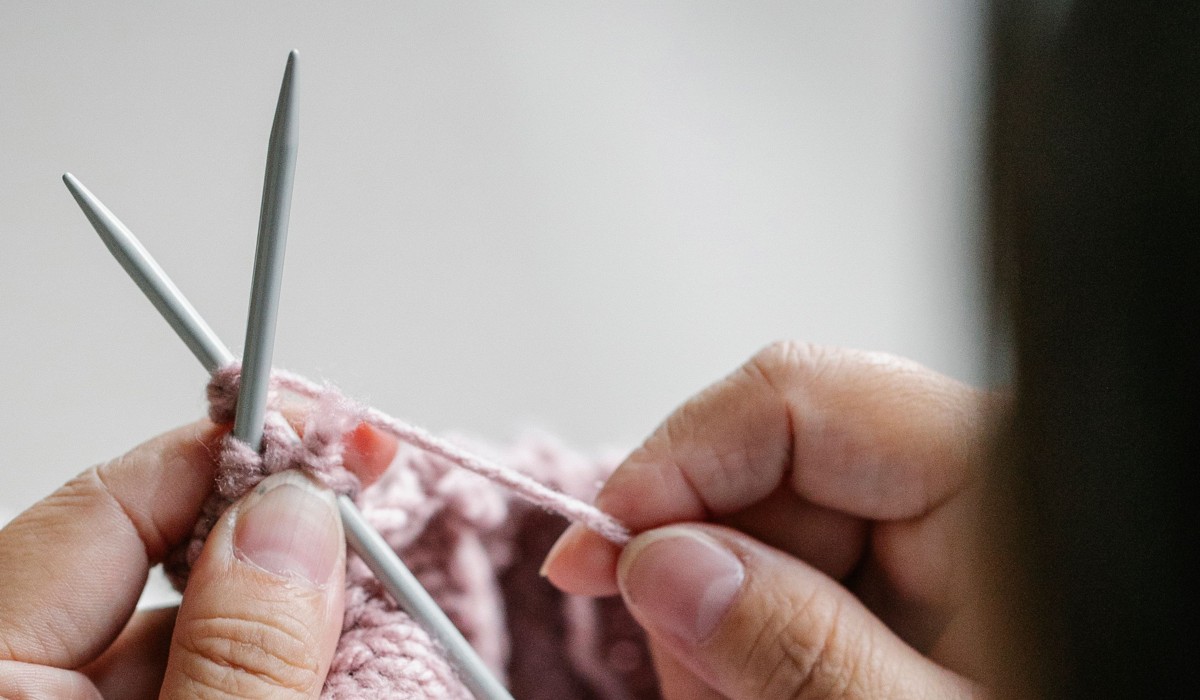
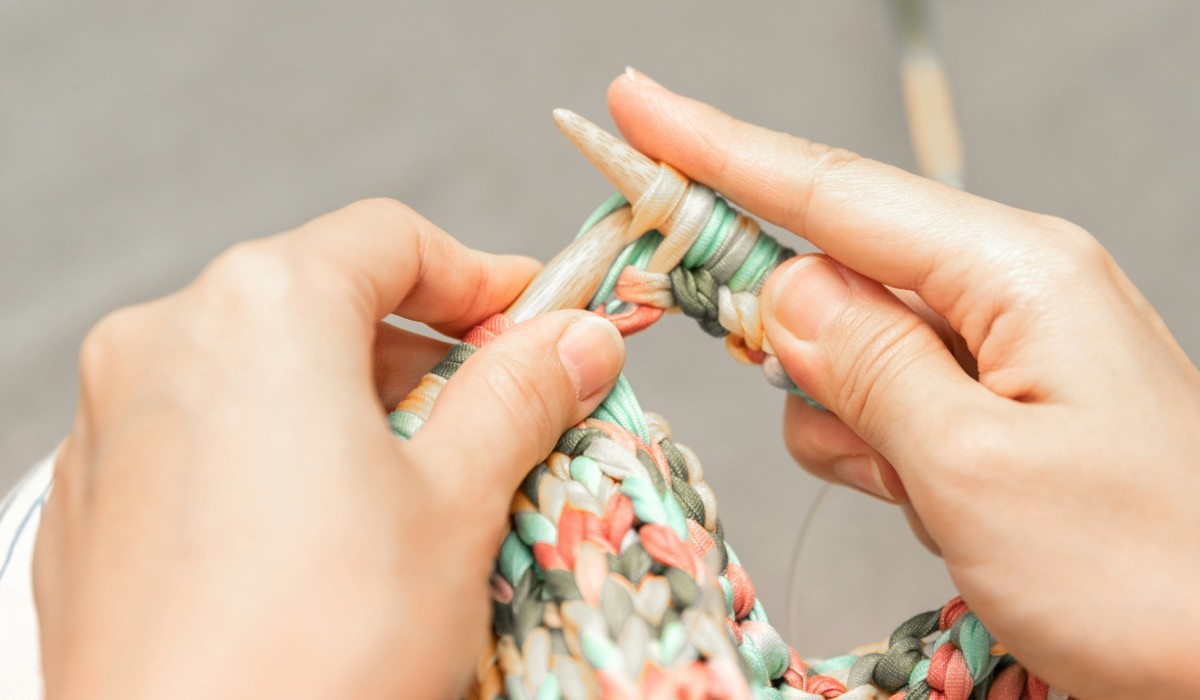
Anyone who has tried knitting for the first time knows how much concentration a simple stitch requires. One needle moves through a loop, the yarn must be positioned correctly, and the new stitch has to slide into place without losing the previous one.
After hundreds of repetitions, those movements become easier. More complicated projects continue introducing decisions.
A sweater with a cable design requires counting stitches and remembering when to change the sequence. Colorwork adds another set of instructions. Discovering an error several rows later means identifying where the mistake happened and deciding how to repair it.
All of that involves attention, memory and coordination between vision and hand movements. Knitting also produces something tangible, giving people a reason to return to an unfinished project.
The cognitive demands are particularly interesting when a person is learning. An experienced knitter repeating the same scarf design faces fewer unfamiliar decisions than somebody attempting lacework for the first time.
Scientists have not established which knitting techniques provide the greatest benefit. However, research on learning new skills offers clues about why a challenging project may be mentally engaging.
Learning Something New May Be More Valuable Than Repeating an Easy Routine
Researchers at the University of Texas at Dallas invited older adults to spend several months learning photography, quilting or both. Other participants joined social activities or completed tasks that required less new learning.
Photography students had to master camera settings, remember technical instructions and learn editing software. Quilting participants worked with unfamiliar equipment and developed increasingly demanding projects.
At the end of the experiment, the groups learning challenging skills showed improvements in episodic memory, the ability to remember events and personal experiences. Participants assigned easier activities did not achieve the same results.
The University of Texas research provide evidence that sustained learning can improve certain aspects of cognitive performance in older adults.
For knitting enthusiasts, the lesson is more interesting than simply counting hours spent with yarn. Someone who enjoys the activity might experiment with unfamiliar stitches, attempt a new garment or learn to read more demanding instructions.
Those challenges introduce new information without requiring a completely separate hobby. There is no established rule specifying how many hours someone must knit each week to protect memory.
Knitting Can Also Give People a Break From Stress
The appeal of knitting extends outside memory research. Repeating a familiar movement gives some people an activity they can concentrate on without having to respond to messages, make work decisions or follow a screen.
Completing a row also provides a small, visible achievement. A complicated project can remain unfinished for weeks, with each session bringing it closer to completion.
Creative hobbies have become popular among people looking for ways to manage everyday anxiety. Activities such as crochet, embroidery and gardening feature in research into relaxation and emotional well-being.
Interest in traditional hobbies that ease anxiety has also spread among younger adults, many of whom enjoy making something by hand after spending much of their day using electronic devices.
Knitting will not feel relaxing to everyone. Beginners may become frustrated with mistakes, and repetitive hand movements may be uncomfortable for people with certain joint or nerve conditions.
The emotional benefit also depends on the circumstances. Working on a simple scarf for enjoyment is a very different experience from racing to finish several handmade gifts before a deadline.
For someone who finds knitting satisfying, the combination of concentration, progress and enjoyment provides a reason to maintain the activity even without any promise of protection against memory loss.
Other Hobbies That May Help Keep Your Brain Active
Knitting is far from the only pastime associated with cognitive health. Researchers have investigated activities involving creative decisions, physical movement and learning, with some producing measurable changes in specific mental skills.
Photography Makes You Pay Attention to Details
Taking photographs becomes mentally demanding when someone begins making deliberate decisions instead of relying entirely on automatic settings.
A beginner learning photography has to consider light, distance, focus and composition. Taking a successful photograph also requires remembering earlier attempts and adjusting settings when the result is disappointing.
The older adults who learned digital photography in the University of Texas experiment improved their episodic memory after completing their training. The course included camera operation and editing software, so the result cannot be attributed to taking pictures alone.
The published photography and quilting experiment suggests that activities involving sustained learning can improve memory performance without being designed specifically as memory exercises.
For someone interested in photography, learning how to control exposure or edit photographs creates new challenges even when using equipment they already own.
Gardening Makes Every Season a New Project
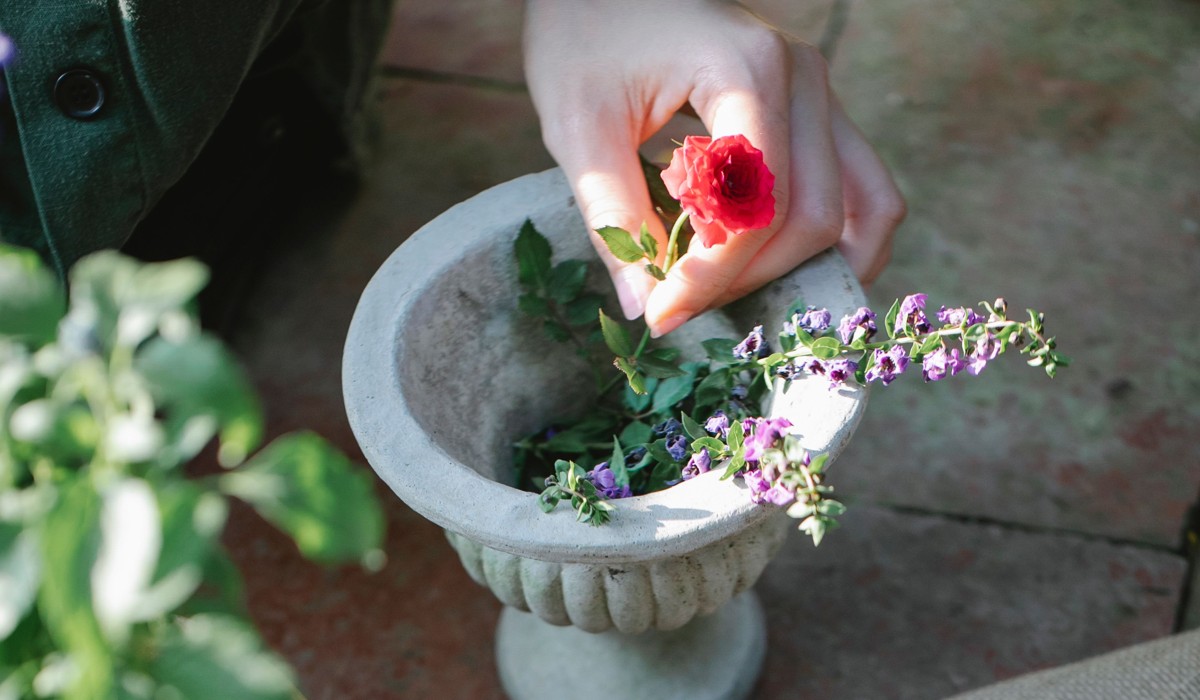
A gardener rarely performs exactly the same tasks all year. Spring involves preparing soil and deciding what to plant. Summer brings watering, pruning and dealing with pests. Autumn requires harvesting and preparing plants for colder conditions.
Keeping a garden productive involves remembering instructions, recognizing changes and adjusting plans when something goes wrong.
Researchers at the University of Edinburgh found that people who spent time gardening during adulthood tended to have better cognitive performance later in life than those who rarely or never gardened.
The University of Edinburgh gardening research considered childhood cognitive ability and several other influences. The association remained, although the researchers could not establish gardening as the cause.
Gardening also involves physical movement and time outdoors, which complicates any attempt to assign its benefits exclusively to mental stimulation.
Playing a Musical Instrument Challenges Memory and Coordination
Learning piano requires both hands to perform movements that may initially feel unnatural. A beginner must remember notes, keep time and listen closely enough to recognize mistakes.
Guitar presents its own challenges. Changing chords smoothly requires coordination, and learning an unfamiliar song adds memory demands.
A research review of musical instrument training found improvements in processing speed and certain skills involving attention and switching between tasks among older adults.
Not every memory measure improved, so learning an instrument should not be advertised as a universal solution to age-related cognitive decline.
Music also influences emotional well-being. Separate research into music and relief from stress has identified potential benefits from listening to music, although playing an instrument adds the demands of acquiring and practicing a skill.
Dancing Combines Movement With Learning
Following a dance routine involves remembering sequences and coordinating movements with music. Partner dancing adds the need to respond to another person without losing track of timing.
Scientists studying experienced tango dancers found that their brain activity was associated with younger estimated brain ages than those of comparison participants.
The research on creative expertise and brain aging also included musicians, visual artists and video-game players.
Estimated brain age is calculated from recordings of brain activity. It does not mean a dancer has literally reversed biological aging, and the findings do not establish that dancing prevents dementia.
Dancing does, however, bring movement and learning together. Joining a class also introduces regular social contact, which may contribute to the overall experience.
Puzzles and Board Games Keep You Solving Problems
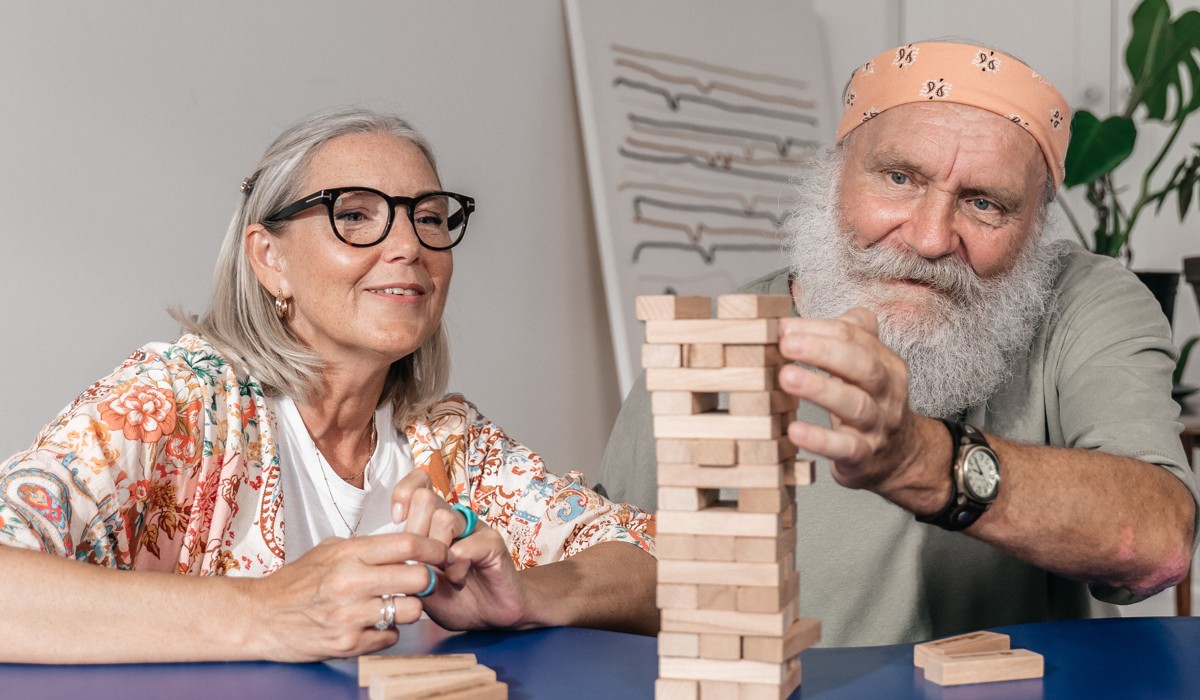
A jigsaw puzzle asks someone to compare colors, shapes and positions. Chess requires planning, remembering previous moves and responding to an opponent. Crosswords rely on language and retrieving information from memory.
Researchers have linked participation in games with a lower risk of mild cognitive impairment. In the Mayo Clinic research, playing games during both middle and later life was associated with a 20% lower risk.
Another study of mentally stimulating activities reported an association between game participation and lower risk of mild cognitive impairment.
However, no single puzzle has been shown to guarantee protection against dementia. An unfamiliar challenge may engage more mental skills than repeating a task someone has already mastered, although the most useful amount and type of puzzle activity remain uncertain.
People With Hobbies Also Report Better Mental Well-Being
There is another reason hobbies deserve attention that has little to do with memory tests.
Researchers studying more than 93,000 older adults across 16 countries found that hobby participation was associated with fewer depressive symptoms, greater happiness, higher life satisfaction and better self-rated health.
The international research on hobbies and well-being included activities such as arts, crafts, reading, sports and gardening.
The findings cannot prove that taking up a hobby will improve mental health for every person. Depression and other health difficulties can themselves make it harder to participate in activities.
Nevertheless, hobbies provide opportunities that are easily lost after retirement or major lifestyle changes. A weekly knitting group creates a reason to meet other people. Gardening gives someone a continuing project, and learning music offers new goals as skills improve.
Enjoying an activity remains a valuable outcome in its own right, even when researchers cannot connect it to a measurable change in long-term cognitive health.
Should You Start Knitting to Protect Your Memory?
There is no evidence that knitting guarantees protection against dementia, and the 42% finding should not be used as an individual prediction.
The more useful conclusion is that mentally engaging hobbies deserve a place in everyday life, including after retirement. Someone who enjoys knitting has a reason to continue. A person who finds it boring may prefer photography, gardening, music or another activity that involves learning.
Persistent memory problems still deserve medical attention. Forgetting recent conversations repeatedly, becoming confused in familiar places or struggling with previously manageable tasks should not be dismissed as normal aging.
Regular physical activity, healthy sleep and appropriate medical care remain important alongside mentally stimulating interests. Even sleep quality and consistent sleep habits influence how alert and mentally capable people feel during the day.