
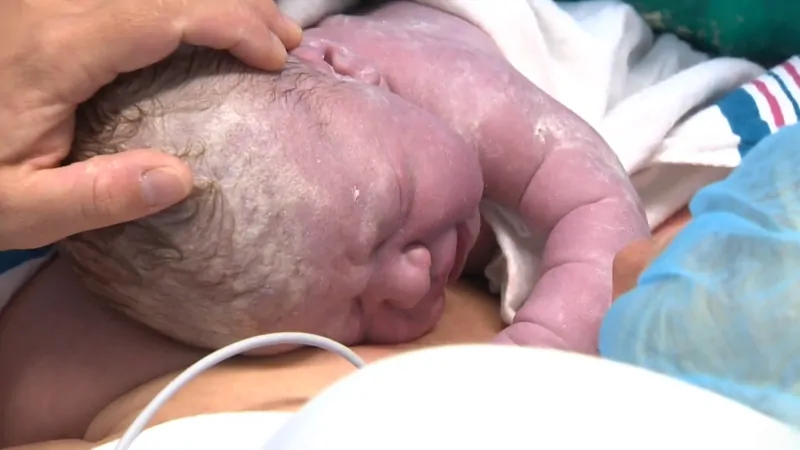
Birth injury statistics are easy to misuse because the term covers very different medical problems. A swollen scalp that clears on its own can appear in the same dataset as a fractured clavicle, nerve damage or serious bleeding beneath the scalp.
That is why we are not going to tell you that one fixed number of American babies suffers a birth injury every year. The United States does not publish one current national count that covers every condition people place under the term “birth injury.” Studies use different definitions, different hospital records and different periods.
We do have useful numbers. The US recorded 3,628,934 births in 2024. A large national hospital study found 31.1 recorded birth-trauma diagnoses per 1,000 hospital births in 2014, but four out of five of those diagnoses involved the scalp. Major trauma was recorded at a much lower rate of 4.67 per 1,000 hospital births.
Table of Contents
ToggleThe gap is important because it can tell us more than the dramatic claims repeated on many birth-injury reports. Instead of squeezing every diagnosis into one total, we can look at the injuries separately and see which ones are common, which are rare and which delivery complications raise the risk.
Here Are the Most Important Facts About Birth Injuries in the US
| atistic | Figure | What It Covers |
|---|---|---|
| US births in 2024 | 3,628,934 | All registered live births |
| Cesarean deliveries in 2024 | 1,173,391 | 32.4% of all births |
| Vaginal deliveries in 2024 | 2,450,519 | About two-thirds of all births |
| Preterm births in 2024 | 377,204 | 10.41% of births |
| Low-birthweight babies in 2024 | 308,966 | 8.52% of births |
| All recorded birth trauma in one national study | 31.1 per 1,000 | Hospital births in 2014, including scalp injuries |
| Major birth trauma in the same study | 4.67 per 1,000 | More serious injuries recorded in 2014 |
| Cephalohematoma | 0.4% to 2.5% | Blood collecting beneath tissue covering a skull bone |
| Neonatal brachial plexus injury | 0.4 to 4 per 1,000 births | Nerve injury affecting the shoulder and arm |
| Subgaleal hemorrhage after spontaneous vaginal delivery | 4 per 10,000 | Serious bleeding beneath the scalp |
| Subgaleal hemorrhage after vacuum-assisted delivery | 59 per 10,000 | The same injury after vacuum-assisted birth |
| Clavicle fracture | 0.5% to 4% | Range reported across published studies |
| Breech presentation at full term | 3% to 4% | A delivery risk factor, not an injury |
The current national birth figures come from CDC infant health data. The injury rates come from clinical research because CDC birth records do not provide one current total for every form of physical trauma during delivery.
The 31.1-per-1,000 figure needs particular care. Researchers looked at US hospital births from 2006 through 2014 and found that the recorded birth-trauma rate rose from 25.3 to 31.1 per 1,000. That sounds alarming until we look at what changed.
Scalp injuries made up 80% of all recorded trauma and became more common in the records. Major trauma moved in the other direction, falling from 5.44 to 4.67 per 1,000 hospital births. The study counted clavicle fractures, brachial plexus injuries and intracranial hemorrhage among the major injuries. Readers can see the figures in the national birth trauma study.
So a broad rate and a serious-injury rate can both be correct and still describe very different situations.
Most Recorded Birth Trauma Does Not Mean Severe Injury
The word “trauma” can make every diagnosis sound severe. In newborn medicine, that is not how the numbers work.
Pressure on the baby’s head during labor can leave swelling or bleeding in the tissUSaround the skull. Some conditions need little or no treatment. Others require close monitoring because blood loss can become dangerous.
Caput Succedaneum
Caput succedaneum is soft swelling on the scalp caused by pressure during delivery. It is usually visible at birth and can spread across the lines between the skull bones.
In many babies, the swelling disappears within days without treatment. It still qualifies as birth trauma in datasets that count scalp injuries, which helps explain why broad birth-trauma rates can look much higher than rates for serious injury.
Cephalohematoma
Cephalohematoma is different. Blood collects between a skull bone and the tissue covering it, so the swelling stays over one bone rather than spreading freely across the scalp.
Published medical estimates put the incidence at 0.4% to 2.5% of live births. Large babies, difficult labor and forceps or vacuum assistance are among the factors associated with a higher rate. A clinical review of cephalohematoma reports that vacuum-assisted delivery carries a particularly strong association.
Most cephalohematomas resolve without surgery. Doctors still watch for problems such as jaundice and anemia because blood trapped beneath the scalp eventually breaks down and has to be processed by the body.
Subgaleal Hemorrhage
Subgaleal hemorrhage is the scalp injury that deserves much more caution. Bleeding occUSin a large space beneath the scalp where a newborn can lose a significant amount of blood.
The rate also shows how strongly delivery method can change the risk for one specific injury. A medical review reports around 4 cases per 10,000 spontaneous vaginal deliveries, compared with 59 per 10,000 vacuum-assisted deliveries.
Those numbers have sometimes been repeated online as if they describe all birth injuries after vaginal or vacuum delivery. They do not. They refer only to subgaleal hemorrhage, as the NCBI birth trauma review makes clear.
The difference is not just technical wording. Four birth injuries per 10,000 deliveries would describe a very rare overall problem. Four cases of one particular hemorrhage per 10,000 deliveries tells us something completely different.
Clavicle Fractures Are More Common Than Other Birth Fractures
A fractured collarbone is one of the better-known physical injuries associated with delivery. It is also the most commonly reported fracture in newborns.
Studies do not give one universal rate. A 2024 systematic review found reported neonatal clavicle-fracture rates ranging from 0.5% to 4%. High birthweight, shoulder dystocia, prolonged labor and vacuum-assisted delivery appear repeatedly among the risk factors in the newborn clavicle fracture review.
The wide range does not mean researchers have no idea how common the injury is. Hospitals treat different groUSof mothers and babies, and they do not always find fractures in the same way. A displaced fracture may be obvious soon after birth. A small fracture can be found days later when a parent or doctor notices that the baby moves one arm less, reacts to pressure near the collarbone or develops a small lump as the bone heals.
One recent hospital review gives a useful example. Researchers found 91 clavicle fractures among 8,132 births, a rate of 1.1%. The rate was 1.7% among vaginal births and 0.04% among cesarean births. Instrument-assisted vaginal birth roughly doubled the odds of fracture in that hospital, and shoulder dystocia had an even stronger association.
Those figures should stay attached to the hospital that produced them rather than being presented as US national rates. They do show why delivery circUSances are important when doctors review a newborn fracture.
Most isolated clavicle fractures heal with simple care and follow-up. A fracture can also happen during a delivery where no medical error occurred. That point is easy to lose when birth injury statistics are written mainly from a legal perspective.
Brachial Plexus Injuries Can Range From Temporary Weakness to Lasting Nerve Damage
The brachial plexus is a group of nerves running from the neck into the shoulder and arm. During a difficult delivery, those nerves can stretch or tear.
A newborn may move one arm less than the other, hold the arm in an unusual position or show little movement from the shoulder or elbow. The American Academy of Pediatrics places the incidence of neonatal brachial plexus injury between 0.4 and 4 cases per 1,000 births.
The range is large because injury rates differ across populations and delivery settings. Shoulder dystocia and birthweight above 4,000 grams are among the strongest risk factors. Maternal diabetes or obesity, prolonged labor and delivery with forceps or a vacuum extractor also appear in the AAP brachial plexus review.
Some babies recover movement as stretched nerves heal. Others have more serious damage and need physical therapy, specialist care or surgery. A single incidence figure cannot tell parents which outcome their child will have.
Cesarean delivery lowers the risk, but it does not reduce it to zero. Brachial plexus injuries have been reported after cesarean birth as well.
Shoulder Dystocia Changes the Risk During Delivery
Shoulder dystocia happens after the baby’s head has been delivered and one or both shoulders become stuck behind the mother’s pelvic bone. The medical team then has to free the shoulders and complete the birth.
It is one of the delivery complications most closely associated with brachial plexus injury and clavicle fracture. The reason is physical. The shoulders are stuck, and the baby still has to be delivered quickly and safely.
Fetal size plays a role, but shoulder dystocia cannot be predicted simply by looking at estimated birthweight. Cases also occur in babies who are not unusually large.
Recent clinical guidance reports neonatal complications in around 5% to 10% of births complicated by shoulder dystocia, with brachial plexus injuries and clavicle fractures among the injuries doctors watch for. Those percentages describe births where shoulder dystocia has already occurred, not all US births.
The distinction is worth keeping in mind whenever a statistic seems unusually high. A rate measured among a high-risk group cannot be applied to every delivery.
Vacuum and Forceps Deliveries Need Their Own Context
Vacuum extractors and forceps are used when a vaginal delivery needs assistance. A baby may need to be delivered sooner, pushing may no longer be effective or labor may have stopped progressing.
Because these instruments are used during difficult births, the statistics are not as simple as “instrument used, injury followed.” The reason the instrument was needed can already raise the risk of injury.
Vacuum delivery has a clear association with cephalohematoma and subgaleal hemorrhage. Forceps can leave brUSng and have been associated with facial nerve injuries and other forms of trauma. Both methods also appear in research on clavicle fractures and brachial plexus injuries.
That does not make assisted vaginal delivery inherently USfe. It means the risks are different from those of an uncomplicated spontaneous vaginal birth, and the clinical circUSances around the delivery have to be considered.
For readers looking at a medical record, the name of the instrument is only one piece of information. Fetal position, how long labor had continued, the reason assistance was needed and what happened immediately after birth give the number much more meaning.
One in Three US Babies Is Born by Cesarean Delivery
Cesarean delivery is common enough in the United States that it has to be part of any serious discUSon of birth injury. In 2024, 1,173,391 babies were delivered by cesarean, accounting for 32.4% of all US births. Vaginal deliveries totaled 2,450,519, according to CDC delivery data.
A cesarean can avoid some of the mechanical problems that arise during a difficult vaginal birth. Doctors may use it when the baby is breech, when labor is not progressing, when fetal monitoring raises concern or when another complication changes the safest route of delivery.
It does not prevent every newborn injury. Fractures and nerve injuries have been reported after cesarean birth, and some newborn conditions begin before the operation itself.
For 2024, the low-risk cesarean rate was 26.6%. That measure covers first births at term with one baby in a head-first position. A high national cesarean rate can raise qUSions about maternity practice, but the percentage alone cannot tell us which individual operations were necessary.
Breech Presentation Is a Risk Factor, Not an Injury
A breech baby reaches the final weeks of pregnancy with the buttocks, feet or both positioned to come out first. The American College of Obstetricians and Gynecologists reports that breech presentation occUSin 3% to 4% of full-term births.
Doctors may try to turn the baby before labor in selected pregnancies, and cesarean delivery is used for many persistent breech presentations. The options depend on the type of breech presentation, pregnancy history, fetal condition and other clinical details. ACOG explains the basic choices in its guidance for breech pregnancy.
Breech presentation raises the risk of certain complications, but it should never be counted as another birth injury. The baby can be breech and still be born without trauma.
The same rule applies to many conditions that appear in poor birth-injury statistics pages. A risk factor, a delivery complication and an actual injury are three different things.
High Birthweight Raises Risk but Does Not Predict the Outcome
Large babies appear repeatedly in research on shoulder dystocia, clavicle fracture and brachial plexus injury.
For brachial plexus injury, the AAP identifies birthweight above 4,000 grams as one of the main risk factors. A larger baby can make passage through the birth canal more difficult, particularly when the shoulders become stuck.
Yet birthweight alone is not a prediction. Many babies over 4,000 grams are delivered without an injury, and birth trauma also occUSbelow that weight.
Estimated fetal weight before delivery is not perfectly precise either. Doctors combine size estimates with fetal position, maternal health, labor progress and previous pregnancy history rather than relying on one number.
Preterm Birth and Low Birthweight Are Not Birth Injuries
In 2024, 377,204 US babies were born preterm, equal to 10.41% of births. Another 308,966 babies, or 8.52%, had a birthweight below 2,500 grams. CDC lists both figures in its birthweight and gestation data.
Those numbers are important for newborn health, but they should not be added to birth-injury totals.
A premature baby may have breathing problems, bleeding, infection risk or complications related to organs that have not fully developed. Those are not automatically injuries caused by the delivery itself.
The same applies to low birthweight. It describes the baby’s weight at birth, not the cause of a medical problem.
Mixing prematurity, low birthweight, congenital conditions and delivery trauma creates huge numbers that look impressive but tell readers very little.
Birth Injury Is Not Responsible for 20% of US Infant Deaths
A claim that birth injuries cause 20% of infant deaths has been repeated across legal and health websites for years. Current federal mortality data does not support it.
The United States recorded 20,050 infant deaths in 2024. The infant mortality rate was 552.5 deaths per 100,000 live births, equal to about 5.5 per 1,000.
Congenital malformations were the leading cause with 4,061 deaths, or 20.3% of the total. Disorders related to short gestation and low birthweight ranked second with 2,941 deaths. Sudden infant death syndrome ranked third with 1,351 deaths.
Intrauterine hypoxia and birth asphyxia was tenth, not fourth. The complete 2024 ranking appears in the CDC infant mortality report.
Birth trauma can contribute to an infant death in an individual case. But current US mortality data does not support the blanket claim that generic birth injuries cause one in five infant deaths.
We make the same distinction in our coverage of leading causes of death. A death certificate category has to be read as the category CDC actually uses rather than replaced with a wider term that sounds similar.
Some Birth Injuries Are Found After the Hospital Stay
Not every injury is obvious in the delivery room.
A small clavicle fracture can be missed at first because a newborn cannot explain where it hurts. Parents or doctors may later notice less movement in one arm, tenderness near the collarbone or a small hard lump that forms as the fracture heals.
Brachial plexus injuries are often easier to recognize because the affected arm may move less or rest in a different position.
Scalp injuries also change after birth. Cephalohematoma may become more noticeable over the first day or two as blood collects beneath the tissue covering a skull bone. Rapidly increasing, widespread swelling raises a different concern because subgaleal blood can spread through a much larger space.
Delayed diagnosis also affects statistics. A study based only on diagnoses recorded before hospital discharge may miss injuries found later by a pediatrician.
A Birth Injury Does Not Automatically Mean Medical Malpractice
Families naturally want to know why an injury happened, especially when a baby needs weeks, months or years of additional care. Statistics cannot answer that qUSion for an individual delivery.
Some birth injuries occur even when the medical team follows accepted practice. A clavicle can fracture during a difficult birth without a preventable mistake. A brachial plexus injury can also occur without obvious excessive traction.
Other cases raise legitimate qUSions about the care provided. Medical records may show how clinicians responded to fetal distress, shoulder dystocia, stalled labor, abnormal presentation or the need for assisted delivery. The timing of a cesarean can also become important.
Medical malpractice therefore requires a separate analysis of the care, the injury and the connection between them. A bad outcome alone does not prove negligence, and a national injury statistic cannot settle a legal claim.
Our data on medical malpractice payoUSby state also needs to be read on its own terms. Payment records describe claims that resulted in payments. They are not a count of negligent births or birth injuries.
Why Birth Injury Rates Vary So Much
Birth injury rates can look very different from one study to another because researchers are not always counting the same conditions.
A study that includes scalp swelling, cephalohematoma, fractures, nerve injuries and intracranial bleeding will report a higher rate than one that only counts major trauma.
The population also changes the number. A hospital that handles more high-risk pregnancies, difficult deliveries and referrals from other hospitals may record more injuries than a hospital dealing mainly with routine births.
Older figures need their dates attached for the same reason. Delivery practices have changed over time, including the use of forceps, vacuum extraction and cesarean delivery. A rate reported from births in 2006 describes that period, not current U.S. births.
The clearest statistics are the ones tied to a specific injury, population and year. A rate for brachial plexus injury means more than a broad figure for “birth trauma” if brachial plexus injury is the condition being discussed.
What We Can Say With Confidence From the US Data
Minor scalp trauma makes up a large share of recorded birth injuries when researchers use a wide definition. Serious injuries are much less common.
Vacuum-assisted delivery raises the risk of specific scalp injuries, particularly cephalohematoma and subgaleal hemorrhage. Shoulder dystocia and high birthweight are strongly linked with clavicle fracture and brachial plexus injury.
Cesarean delivery reduces some forms of mechanical trauma but does not eliminate newborn injury. Breech presentation, prematurity and low birthweight can change the risks around a delivery, but none of them is itself proof that an injury occurred.
We can also say that the old claim about birth injuries causing 20% of US infant deaths does not match current CDC data.
For parents researching a diagnosis, the most useful number is rarely a grand total for all birth injuries. The useful number is the rate for the condition in qUSion, followed by what doctors know about recovery, treatment and the factors associated with it.
Methodology
We used the latest available US birth and infant mortality data from the CDC and the National Center for Health Statistics for the national figures in this article.
Birth injury rates required a different approach because there is no single federal database that gives one current rate for every type of birth trauma. For those figures, we used medical reviews, pediatric guidance and large hospital studies that clearly state which injury was measured, which births were included and which years the data covers.
We kept minor scalp injuries, fractures, nerve injuries and serious hemorrhages separate instead of combining them into one national total. Risk factors such as breech presentation, high birthweight, shoulder dystocia and assisted delivery were also treated separately from injuries themselves.
Older studies were used only where they still provide useful injury-specific data that newer national sources do not replace. Their dates and study populations are stated in the article so readers can see exactly what each figure describes.
References
- Review of childbirth head injuries
- Clinical review of birth injury
- Recent clavicle fracture study
- ACOG cesarean birth guidance
- Shoulder dystocia clinical guideline
Related Posts:
- Minnesota Population 2026 - Census Numbers Show…
- Detroit Population Growth in 2026, Latest Census…
- Identity Theft Statistics 2026 - Most Common Types…
- Premature Birth Rate in the US 2026 - Which States…
- What’s the Legal Difference Between a Certificate of…
- Agriculture Statistics 2026 - AI, Robotics, and…