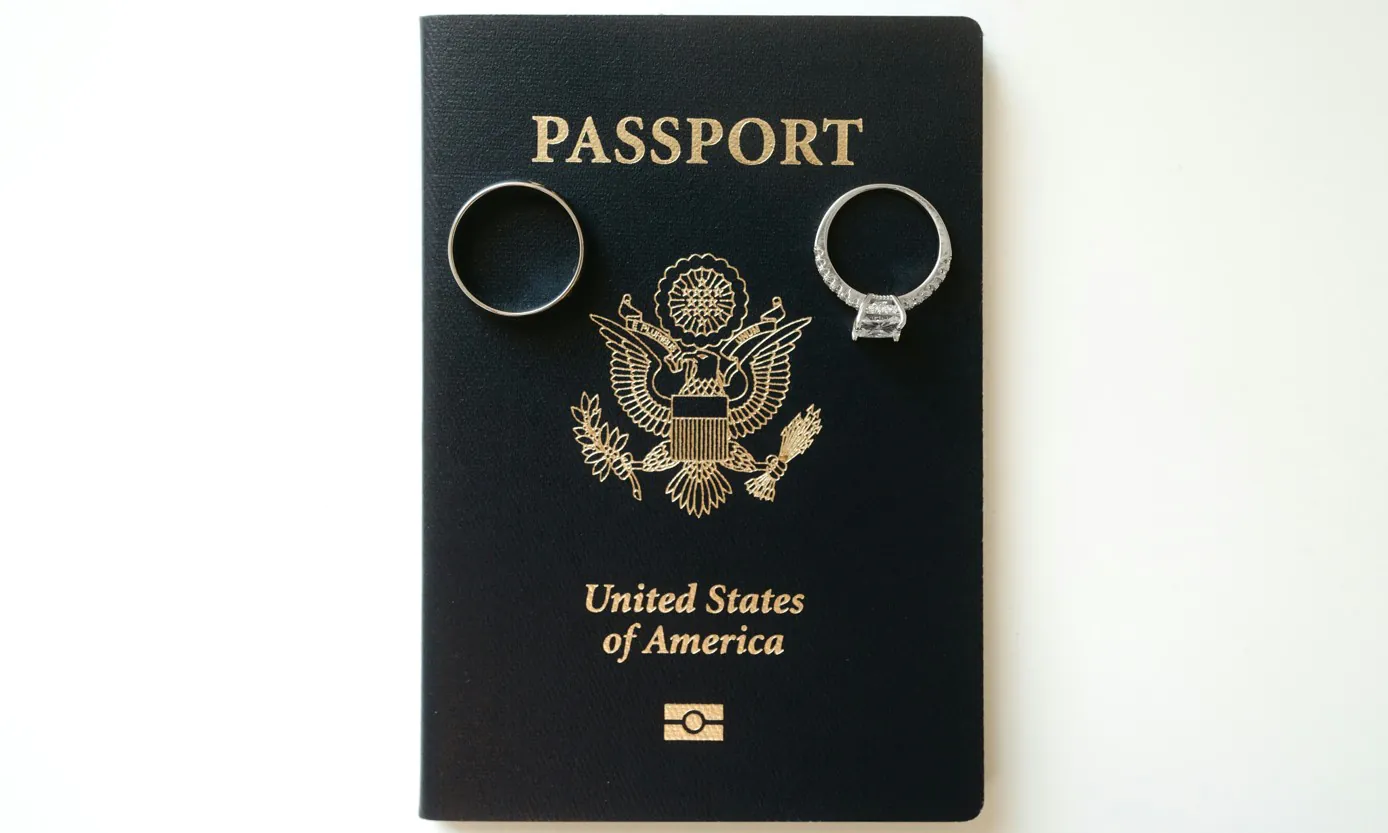
Marriage to a U.S. citizen is still one of the main legal paths to a green card and later citizenship. The law has not suddenly erased that route.
But the process is no longer as simple to describe as “get married, file papers, wait for approval.” A new Trump administration policy has made the inside the U.S. green card process more discretionary, and that is why many mixed status families are worried.
The change centers on adjustment of status. That is the process that allows some immigrants already in the United States to apply for lawful permanent residence without leaving the country.
USCIS now says adjustment of status should be treated as an extraordinary form of relief, not a routine benefit. Officers are being told to look at the full case and decide if the applicant deserves that relief as a matter of discretion.
For spouses of U.S. citizens, that creates a practical question. Can they still get a green card from inside the United States, or will more people be pushed toward a U.S. consulate abroad?
Table of Contents
ToggleMarriage Still Counts, but It Does Not Give Citizenship by Itself
A U.S. citizen can still sponsor a spouse. USCIS still lists spouses of U.S. citizens as immediate relatives who may apply for a green card in certain cases.
The USCIS immediate relative guidance still covers spouses, unmarried children under 21, and parents of U.S. citizens who are at least 21.
Marriage does not create citizenship automatically. The usual path has several steps.
| Step | What it means |
| Marriage | The couple must have a real, legally valid marriage. |
| Spouse petition | The U.S. citizen normally files Form I-130 to prove the family relationship. |
| Green card process | The immigrant spouse applies through adjustment of status in the U.S. or consular processing abroad. |
| Permanent residence | The spouse becomes a lawful permanent resident if approved. |
| Naturalization | The spouse may apply for citizenship later if all requirements are met. |
The citizenship step comes later. USCIS says a spouse of a U.S. citizen may apply for naturalization after three years as a lawful permanent resident if the spouse has lived in marital union with the U.S. citizen and meets the other requirements.
The Big Change Is the Green Card Process Inside the U.S.
The current concern is not that marriage no longer matters. The concern is that adjustment of status may become harder to win.
Adjustment of status is important because it lets an eligible person apply for a green card inside the United States. Many spouses of U.S. citizens have used that route after entering with a visa, overstaying, or falling out of status.
Under the new memo, USCIS officers are being told to treat adjustment as a discretionary benefit. That means a person can meet the basic legal requirements and still face a harder review.
In plain English, the government is saying that eligibility is not the full story. Officers can look at immigration history, conduct, public interest concerns, fraud concerns, past violations, and other factors before deciding if the person should be allowed to adjust status inside the country.
Why Families Are Worried?
NPR reported that spouses of U.S. citizens are now facing more uncertainty as the Trump administration applies stricter screening across immigration benefits. The report said family and fiancé petitions make up a large share of green card approvals, and it cited Department of Homeland Security data showing about 343,000 people received green cards through spouses in the latest reported year.
Immigration lawyers quoted in the report said spouses of U.S. citizens have traditionally had a special place in immigration law, partly because immediate relatives are not subject to annual immigrant visa caps. The new policy climate makes some families afraid to engage with the system.
The government position is different. USCIS says a pending or approved family petition does not create legal status by itself. A person can still be subject to immigration enforcement if they are in the country without lawful status.
That distinction is central. Form I-130 can prove the family relationship, but it does not by itself give the immigrant spouse permission to stay, work, travel, or become a permanent resident.
Adjustment of Status and Consular Processing Are Not the Same
Spouses may have two possible routes, depending on the case.
| Route | Where it happens | Why it matters |
| Adjustment of status | Inside the United States | The person applies for a green card without leaving the country. |
| Consular processing | At a U.S. embassy or consulate abroad | The person completes the immigrant visa process outside the United States. |
The State Department guide for an immigrant visa for a spouse explains the consular route. The first step is usually the U.S. citizen filing Form I-130. After approval, the case goes to the National Visa Center and then to a U.S. embassy or consulate for interview processing.
Consular processing may be normal for spouses living outside the United States. It can be risky for people already inside the country if they have unlawful presence, a prior removal order, misrepresentation issues, or other immigration problems.
Leaving the United States can trigger bars that make return difficult without a waiver. That is why immigration lawyers are warning families not to make travel decisions based only on headlines.
Who Could Face More Problems
The policy can matter most for people whose immigration history is already complicated.
- People who overstayed a visa
- People who entered without inspection
- People who entered on parole and later applied for a green card
- People with old removal orders
- People who worked without authorization
- People with criminal history
- People with prior immigration fraud or misrepresentation issues
- People with weak evidence that the marriage is real
Not every one of those facts automatically kills a marriage green card case. Some rules treat spouses of U.S. citizens differently from other applicants. Some problems can be waived. Some cannot.
The new concern is discretion. A case that once looked straightforward may now receive more questioning, more document demands, or a harder review.
What Has Not Changed?
The basic marriage path still exists. A U.S. citizen can still petition for a spouse. A real marriage can still support a green card case. A permanent resident married to a U.S. citizen can still have a faster naturalization timeline if the legal requirements are met.
The USCIS naturalization policy still says spouses of U.S. citizens may qualify after three years as lawful permanent residents, with continuous residence, physical presence, marital union, English, civics, and good moral character requirements.
The marriage must be real. USCIS can still investigate fraud, ask for interviews, request documents, and deny cases where the relationship appears fake or the applicant is otherwise inadmissible.
Couples should know the difference between a relationship petition and legal status. They should also know the difference between filing from inside the United States and processing through a consulate.
Before taking action, families should review four questions.
| Question | Why it matters |
| How did the immigrant spouse enter the United States? | Entry history can affect adjustment eligibility. |
| Has the person ever overstayed, worked without authorization, or been ordered removed? | Past violations can create legal risks. |
| Would leaving the United States trigger a reentry bar? | Consular processing can become dangerous if bars apply. |
| Is the marriage evidence strong? | USCIS can question cases that look rushed, inconsistent, or poorly documented. |
A qualified immigration lawyer is important for people with overstays, unlawful entry, prior deportation orders, criminal history, or fraud concerns. A mistake can separate a family or create a long bar from returning.
The marriage green card issue is part of a wider immigration shift. The Trump administration has increased scrutiny across legal immigration, enforcement, visa reviews, and benefit applications.
Our earlier reporting on how immigration shapes the U.S. workforce showed how deeply immigrant labor is tied to healthcare, construction, logistics, hospitality, and home care. Our coverage of deportation policy and jobs also explained why family immigration and labor supply are not separate issues.
When a U.S. citizen spouse is afraid to file papers for a husband or wife, the impact is not only legal. It affects housing, children, work, taxes, military families, caregiving, and local communities.
Bottom Line
People can still become permanent residents and later citizens through marriage to a U.S. citizen. The route has not been canceled.
The risk is in the middle step. The Trump administration is making adjustment of status harder to treat as a routine process. More applicants may face tougher review, more questions, and greater pressure to process from abroad.
The clearest answer is this: marriage still matters, but it is not a shield by itself. A spouse petition does not automatically protect someone from enforcement, and it does not automatically guarantee a green card from inside the United States.
Families should read the change carefully, check the facts of their own case, and get legal advice before leaving the United States or filing anything that could expose an unresolved immigration problem.
Related Posts:
- Are You Relying Too Much on Meds to Get Through the…
- Trump Green Card Rule Expanding Public Charge…
- Green Card Applicants Could Face $100,000 Bond Under…
- Trump Administration Asks Supreme Court to Allow New…
- Trump Administration Plan for State Citizenship…
- New Medicaid Requirements Could Make Mental Health…