

The Food and Drug Administration has approved Lipfendra, a pill that can produce a large reduction in LDL cholesterol. The prescription medicine was developed by Merck and is the first oral PCSK9 inhibitor approved in the United States.
Lipfendra is the brand name for enlicitide, a drug previously known as MK-0616. The approval gives patients access to the cholesterol-lowering power of a PCSK9 inhibitor without the injections used for existing medicines in the same class.
Clinical trials found that enlicitide reduced LDL cholesterol by as much as 60% when added to the treatment patients were already receiving.
The result is significant for people whose LDL remains high despite statins, diet changes, and other treatments. It does not establish that Lipfendra prevents heart attacks or strokes. A much larger cardiovascular study is still underway.
What Is Lipfendra?
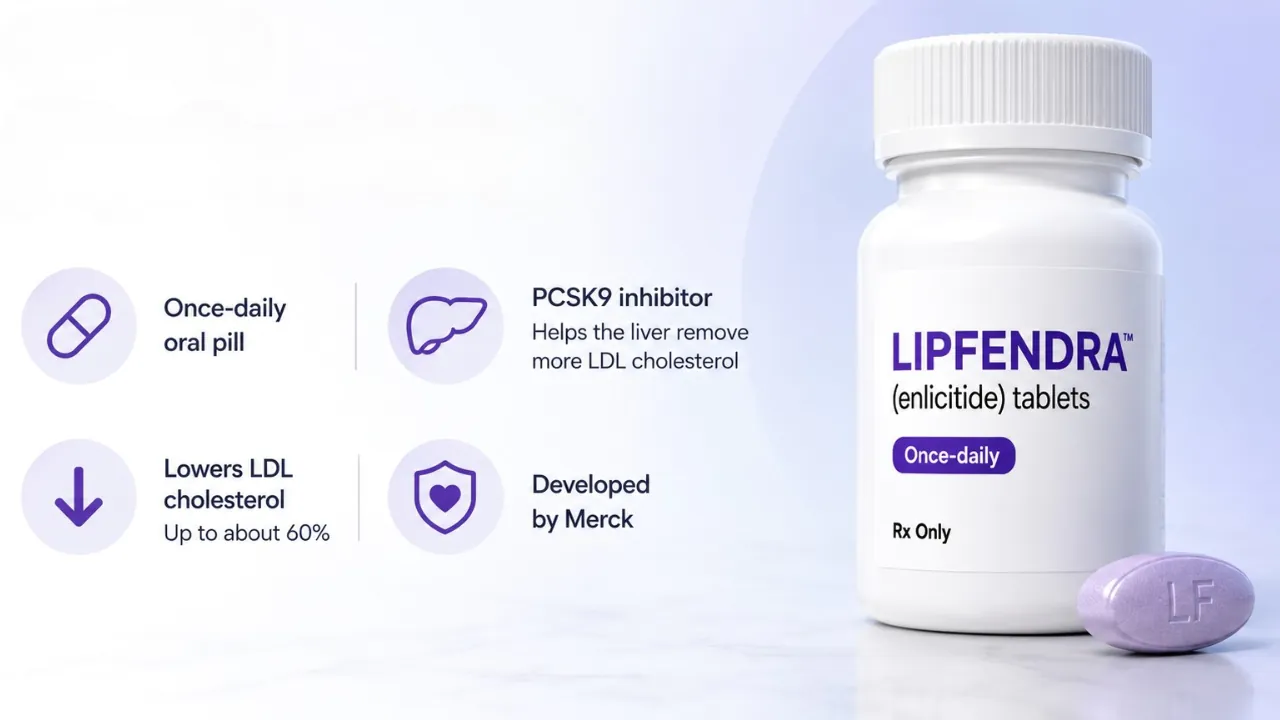
Lipfendra is a prescription cholesterol medicine taken by mouth once a day. Its active ingredient is enlicitide.
The medicine belongs to a group of treatments called PCSK9 inhibitors. Drugs in this class help the liver remove more LDL cholesterol from the blood.
Existing PCSK9 treatments include powerful injectable medicines. Lipfendra targets the same protein through a pill. It could become an option for patients who do not want regular injections or have difficulty obtaining injectable treatment.
| Key Detail | Lipfendra |
|---|---|
| Generic name | Enlicitide |
| Developer | Merck |
| Drug class | PCSK9 inhibitor |
| Form | Once-daily oral pill |
| Main purpose | Lowering elevated LDL cholesterol |
| LDL reduction in trials | Up to about 60% |
| Cardiovascular outcome results | Not yet available |
How Lipfendra Lowers LDL Cholesterol?
Lipfendra, to be taken once a day, is designed to help lower cholesterol levels beyond what statins alone can achieve. https://t.co/EANiIoGNy2
— The Wall Street Journal (@WSJ) July 16, 2026
LDL is commonly called bad cholesterol because high levels can contribute to plaque inside the arteries. Plaque can narrow blood vessels and increase the risk of coronary artery disease, heart attack, and stroke.
The Centers for Disease Control and Prevention explains that high LDL usually has no symptoms. A blood test is needed to detect it.
PCSK9 is a protein produced mainly by the liver. It attaches to LDL receptors and causes them to be broken down. Fewer working receptors remain available to remove LDL from the bloodstream.
Lipfendra blocks PCSK9 from interfering with those receptors. The liver can then clear more LDL from the blood.
Statins work differently. They reduce the liver’s production of cholesterol. Lipfendra is expected to be added to statin treatment for many patients rather than automatically replacing it.
How Much Did Lipfendra Reduce Cholesterol?
A Phase 3 study included more than 2,900 adults whose LDL remained above their recommended level. Participants had a history of atherosclerotic cardiovascular disease or faced a high risk of developing it.
Patients continued their existing cholesterol treatment. Half received enlicitide. The remaining participants received a placebo.
After six months, LDL cholesterol had fallen by up to 60% among patients receiving the medicine. The reduction weakened only slightly during the remainder of the one-year study.
An Associated Press report on the clinical findings said the overall frequency of safety events was similar in the enlicitide and placebo groups.
A separate trial studied 303 adults with heterozygous familial hypercholesterolemia. The inherited condition causes very high LDL levels and can lead to cardiovascular disease at a younger age.
Patients receiving enlicitide recorded an average LDL reduction of approximately 58% at week 24. Most of that reduction remained after one year.
Who Could Be Prescribed Lipfendra?

Lipfendra is aimed at adults who need further LDL reduction. Likely candidates include patients with cardiovascular disease, inherited high cholesterol, or persistently elevated LDL despite other treatment.
A doctor will need to consider a patient’s current LDL level, treatment history, cardiovascular risk, and other medications before prescribing it.
People who already meet their LDL target with an affordable statin may have no reason to change treatment. Statins have decades of safety information and strong evidence showing that they reduce cardiovascular events.
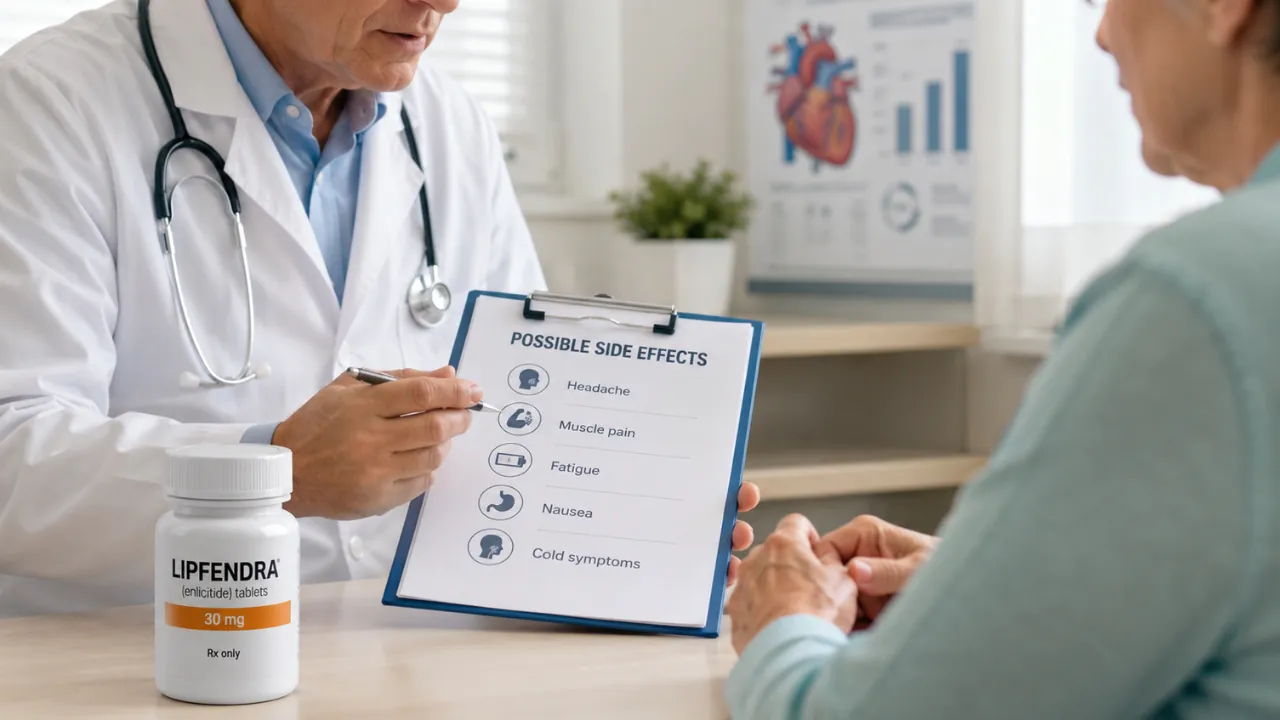
High cholesterol is one of several major risk factors connected to heart disease in the United States. Smoking, diabetes, high blood pressure, age and family history also affect a person’s total risk. Lipfendra and statins should not be treated as direct substitutes. Statins remain the standard starting treatment for most people with high LDL. Generic versions are inexpensive, widely available, and supported by extensive evidence showing fewer heart attacks, strokes, and cardiovascular deaths. Lipfendra offers a different mechanism and a larger additional reduction for patients who need it. Trial participants generally took the medicine on top of their existing cholesterol therapy. A person should not stop taking a statin after hearing about the new pill. Any change should be discussed with the prescribing doctor. The main practical difference is that Lipfendra brings PCSK9 inhibition into tablet form. Repatha, Praluent, and other treatments that act on PCSK9 are administered by injection. FDA approval confirms that Lipfendra lowers LDL cholesterol. It has not yet been proven that the medicine reduces heart attacks, strokes, or deaths. Lower LDL is strongly connected with lower cardiovascular risk. Other cholesterol medicines have shown that substantial LDL reductions can prevent serious cardiovascular events. A dedicated trial is still needed for Lipfendra because every new medicine must produce its own outcome evidence. Merck is conducting a study involving more than 14,000 patients. The trial is designed to determine if adding enlicitide to standard care reduces major cardiovascular events. Final results are expected later in the decade. Until those findings arrive, the most accurate statement is that Lipfendra sharply lowers LDL. Claims about preventing heart attacks or extending life remain unconfirmed. Lipfendra is taken once a day. Clinical trial participants were instructed to take enlicitide on an empty stomach because food can affect the absorption of this type of oral peptide. Patients should follow the FDA-approved prescribing instructions and the directions provided by their doctor or pharmacist. Missing the required fasting period could affect how much medicine reaches the bloodstream. The pill is not an over-the-counter supplement. A prescription and ongoing cholesterol testing are required. The large Phase 3 study did not find a major difference in the overall rate of adverse events between patients receiving enlicitide and those receiving a placebo. Earlier trial reports described headache and cold-like symptoms among the events observed. Those results do not replace the full safety information in the approved prescribing label. Patients should tell their doctor about prescription medicines, nonprescription drugs, and supplements before starting Lipfendra. Medical advice is also needed if new symptoms appear after treatment begins. Long-term safety will become clearer as more people use the medicine and the continuing cardiovascular trial collects additional data. Merck plans to set the list price at approximately $10.50 per pill. That equals about $315 for a 30-day supply. The Wall Street Journal reported that insured patients may pay less through coverage and manufacturer assistance. A list price is not the amount every patient pays. The final cost will depend on insurance, deductibles, pharmacy benefits, and eligibility for discount programs. Access could determine how widely the medicine is used. Injectable PCSK9 inhibitors initially faced limited adoption because of high prices and complicated insurance approval requirements. THE LIPID THERAPEUTIC WORLD just changed. The first ORAL PCK9 inhibitor enlicitide, made by Merck, and sold as Lipfendra has arrived. Be sure to become familiar with how patients should take it. Its monthly price seems a bit lower than the injectables. The F.D.A. Approves a New… — Thomas Dayspring (@Drlipid) July 16, 2026 Lipfendra brings a highly effective cholesterol mechanism into a daily tablet. Doctors have used injectable PCSK9 inhibitors for years, but relatively few eligible patients receive them. A pill may be easier to prescribe, distribute, and use. It may also appeal to patients who avoid injections. The need remains substantial. Heart disease continues to lead the country’s major causes of death, and a large share of high-risk patients do not reach their recommended LDL level. Lipfendra will not replace diet, exercise, or established medicines. It gives doctors another option when those measures do not lower LDL far enough. The next question is no longer whether the pill can change a cholesterol test. Clinical trials have already shown that it can. The unanswered question is whether those lower numbers will lead to fewer heart attacks and strokes over several years.
Is Lipfendra Better Than a Statin?
Does Lipfendra Prevent Heart Attacks and Strokes?

How Is the Pill Taken?
What Is Known About Side Effects?
How Much Will Lipfendra Cost?
Last Words