
A Supreme Court ruling on Temporary Protected Status has turned an immigration case into a workforce problem for hospitals, nursing homes, home care agencies, employers, and families who rely on daily care.
The ruling allows the Trump administration to move forward with ending Temporary Protected Status, known as TPS, for Haitians and Syrians.
For Haitian workers, the impact is especially large because many have lived in the United States for years, worked legally, paid taxes, and filled jobs in care sectors that already struggle to hire enough staff.
The legal issue may sound narrow. The real-world effect is not narrow. TPS gives eligible people protection from deportation and permission to work when conditions in their home country make a safe return unsafe or impossible.
Losing that status can mean losing a work permit, a driver’s license tied to lawful presence, stable income, employer health coverage, and the ability to keep a family routine intact.
Supreme Court Decided to Pause TPS for Haiti and Syria
The Supreme Court decision in Mullin v. Doe centered on whether courts could keep TPS terminations for Haiti and Syria paused during litigation.
The Court held that the TPS statute blocks judicial review of non-constitutional claims tied to the decision to terminate a country designation. The ruling reversed lower court orders that had kept the terminations from taking effect while the cases continued.
The case does not create a new immigration program. It changes the legal posture of an existing one. DHS can now proceed with the termination decisions unless another legal development changes the timeline.
Meaning of TPS
Temporary Protected Status is a humanitarian immigration protection created by Congress in 1990. It can be granted when a country faces armed conflict, a natural disaster, an epidemic, or other extraordinary conditions that temporarily prevent safe return.
TPS is not a green card or a citizenship. It does not automatically create a path to permanent residence. It does allow eligible people already in the United States to remain temporarily and apply for work authorization.
That work authorization is the main reason the ruling reaches beyond immigration court. A TPS holder can be a nursing assistant, caregiver, warehouse worker, driver, hotel cleaner, cook, security guard, or farmworker. When the status ends, the work authorization tied to that status can end too.
Why Haiti Is the Center of The Impact?

Haiti was first designated for TPS after the 2010 earthquake. The designation was extended several times as the country faced political instability, violence, displacement and fragile public services.
DHS later moved to terminate Haiti TPS. The Federal Register notice said the Secretary of Homeland Security determined that Haiti no longer met the statutory conditions for TPS and set termination for February 3, 2026.
That termination was then paused by a federal court order. USCIS later stated on its Haiti TPS page that the termination decision had been stayed by the District Court for the District of Columbia. The Supreme Court ruling now removes the lower court protection that had kept the termination from moving forward.
The tension is clear. DHS says Haiti no longer qualifies for TPS. The State Department still lists Haiti under a Level 4 Do Not Travel advisory because of crime, terrorism, kidnapping, unrest and limited health care.
How Many People Are Directly Affected?
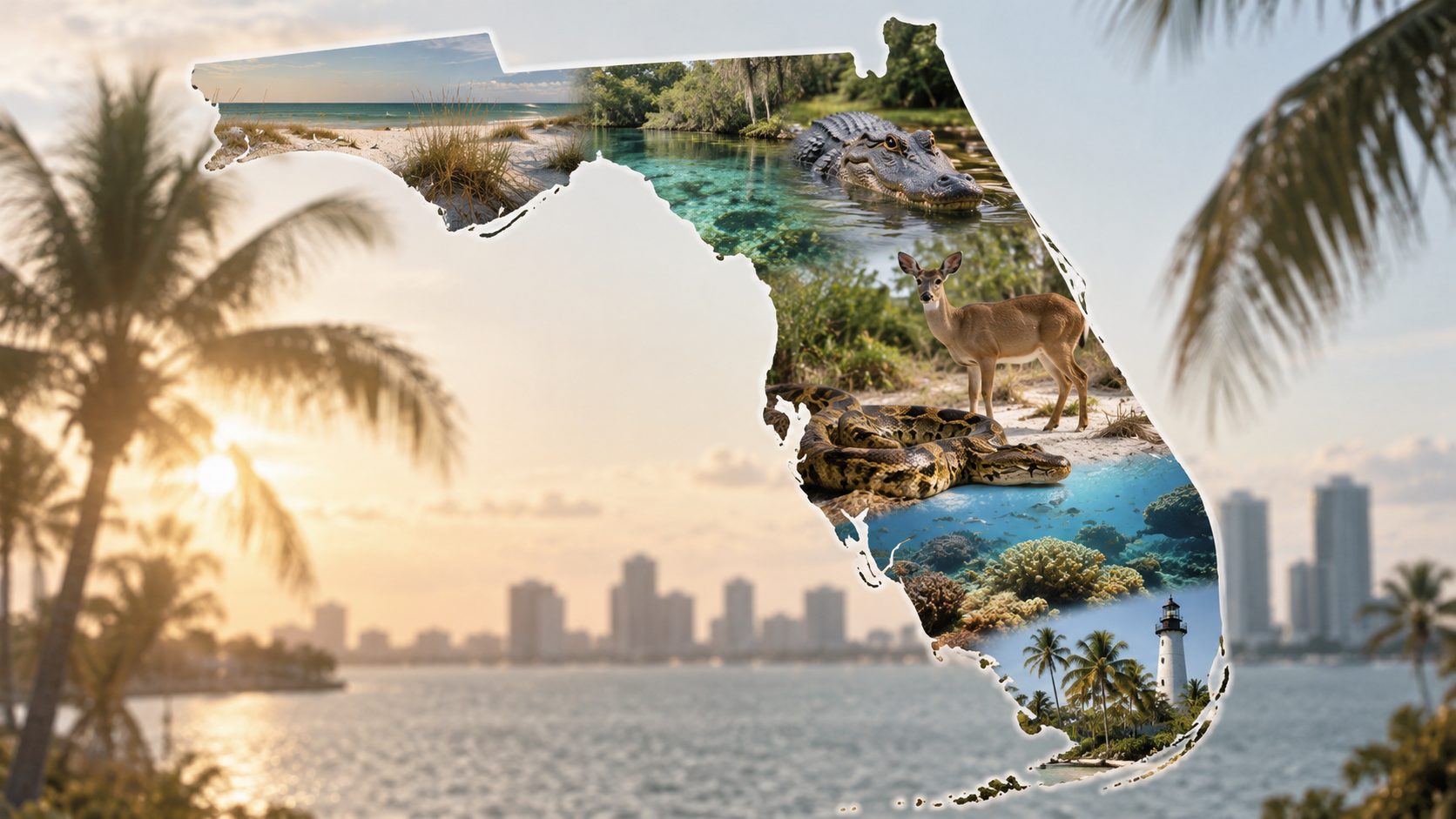
FWD.us estimates that about 330,000 Haitian TPS holders live in the United States. The largest populations are in Florida, New York, Massachusetts, New Jersey, Pennsylvania, Ohio, Georgia and Indiana.
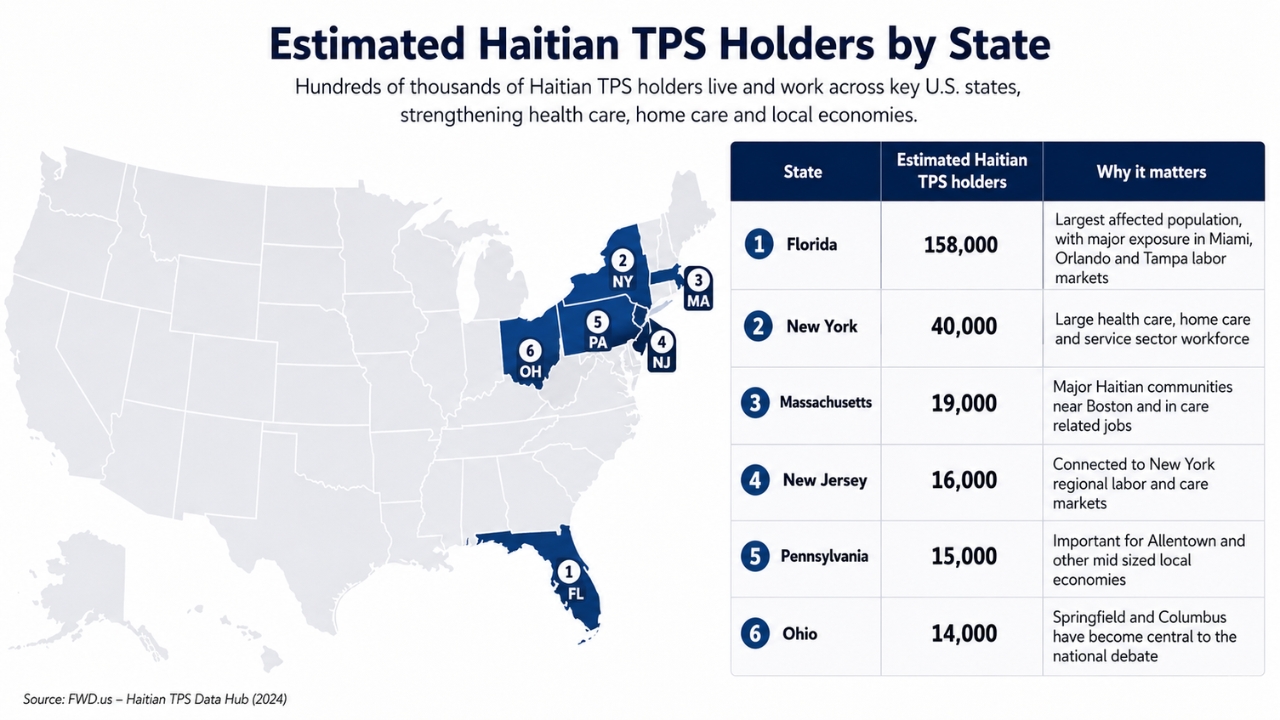
The numbers also show why the case is not only about removal risk. FWD.us estimates that 200,000 Haitian TPS holders are already in the U.S. workforce and contribute $5.9 billion to the economy each year.
Why Health Care Industry Is Worried?
The health care concern is simple. Many affected workers are not in easily replaceable jobs. They work in nursing homes, home care, hospitals, assisted living, child care, food service, cleaning, transport, and other support roles that keep care systems moving.
FWD.us estimates that Haitian TPS holders include 13,000 nursing assistants and 8,000 caregivers. Those jobs matter because long-term care already faces staffing shortages, high turnover, and growing demand from an aging population.
The issue connects directly to broader labor trends we have covered in our reporting on U.S. home care industry stats. Home care depends heavily on immigrant labor in many states, and any sudden loss of authorized workers can reduce available care hours.
JAMA research on deportation and the health care workforce found that noncitizens make up visible shares of health care personnel, especially in home care and nursing home settings.
The article estimated that documented noncitizens and undocumented immigrants together made up larger shares of home care and nursing home staff than in several other health care settings.
Where the Bottleneck Could Show Up First?
The first pressure point is likely to be long-term care. Nursing homes and home care agencies often operate with thin staffing margins. Losing even a small number of aides can affect admissions, shift coverage, and discharge planning.
Hospitals may feel the impact indirectly. If a patient is medically ready to leave but cannot find a nursing home bed or home care support, the hospital stay can stretch longer. That can back up emergency rooms, delay admissions, and increase costs.
Families can feel it quickly, too. A missing home care aide can mean a spouse, adult child or neighbor has to miss work.
A lost nursing assistant can mean fewer available shifts at a facility. A worker who loses authorization may also lose the ability to drive legally, which can cut off transportation to care jobs even before any removal case begins.
What Employers Must Watch Now?
View this post on Instagram
Employers with TPS workers need to follow USCIS and E-Verify instructions closely. A worker who has an expired-looking Employment Authorization Document may still have been valid under prior automatic extensions or court orders. The exact date matters.
The March USCIS guidance for Haiti TPS told employers how to handle Form I-9 and E-Verify while the court order remained in place. After the Supreme Court ruling, employers need updated agency instructions before making broad assumptions about work eligibility.
Employers should avoid two mistakes. They should not continue employing someone after work authorization has ended. They also should not remove a worker too early if DHS or USCIS guidance still recognizes the document as valid.
What TPS Holders Need to Know?
TPS holders should not treat online summaries as legal advice. The safest steps are practical and document-based.
Some TPS holders may already have pending asylum applications or other immigration cases. Others may have no separate protection if TPS ends. The difference is case-specific. The Supreme Court ruling is important for other TPS countries because it strengthens the government’s ability to defend termination decisions from many procedural challenges. The Court did not say every future TPS termination will automatically survive every lawsuit. It did say the TPS statute bars judicial review of non-constitutional claims connected to designation, termination, or extension decisions. That changes leverage. Lower courts may have less room to pause TPS terminations based on arguments that DHS skipped steps, used weak country condition analysis, or made a flawed administrative decision. The larger immigration question is the same one raised in our analysis of how immigration shapes the U.S. workforce. TPS is temporary by law, but many TPS holders have been part of American labor markets for years. When protections end suddenly, the effect is not limited to the individuals who lose status. Haitian TPS holders are concentrated in jobs that touch daily life. FWD.us estimates that Haitian TPS holders include workers in food service, agriculture, care work, logistics, retail, hotels, transportation, security, and maintenance. That makes the policy impact wider than a deportation statistic. Employers may lose trained staff. Families may lose care support. Local governments may lose tax revenue. Children in U.S. citizen households may lose income support if a parent can no longer work legally. That pattern is similar to the labor risk discussed in our reporting on how deportation policies can cost jobs. Removing workers from a labor market can affect employers, customers, prices, and U.S.-born workers who depend on the same businesses. The ruling answers a legal question, but many practical questions remain open. The Supreme Court TPS ruling is not only an immigration decision. It is a labor decision, a health care decision, and a family stability decision. For Haitian TPS holders, the ruling threatens legal work status and protection from deportation. For employers, it creates immediate compliance uncertainty. For health care systems, it raises the risk of losing workers in sectors that already struggle to stay staffed. The most important word in Temporary Protected Status is not only temporary. It is protected. The Supreme Court ruling has now made that protection much easier for the federal government to remove, and the consequences will be measured in workplaces, care facilities, classrooms, households, and local economies.
The Ruling Reaches Past Haiti and Syria
How the Economic Impact Could Spread?
Key Questions Still Unanswered
Question
Why it matters
When will work authorization actually end?
Employers and workers need a clear date for I-9 and E-Verify compliance.
Will DHS issue transition guidance?
Hospitals, nursing homes, schools, and employers need time to plan.
How will pending asylum cases be handled?
Some TPS holders may have separate claims that affect removal risk.
Will Congress intervene?
Only legislation can create a more stable long-term pathway for large groups.
What happens in states with large Haitian communities?
Florida, New York, Massachusetts, and Ohio could see the sharpest local effects.
The Bottom Line