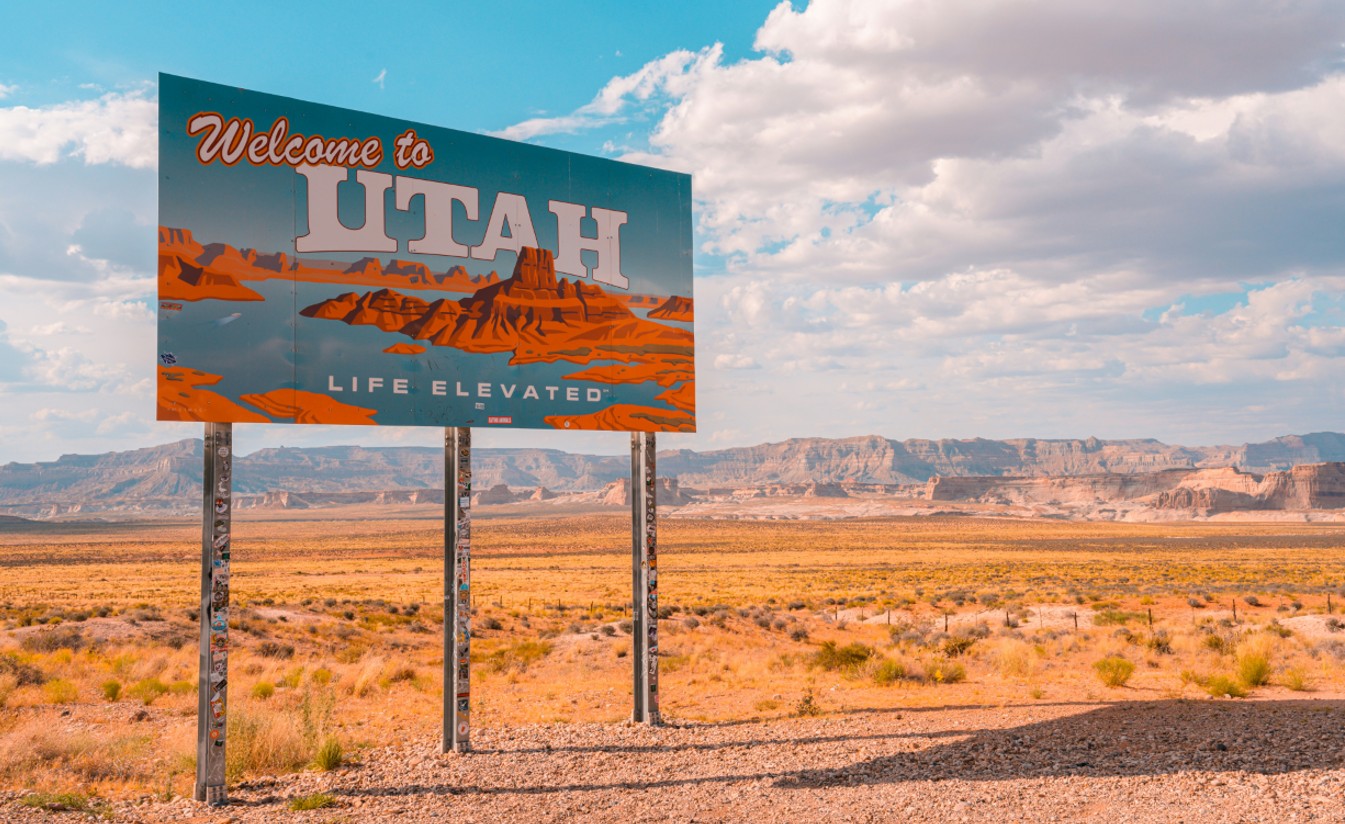
Utah has been ranked the best-performing state in America for 2026, holding the top position for a fourth consecutive year in the latest U.S. News & World Report Best States list.
South Dakota rose to second place, followed by Minnesota, North Dakota and Nebraska. New Hampshire, Idaho, Florida, Washington and Vermont completed the top 10.
The ranking does not simply identify the state with the largest economy, lowest taxes or cheapest housing. It compares all 50 states across health care, education, the economy, infrastructure, opportunity, fiscal stability, crime and corrections, and the natural environment.
Utah did not lead every category. Its first-place finish came from consistently strong results across several parts of state government and the economy, even as it performed poorly on environmental measures.
The 10 Best States in America for 2026
| Rank | State | Main reason it stands out |
|---|---|---|
| 1 | Utah | Strong economy, stable state finances, infrastructure and education |
| 2 | South Dakota | Major gains in health care, economic performance and opportunity |
| 3 | Minnesota | Balanced results across public services, education and opportunity |
| 4 | North Dakota | Improvement in health care, education, finances and the economy |
| 5 | Nebraska | Low unemployment, fiscal stability and steady infrastructure performance |
| 6 | New Hampshire | Nation-leading crime and corrections ranking |
| 7 | Idaho | Economic growth, population gains and relatively strong state finances |
| 8 | Florida | Population growth and a large, expanding economy |
| 9 | Washington | Technology, infrastructure and a high-output economy |
| 10 | Vermont | Ranked first nationally for opportunity |
The full 2026 Best States ranking was released on July 28. U.S. News said it assessed the states using 71 measures and thousands of data points.
Utah Finished First Again
Utah remained at the top because it did well in several heavily watched areas rather than dominating a single part of the ranking.
The state placed second for its economy, second for fiscal stability and fourth for infrastructure. It also finished in the top 10 for education and crime and corrections.
Economic conditions provide part of the explanation. Utah had a seasonally adjusted unemployment rate of 3.6 percent in June 2026, compared with the national rate of 4.2 percent, according to the Bureau of Labor Statistics.
Utah has also experienced sustained population and business growth. Earlier Census figures showed the state adding more than 60,000 residents during one recent 12-month period, with growth coming from both migration and births exceeding deaths. We previously wrote about how Utah became one of the country’s fastest-growing states.
Population growth can support job creation and tax revenue, but it creates pressure of its own. Housing costs, traffic, water supplies and public infrastructure all become harder to manage when new residents arrive faster than homes and services can be added.
Utah also has a clear weakness in the new ranking. It placed 48th for its natural environment, despite being known for national parks, mountains and open desert.
The environmental category looks at conditions such as pollution and air and water quality, not scenic beauty. Ozone pollution along the Wasatch Front has remained a federal regulatory issue. In April, the Environmental Protection Agency proposed changing an earlier air-quality decision affecting the Salt Lake City region.
Utah also slipped from 19th to 24th in opportunity, a category covering affordability, economic opportunity and equality. Housing prices remain one of the clearest challenges facing people considering a move to the state.
South Dakota Made the Largest Move Near the Top
South Dakota climbed from eighth place in the previous ranking to second in 2026. U.S. News attributed the jump to stronger results in health care, the economy and opportunity.
The state also had the lowest unemployment rate in the country in June, at 2 percent. North Dakota followed at 2.3 percent, giving the two neighboring states the strongest headline labor-market figures in the nation.
Low unemployment does not mean every industry or town is growing equally. Rural communities can still struggle to attract doctors, teachers and skilled workers. A very low rate can also indicate that employers have difficulty filling available positions.
South Dakota’s high overall position does not mean every current economic figure is positive. Real state gross domestic product fell at an annual rate of 1.6 percent during the first quarter of 2026, according to the Bureau of Economic Analysis.
The difference shows why the ranking should not be read as a report on one quarter. It combines dozens of measures collected across different periods. A state can weaken temporarily in one indicator and still rank highly because of health, education, finances, infrastructure and longer-term economic performance.
Minnesota, North Dakota and Nebraska Completed the Top Five
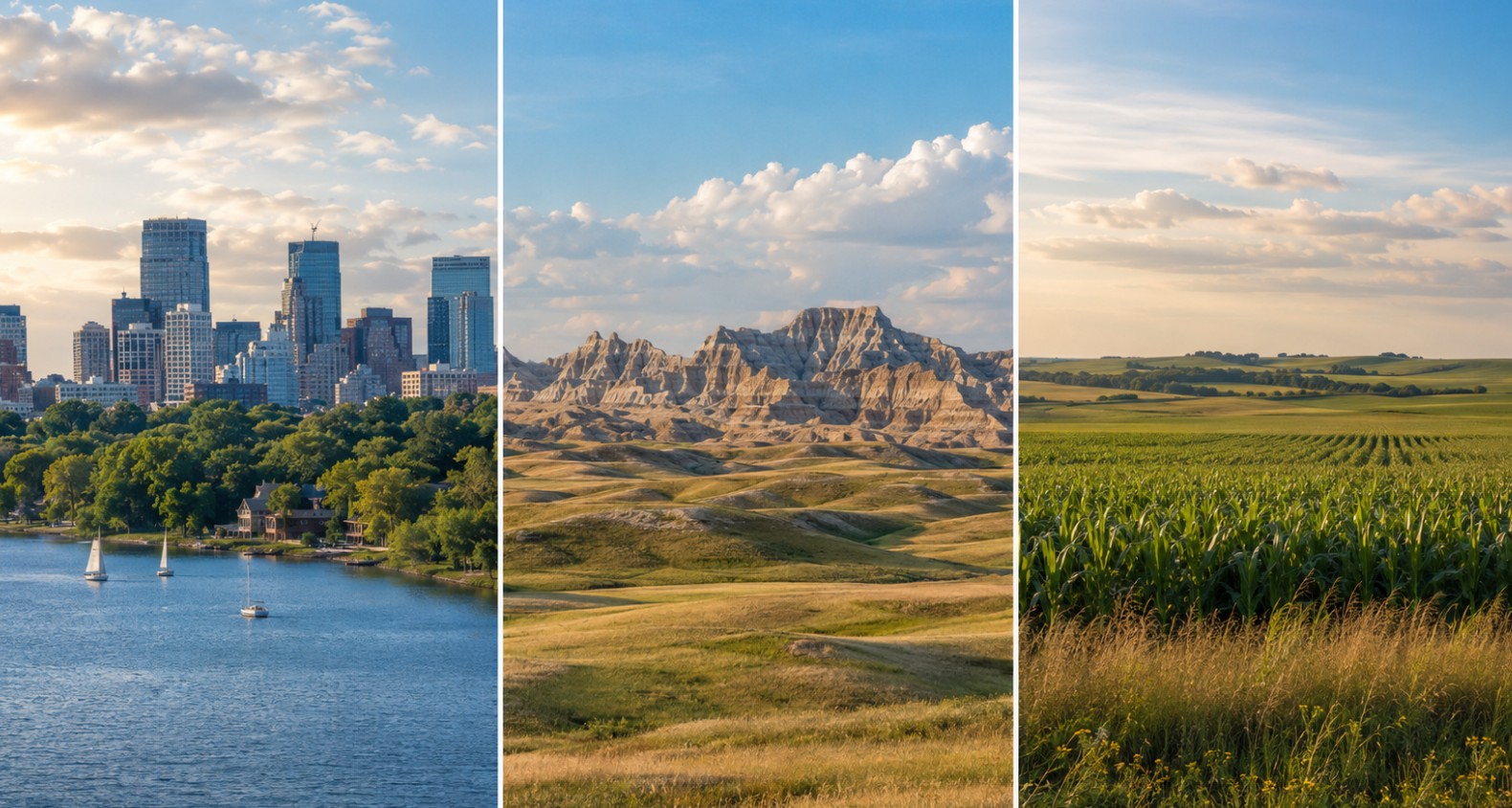
Minnesota placed third, giving the Upper Midwest three of the top five positions. Its result reflects relatively strong public services and broad performance across the ranking rather than leadership in one category.
The state’s June unemployment rate was 4.4 percent, higher than the rates reported in Utah, South Dakota, North Dakota and Nebraska. Minnesota still finished above those states in several other measures used to calculate the overall result.
North Dakota made another significant advance, moving from 12th to fourth. Improvements in health care, education, fiscal stability and economic performance helped push it into the top five.
North Dakota’s 2.3 percent unemployment rate was the second lowest in the country in June. Energy production continues to play an important role in its economy, but changes in oil prices can make growth less predictable than the headline ranking suggests.
Nebraska finished fifth. Its unemployment rate stood at 2.9 percent, tied with New Hampshire for fifth lowest nationally. The state also benefits from a mix of agriculture, manufacturing, transportation, financial services and insurance.
Texas Had the Best Economy but Did Not Lead Overall
Texas placed first in the economy category. U.S. News credited the state with strong job growth, gross domestic product growth, migration and growth among younger residents.
Economic rank is not the same as economic size. California still has the largest state economy in dollar terms, followed by Texas and New York. Our list of U.S. states ranked by GDP shows California producing about $4.25 trillion in 2025, compared with approximately $2.9 trillion in Texas.
U.S. News measures economic performance and momentum rather than ranking states only by the total value of everything they produce. A smaller state can therefore place ahead of California in the economy category if employment, business creation and growth are stronger relative to its size.
Texas did not reach the overall top 10 because the final score includes health care, education, opportunity, crime, infrastructure, state finances and environmental conditions. Strength in one major category cannot fully erase weak results elsewhere.
Let’s See Which State Led Each Category
| Category | No. 1 state | What the category examines |
|---|---|---|
| Overall | Utah | Combined performance across all eight categories |
| Economy | Texas | Growth, employment, business activity and economic momentum |
| Education | Colorado | Pre-K to grade 12 results and higher education |
| Health care | Hawaii | Access, quality and public health outcomes |
| Infrastructure | Nevada | Transportation, utilities, internet access and related systems |
| Fiscal stability | Wyoming | State budget health and long-term financial condition |
| Crime and corrections | New Hampshire | Public safety, crime rates and correctional outcomes |
| Opportunity | Vermont | Affordability, economic opportunity and equality |
| Natural environment | Hawaii | Air quality, water quality and pollution |
As you can see, none of the states leads in multiple categories.
The Midwest Gained Ground in 2026
South Dakota, Minnesota, North Dakota and Nebraska holding positions two through five created the clearest regional pattern in the latest list.
Lower housing and business costs, manufacturing investment and tight labor markets have helped parts of the Midwest attract workers and companies. The ranking does not prove that all people are leaving the Northeast or West, but the results match a wider shift in population and investment toward less expensive areas.
More than 7.1 million Americans moved between states in 2024, based on Census data summarized in a recent migration analysis.
Our team at NCHStats previously reported that New Hampshire led a separate 2026 ranking of the best states for movers.
The two lists should not be treated as interchangeable. The U.S. News ranking measures broad state performance. A moving ranking may place more weight on housing, taxes, safety, employment prospects and the practical costs faced by a household after relocation.
Utah Being No. 1 Does Not Mean It Is Best for Everyone
A national ranking can compare public data, but it cannot decide which state fits a particular family, worker or retiree.
Someone seeking the lowest home price may reach a different conclusion from a person choosing a state for schools, medical care or a specialized career. Conditions can also change sharply within a state. Salt Lake City is not the same housing or employment market as rural Utah, just as Minneapolis does not represent every part of Minnesota.
The age of the data matters as well. State rankings combine information released at different times. Some indicators reflect 2026 conditions, but others come from earlier federal surveys or multi-year averages.
Readers should therefore treat the result as a broad comparison of state performance, not a promise that every resident in a highly ranked state has affordable housing, good medical care or access to a strong school.
Louisiana, Alaska, Mississippi, New Mexico and Michigan Finished at the Bottom
Louisiana, Alaska, Mississippi, New Mexico and Michigan occupied the bottom five positions in the 2026 ranking.
The result does not mean that those states perform poorly in every measure. Alaska has significant natural resources, Michigan has a large industrial economy and New Mexico has major federal research facilities. Lower results across health, education, public safety, opportunity or infrastructure can still pull down the combined score.
California and New York also failed to enter the top 10 despite having two of the country’s largest economies. High economic output does not automatically produce a high overall ranking when housing costs, equality, infrastructure and other public outcomes are included.
What the 2026 Ranking Really Shows?
Utah’s fourth consecutive victory is mainly a story about consistency. The state is not first in education, health care, infrastructure, public safety or the economy. It performs well enough across most of them to remain ahead of states with greater strengths and greater weaknesses.
South Dakota and North Dakota recorded the biggest advances near the top, helped by low unemployment and improvement across several categories. Minnesota and Nebraska completed a top five dominated by the Midwest and Mountain West.
The most useful conclusion is not that every American should move to Utah. The ranking shows which states currently combine economic performance, public services, infrastructure and stable finances most successfully according to the U.S. News methodology.