
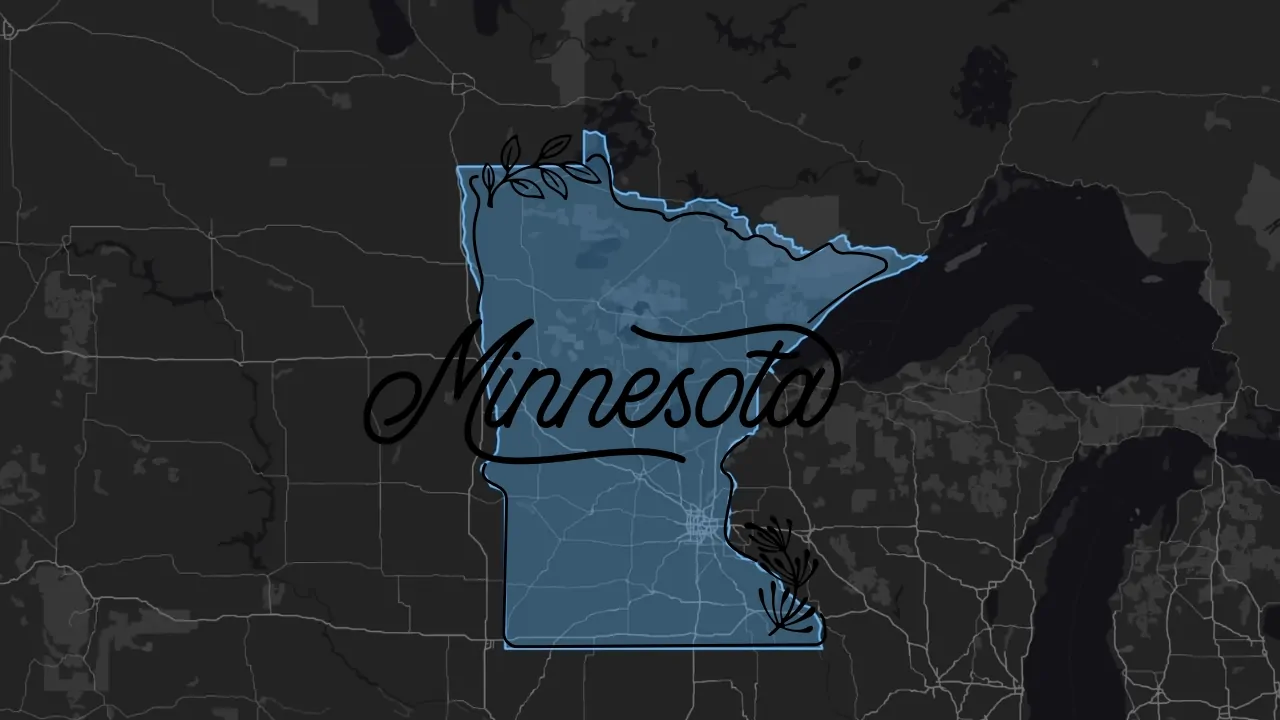
Minnesota enters 2026 with a larger population than it had a year earlier, after several years when migration losses raised concern about the state population path. The latest official U.S. Census Bureau QuickFacts estimate puts Minnesota at 5,830,405 residents as of July 1, 2025.
That figure is the latest official state estimate available in 2026. It shows Minnesota has added 123,672 residents since the April 2020 estimate base of 5,706,733, a gain of 2.2% since the start of the decade.
Measure
Figure
Latest official population estimate
5,830,405
Estimate date
July 1, 2025
April 2020 estimate base
5,706,733
Change since April 2020
+123,672 residents
Percent change since April 2020
+2.2%
2020 Census count
5,706,494
2010 Census count
5,303,925
The new estimate gives Minnesota a different population story than many slow-growth Midwest states. Growth has returned, yet the state still faces pressure from aging, housing costs, uneven county growth, and a labor market that depends on attracting and retaining workers.
How Minnesota Has Changed Since 2020?
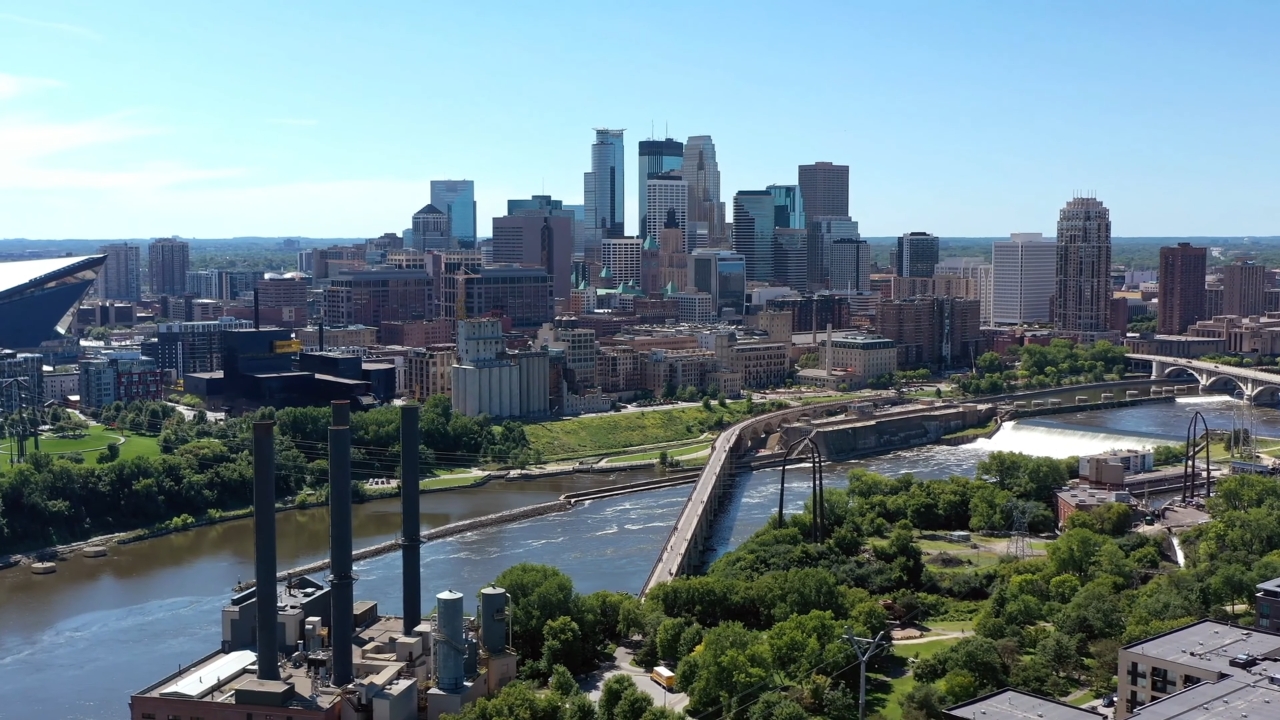
Minnesota has grown every year since the 2020 census base, but the pace has been uneven. Pandemic-era migration losses slowed the state, while stronger international migration and a better domestic migration year helped lift the latest estimate.
The most important change is not only the total population gain. The source of growth is changing. Minnesota can no longer rely on a large natural increase from births outnumbering deaths. Migration now carries more weight in the population outlook.
Population Trend
What It Shows
The state population is rising
Minnesota added more than 123,000 residents since the 2020 base
Growth has improved recently
The state added about 33,000 residents from 2024 to 2025
Migration matters more
Births still exceed deaths, but the margin has narrowed
Growth is uneven by place
Metro and suburban counties are stronger than many rural counties
Is Minnesota Population Growing Or Declining?
Minnesota gained more people from other states in 2025, a first this decade https://t.co/DpjATG9Hhr
— The Minnesota Star Tribune (@StarTribune) January 28, 2026
The Minnesota population is growing. The state gained roughly 33,000 residents from 2024 to 2025, according to USAFacts population change data based on Census Bureau estimates.
The gain came from three population components: natural increase, international migration, and domestic migration. Natural increase remains positive, meaning births still outnumber deaths. International migration also continues to support growth. The new factor is domestic migration, which turned positive after several difficult years.
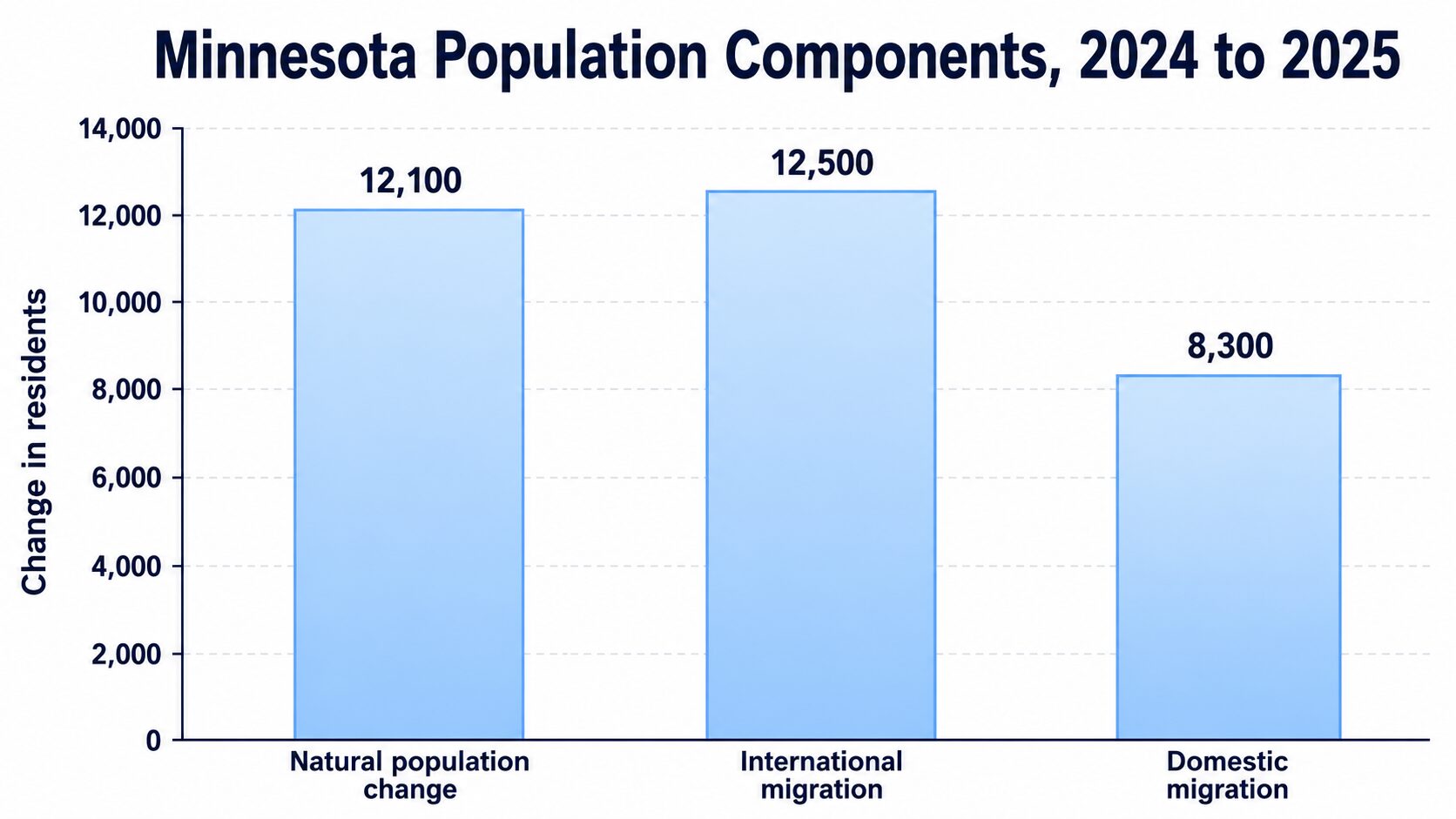
The number of domestic migrants deserves attention. Minnesota had lost residents to other states for years, especially during and after the pandemic. A positive domestic migration year suggests the state has regained some appeal for households, workers, and families deciding where to live.
Why is Domestic Migration so Important?
Domestic migration is a direct test of whether people see enough opportunity to stay or move in from another state. A state can have good schools, strong hospitals and a broad economy, yet still lose residents when housing, taxes, weather, wages, or lifestyle factors push households elsewhere.
Recent reporting on Census migration data found that Minnesota gained 8,300 more residents from other states than it lost in 2025, ending a seven-year run of net domestic outmigration.
View this post on Instagram
The same reporting noted that the state had lost more than 43,000 residents in net domestic migration between 2021 and 2023, which makes the 2025 shift important, though still early.
Axios Twin Cities reported the migration reversal using Census data.
One positive year does not settle the long-term question. Minnesota needs several years of gains before the state can say the migration problem has changed direction. For now, 2025 is a clear improvement, not a final answer.
Minnesota Population By County
Minnesota has 87 counties, and the population is heavily concentrated in the Twin Cities region. Hennepin County remains the largest county by a wide margin, followed by Ramsey, Dakota, Anoka, and Washington counties, according to the U.S. Census Bureau county population estimates.
The statewide growth number hides major local differences. Large metro counties hold the biggest population base, fast-growing suburban counties are gaining residents, and many rural counties face flat or declining population totals.
Rank
County
2025 Population
Main Population Point
1
Hennepin County
1,284,784
The largest county and the Minneapolis core
2
Ramsey County
541,623
The second-largest county and the Saint Paul core
3
Dakota County
457,710
Large south metro county
4
Anoka County
381,605
Large north metro county
5
Washington County
286,895
Fast-growing east metro county
6
St. Louis County
200,630
The largest county in northeast Minnesota
7
Olmsted County
166,731
Rochester and Mayo Clinic economic base
8
Stearns County
164,110
Central Minnesota population center
9
Scott County
159,017
Growing southwest metro county
10
Wright County
157,559
Strong suburban and exurban growth
Hennepin County remains the population center, but growth pressure has moved outward. Wright, Scott, Washington, and other suburban counties benefit from households looking for space, newer housing, and access to metro jobs.
Ramsey County remains central to the state population map, but its recent numbers show weaker momentum than the fastest-growing suburbs.
Fastest-Growing Areas In Minnesota

The latest state estimates show growth spreading beyond the two central counties. The Minnesota State Demographic Center population estimates identified Wright, Carver, Washington, Isanti, and Sherburne as the fastest-growing counties from 2020 to 2024. The same release found that 34 counties lost population during that period.
That split explains the Minnesota population picture better than the statewide total alone. The state is growing, but growth is not evenly spread.
Counties with access to the Twin Cities labor market and new housing supply are gaining residents faster, while many rural counties face aging, slower job growth, and fewer new households.
County Pattern
Population Meaning
Outer metro growth
Households continue moving toward suburban and exurban counties
Central city stability
Minneapolis and Saint Paul remain large, but growth pressure has spread outward
Rural county decline
Aging and weaker household formation place pressure on smaller counties
Regional job centers
Places such as Rochester and St. Cloud remain important outside the Twin Cities
Minnesota Cities By Population
Minneapolis remains the largest city in Minnesota, followed by Saint Paul and Rochester. City-level estimates from the State Demographic Center use an April 1 reference date, while Census state estimates use July 1, so city and state figures should be read as separate estimate series.
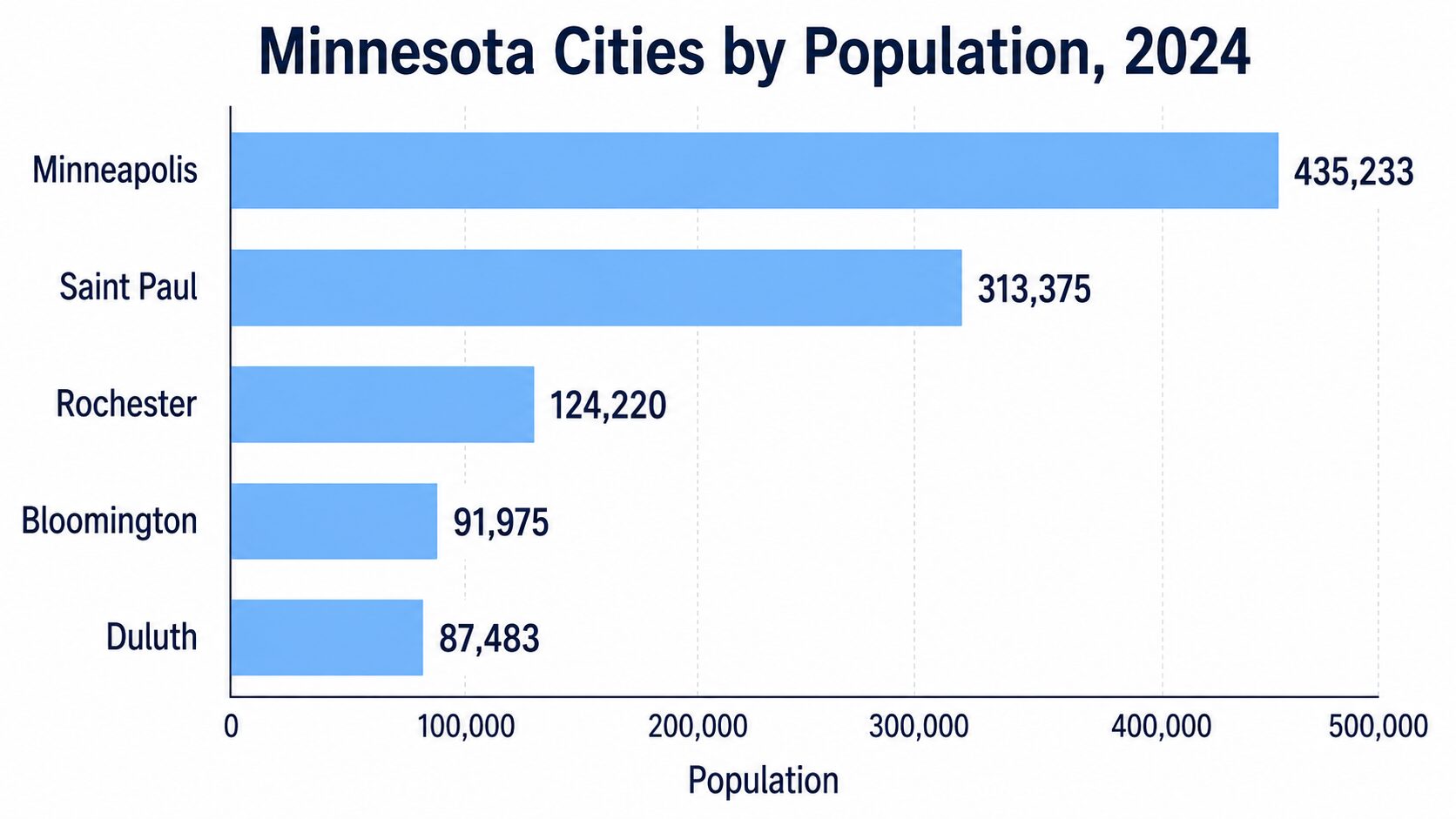
Minneapolis and Saint Paul still define the state population core. Rochester adds a different kind of growth story, tied to health care, research, education, and regional jobs.
Duluth remains the largest northern city, while Bloomington shows how suburban communities can hold major employment bases without being the largest residential centers.
Minnesota Demographics In 2026
Minnesota remains younger than several slow-growth states, but aging is becoming more important. Census data shows 22.4% of residents are under 18, while 18.2% are age 65 or older.
That balance still gives the state a meaningful school-age and working-age base, though the senior share will keep rising in the coming decades.
Category
Latest Figure
Under 5 years
5.6%
Under 18 years
22.4%
Age 65 and older
18.2%
Female residents
49.9%
Veterans
259,988
Foreign-born residents
8.7%
Language other than English spoken at home
12.4%
High school graduate or higher
93.9%
Bachelor’s degree or higher
39.4%
Education remains one of the state’s population strengths. More than nine in ten adults have completed high school, and nearly four in ten have a bachelor’s degree or higher.
That helps explain why the state continues to support large health care, finance, education, manufacturing, and corporate employment sectors.
Race and Ethnicity
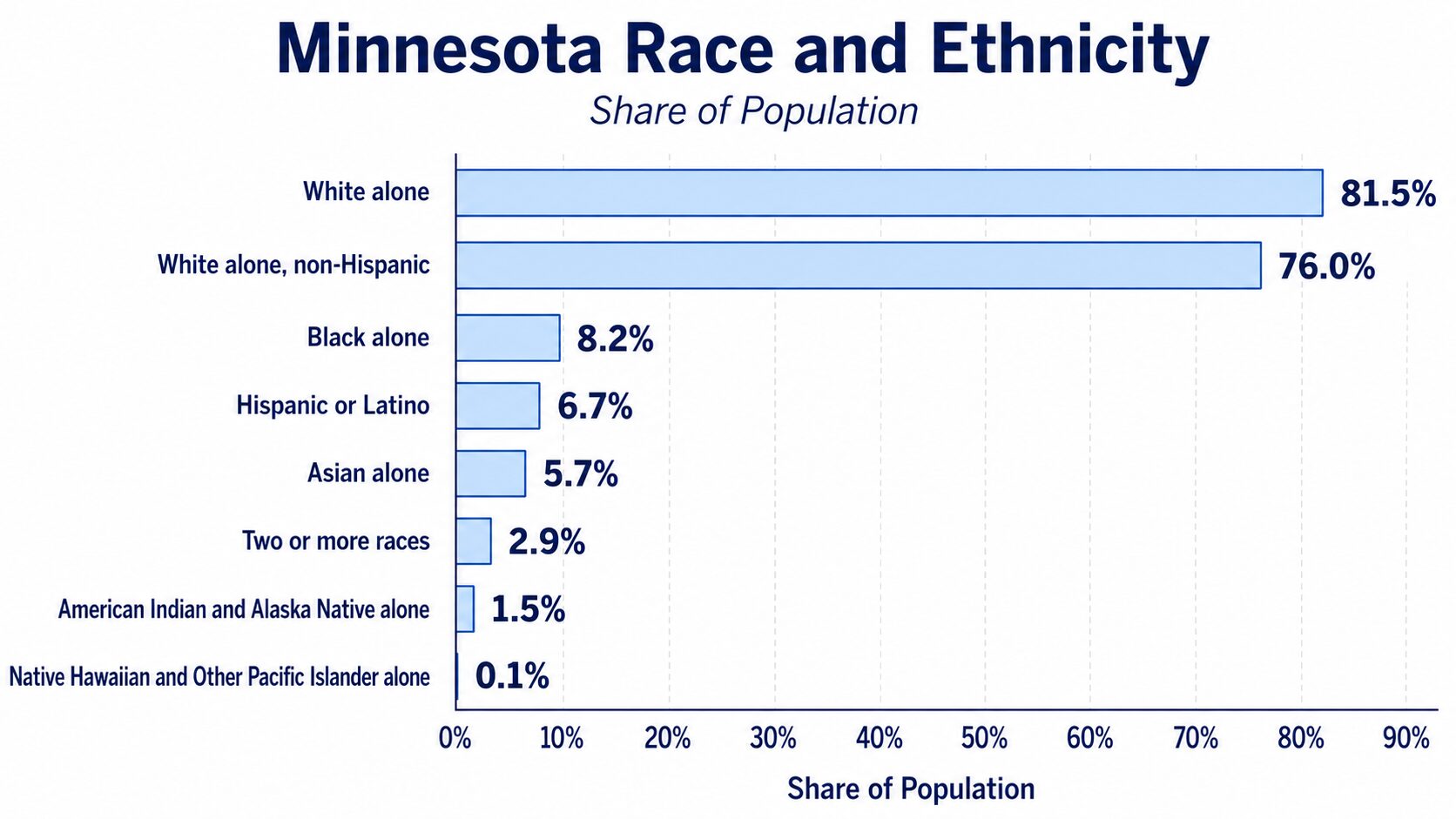
Minnesota remains majority White, while Black, Asian, Hispanic, Indigenous, and multiracial communities form a growing part of the state population.
Immigration also remains important, especially in the Twin Cities, Rochester, St. Cloud, and other regional job centers.
Housing Costs and Population Pressure
Housing is one of the clearest limits on Minnesota’s growth. Statewide home prices remain far below high-cost coastal states, but affordability has weakened for renters, first-time buyers, and households with modest incomes.
Minnesota Realtors reported that the statewide median home price rose 2.9% to $355,000 in 2025. The Twin Cities metro median rose 2.6% to $390,000. Both were record highs, even as higher borrowing costs kept many buyers cautious.
Housing Measure
Latest Figure
Housing units
2,597,286
Owner-occupied housing rate
72.2%
Median owner-occupied home value
$329,300
Median monthly owner cost with mortgage
$1,947
Median gross rent
$1,280
Building permits in 2024
20,913
Minnesota Housing Partnership reported that nearly half of renter households are cost-burdened. Older renters face heavier pressure, with 63% of senior renters cost-burdened. The same profile found a shortage of more than 101,000 affordable and available homes for extremely low-income renters.
Population growth depends on housing supply. When new households cannot find housing near jobs, schools, and transit, growth moves outward or leaves the state entirely.
That is why housing is no longer just a real estate issue in Minnesota. It is a population issue, a workforce issue, and a regional planning issue.
Income, Poverty, and Household Conditions
Minnesota has stronger income numbers than many states. Median household income stands at $89,062, per capita income at $48,237, and the poverty rate at 9.3%.
Those figures point to a relatively strong household base, but they do not erase the pressure caused by housing and child care costs.
Economic Measure
Latest Figure
Median household income
$89,062
Per capita income
$48,237
Poverty rate
9.3%
Retail sales in 2022
$134.66 billion
Retail sales per capita in 2022
$23,565
A strong income profile helps Minnesota compete for workers, but household decisions depend on what income buys. If home prices, rents, and mortgage costs rise faster than wages, the state can grow on paper while many households feel less secure.
Jobs and The Local Economy

Population growth and job growth are tied closely in Minnesota. A growing population supports employers, school districts, and local tax bases.
A tighter or shrinking labor force makes it harder for businesses, hospitals, care providers, and manufacturers to fill jobs.
Minnesota labor market data for March 2026 showed a mixed picture. The unemployment rate stayed at 4.5%, slightly above the national rate of 4.3%. The labor force fell to 3,156,405 people, while nonfarm payrolls added 800 jobs over the month.
Labor Market Measure
March 2026
Unemployment rate
4.5%
U.S. unemployment rate
4.3%
Labor force
3,156,405
Labor force participation rate
67.6%
Monthly nonfarm job change
+800
Private sector monthly job change
+600
Average private-sector hourly wage
$39.16
Education and health services led over-the-year job growth in March 2026, with 19,230 jobs added. Construction also gained 5,257 jobs. Several sectors posted annual losses, including manufacturing, information, financial activities, leisure and hospitality, trade, transportation, and utilities.
The labor market numbers add context to the population figures. Minnesota needs residents not only for growth, but for replacement. As older workers leave the labor force, the state needs younger workers, domestic movers, and immigrants to keep the economy moving.
State Budget and Economic Outlook
Minnesota entered 2026 with a better short-term budget picture than earlier forecasts suggested, but long-term pressure remains. The Minnesota Management and Budget forecast projected a $3.7 billion balance for fiscal years 2026 and 2027, up $1.3 billion from the previous estimate.
The same outlook warned that spending growth is expected to outpace revenue growth later in the forecast period. That matters for population coverage because schools, health care, transportation, and housing programs all depend on a stable tax base and a large enough working population.
Minnesota Population Outlook
The Minnesota State Demographic Center projection points to slow long-term growth. The state population is expected to rise from 5.78 million in 2024 to 6.11 million in 2075.
The forecast also shows a major demographic shift. Natural change from births and deaths is expected to decline and turn negative by 2065. At that point, deaths would outnumber births, and net migration would become the main source of population growth.
Projection Measure
Figure
Projected 2024 population
5.78 million
Projected 2075 population
6.11 million
Natural change outlook
Turns negative by 2065
Main long-term growth support
Net migration
The projection gives Minnesota a clear warning. Growth can continue, but it will require housing, jobs, and public services that can keep people in the state and bring new residents in. Without stronger migration, the aging trend will slow population gains over time.
FAQ
Conclusion
@hoodmaps Best Minnesota Cities to move to in 2026 #minnesotacheck #minnesota #twincities #minneapolis #rochestermn ♬ Mindful force – KNAwave
The Minnesota population in 2026 shows growth, not decline. The latest official estimate puts the state at 5,830,405 residents, with more than 123,000 people added since 2020. The newest annual data also shows a stronger migration picture, including a domestic migration gain after years of losses.
The growth story has limits. Housing costs remain a pressure point, the labor market has cooled, and long-term projections show that aging will reduce natural growth.
Minnesota remains in a stronger position than many slow-growth states, but future gains will depend more on migration, housing supply, and job growth than on births alone.
References
- U.S. Census Bureau QuickFacts, Minnesota – https://www.census.gov/quickfacts/fact/table/MN/PST045224
- U.S. Census Bureau, County Population Totals 2020 To 2025 – https://www.census.gov/data/datasets/time-series/demo/popest/2020s-counties-total.html
- USAFacts, Minnesota Population Growth And Components – https://usafacts.org/answers/is-the-population-growing-or-shrinking/state/minnesota/
- Minnesota State Demographic Center, Population Estimates – https://mn.gov/admin/demography/data-by-topic/population-data/our-estimates/
- Minnesota State Demographic Center, Population Projections – https://mn.gov/admin/demography/data-by-topic/population-data/our-projections/
- Minnesota Housing Partnership, 2026 State Profile – https://mhponline.org/2026-state-profile/
- Minnesota Realtors, 2025 Annual Minnesota Housing Market Report – https://www.mnrealtor.com/blogs/mnr-news1/2026/01/27/2025-minnesota-annual-housing-market-report
- Minnesota Department of Employment and Economic Development, March 2026 Employment Analysis – https://mn.gov/deed/assets/Mar%202026%20Employment%20Analysis_final_tcm1045-283140.pdf