Every U.S. state allows at least some voters to cast a ballot by mail, but the rules now fall into three different systems: automatic mailed ballots, no-excuse absentee voting and excuse-required absentee voting.
The distinction has become more urgent after the Postal Service moved ahead with a proposed federal rule tied to President Donald Trump administration plans for mail ballot controls.
The rule would create new mail-ballot reporting standards for federal elections, including state-specific lists and ballot envelope barcodes.
According to the National Conference of State Legislatures, 29 states allow no-excuse absentee voting, while eight states and Washington, D.C., conduct elections largely by mail. The remaining 13 states require voters to provide an approved reason to vote absentee by mail.
The issue now reaches beyond state election manuals. CNN reported on the Postal Service ballot delivery fight as federal officials and states prepare for the November midterms, while News From The States reported that the Department of Homeland Security plans to give states access to federal citizenship data by June 30 and use mail-ballot data to monitor ballot flows.
States Where Voters Automatically Receive Mail Ballots
Eight states and Washington, D.C., mail ballots automatically to voters rather than requiring a separate absentee ballot request. NCSL classifies California, Colorado, Hawaii, Nevada, Oregon, Utah, Vermont and Washington as all-mail election states, with Vermont noted for general elections.
Voting System
States And Districts
What Voters Need To Know
Automatic mail ballots
California, Colorado, Hawaii, Nevada, Oregon, Utah, Vermont, Washington and Washington, D.C.
Voters generally receive a ballot by mail without submitting a separate absentee request.
California is the largest example. The California Secretary of State says county election officials mail vote-by-mail ballots to all active registered voters.
That system has drawn fresh national attention after Trump made unsupported fraud claims about California primary ballot counting. California counts mailed ballots that meet state deadlines and then completes the official canvass, which means election-night totals can shift as later-arriving and verified ballots enter the count.
As we reported in our voter registration analysis, mail voting accounted for nearly one-third of ballots cast in the 2024 election. That makes even technical ballot-mail changes significant when applied before a midterm election.
States Where Any Voter Can Request A Mail Ballot
Twenty-nine states allow no-excuse absentee voting. Voters in those states still need to request a mail or absentee ballot, unless they are already on a permanent mail-ballot list where state law allows one, but they do not need to prove illness, travel, age, disability or another approved excuse.
Voting System
States
What Voters Need To Know
No-excuse absentee voting
Alaska, Arizona, Connecticut, Florida, Georgia, Idaho, Illinois, Iowa, Kansas, Maine, Maryland, Massachusetts, Michigan, Minnesota, Montana, Nebraska, New Jersey, New Mexico, New York, North Carolina, North Dakota, Ohio, Oklahoma, Pennsylvania, Rhode Island, South Dakota, Virginia, Wisconsin and Wyoming
Any eligible voter can request a mail ballot without giving a reason.
Those states sit at the center of the federal dispute because many rely on mail ballots without using a full automatic mail system. A USPS rule requiring state voter lists, barcodes and new data reporting would add another layer of administration before federal elections.
As we already covered in our earlier report on the Trump mail voting order, a federal judge allowed the order to remain in effect for now because the court found the challengers had not yet shown immediate harm from a final agency action.
States Where Voters Need An Excuse To Vote By Mail
Thirteen states still require an approved excuse for most voters who want to cast a mail or absentee ballot. A voter in those states may qualify because of illness, disability, age, work, travel, religious observance, military service or another reason listed in state law.
Voting System
States
What Voters Need To Know
Excuse-required absentee voting
Alabama, Arkansas, Delaware, Indiana, Kentucky, Louisiana, Mississippi, Missouri, New Hampshire, South Carolina, Tennessee, Texas and West Virginia
Voters usually need a state-approved reason to receive and cast a mail ballot.
Those states do not ban mail voting. They limit it to voters who meet absentee eligibility rules. That is why the phrase “cannot vote by mail” needs a careful reading: voters without an approved excuse cannot use the mail option in those states, while qualifying voters still can.
What The New USPS Rule Would Change?
View this post on Instagram
The Postal Service proposed rule would amend federal mailing standards for ballot mail in federal elections. The proposal calls for official election mail markings, automation-compatible envelopes, uniquely serialized Intelligent Mail barcodes and mailpiece design review.
The proposal also creates a process for states to submit information to a Federal Ballot Mail Portal. According to the Postal Service document, states would provide names of people who will receive a mail-in or absentee ballot, along with the barcode tied to the outbound and return ballot envelope.
The rule says states would retain control over who can vote by mail under state law. The Postal Service would compile and return a state-specific participation list, while law enforcement could use the data to compare the number of ballots mailed with the number of ballots returned.
The proposal does not apply to primary elections or to ballots covered under the Uniformed and Overseas Citizens Absentee Voting Act. It also says the Postal Service would continue its ordinary election mail practices for completed ballots that enter the mailstream, including extra measures before the November 3, 2026, general election.
Some States Say The Rule Could Disrupt Mail Voting
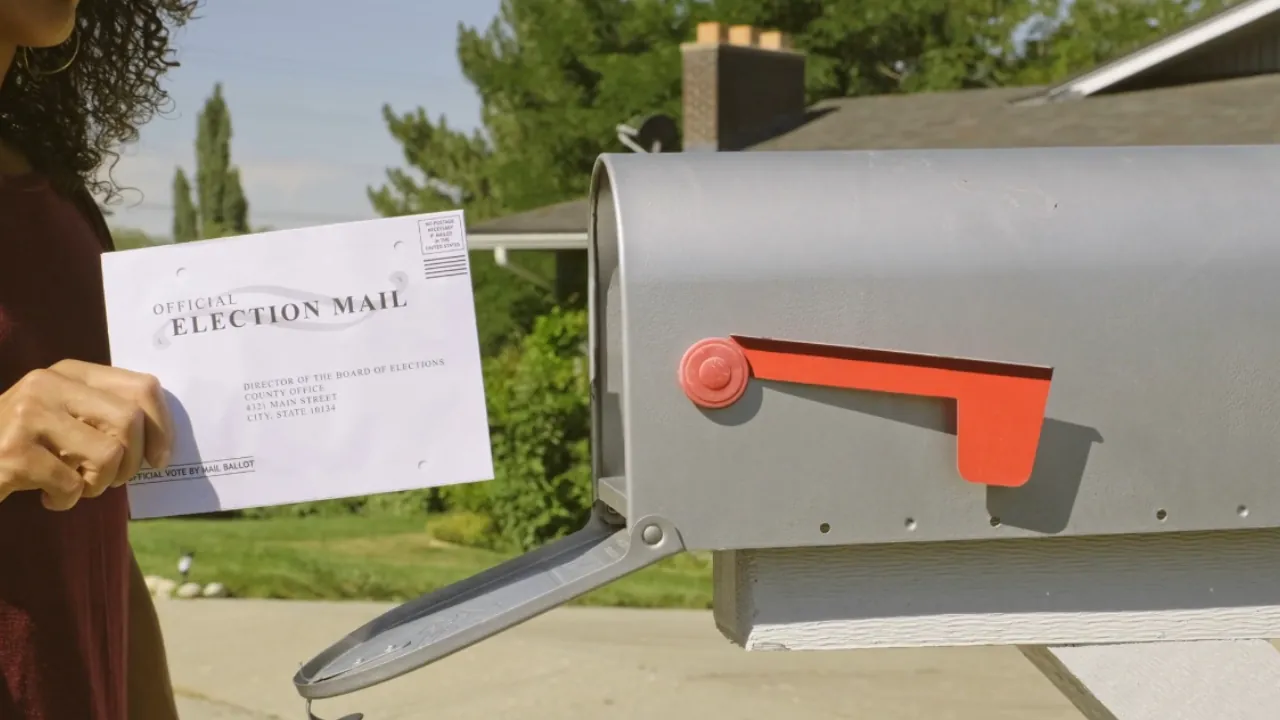
State officials and voting-rights groups argue that the federal plan could create confusion close to the midterms. Their concern is not just whether the Postal Service can physically deliver ballots. The larger issue is whether new federal data steps could delay ballot mailing, add privacy risks or give federal officials a role in state-run election administration.
News From The States reported that DHS intends to use voter lists submitted to USPS to monitor mail-in and absentee ballot flows, identify possible anomalies and generate investigative leads. The same report said the executive order faces multiple lawsuits from Democrats, civil-rights groups and voting-rights organizations.
The White House has argued that the order is meant to prevent noncitizen voting and protect federal elections. Opponents say noncitizen voting is rare and that states already manage voter eligibility, registration checks and ballot verification under state and federal law.
We previously explained the related federal data fight in our coverage of the Trump administration citizenship list plan. That effort is now tied to the mail voting dispute because voter-roll data, citizenship checks and ballot delivery rules are moving on the same election calendar.
California Shows The Next Legal Clash
California has become a test case for the broader fight because the state automatically mails ballots to active registered voters and allows time for mailed ballots to be verified and counted. That process slows final results, especially in large counties, but state officials say the timing comes from verification and canvass rules.
A separate California conflict emerged in Shasta County, where voters approved a local measure designed to move elections toward one-day, in-person, hand-counted voting with photo ID requirements.
Thousands of ballots have yet to be counted, but Measure E could end up seeing the lowest level of support for a parcel tax in the past decade. https://t.co/6CCfvSA4HM
— San Francisco Chronicle (@sfchronicle) June 5, 2026
The San Francisco Chronicle reported that Measure B would largely eliminate mail and absentee ballots in conflict with state law, even though 88% of voters who supported the measure cast their ballots by mail.
The measure now puts Shasta County on a collision course with California law. State law guarantees mailed ballots to active registered voters, restricts hand counting and bars local governments from setting their own voter ID requirements.
California generally does not require voters to show ID at the polls, although first-time voters in a federal election may be asked for identification if they registered by mail and did not provide verifiable ID information, according to the California Secretary of State.
California Attorney General Rob Bonta office told the Chronicle it was monitoring the results and was prepared to act to protect voter rights and enforce state election law.
Bottom Line
@reuters President Trump signed an executive order aimed at tightening mail-in voting rules nationwide that would direct his administration to create a list of confirmed U.S. citizens eligible to vote in each state. #trump #mailinvoting #election #voting #politics ♬ original sound – Reuters
Every U.S. state permits some form of absentee or mail voting, but access varies sharply by state. The broadest access exists in all-mail states such as California, Colorado, Oregon and Washington. The narrowest access remains in the 13 states that require a voter to give an approved excuse.
The new federal fight is about control of the mail-ballot pipeline before the 2026 midterms. If the USPS rule takes effect, states that use mail ballots will face new federal data and barcode requirements.
For voters, the safest step remains the same: check the state election office, request a ballot early when required, use official tracking where available and return the ballot before the state deadline.