
Across the United States, population aging has become a major demographic story, yet some states sit far older than the national norm.
Current figures place the U.S. median age at 38.5, which makes the oldest states look notably older than average.
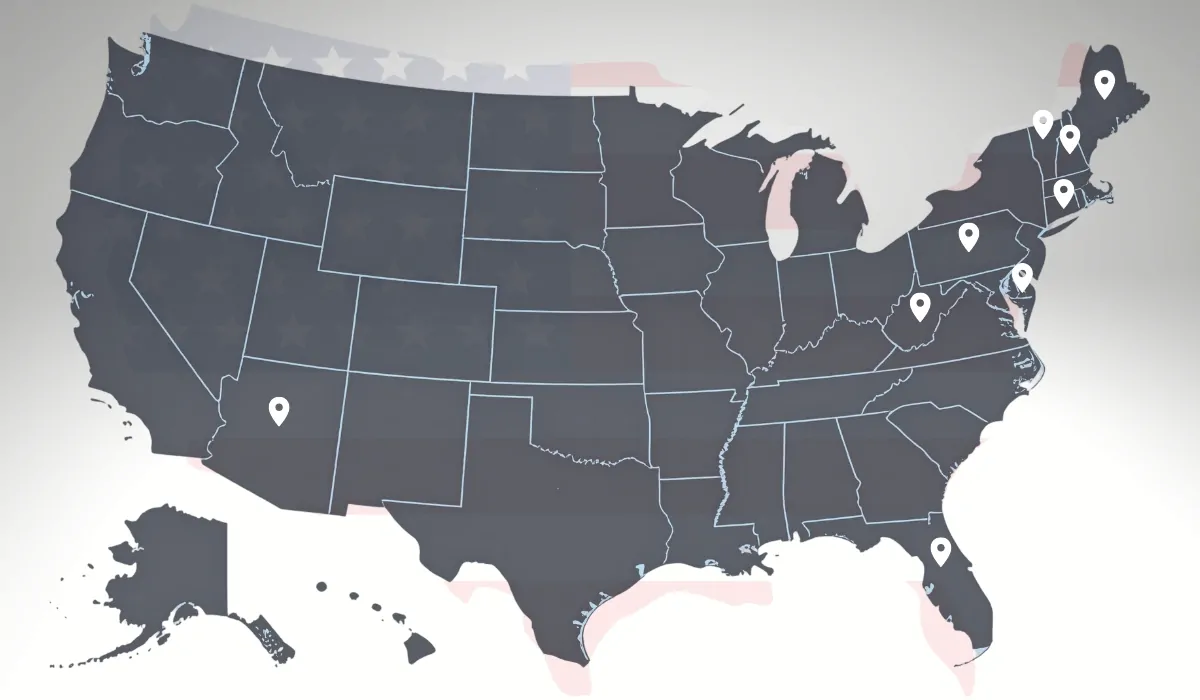
Older populations cluster heavily in New England and the Northeast, while West Virginia represents Appalachia and Florida remains the best-known retirement magnet.
Recent rankings place Maine, New Hampshire, Vermont, West Virginia, Florida, Delaware, and Connecticut near the top, with Hawaii and Pennsylvania tied close behind at 40.9 in one major table.
Taken together, the eight oldest-population states show how retirement migration, slower youth growth, and long-running demographic patterns shape state age profiles.
Maine
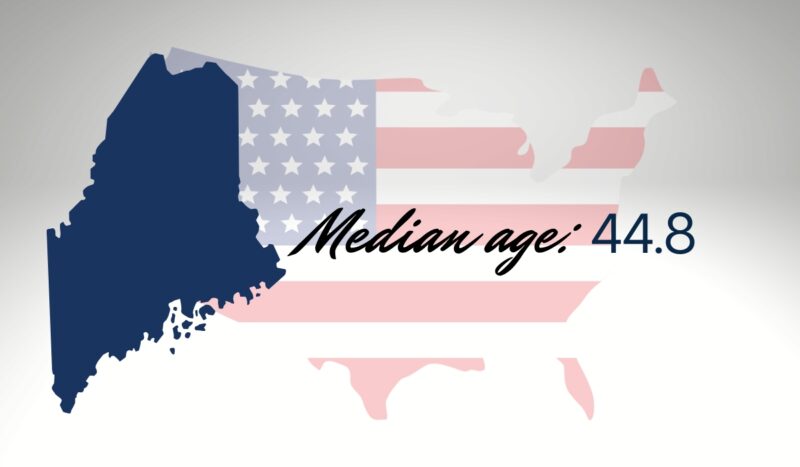
- Median age: 44.8
- Residents age 65 and older: 21.84%
- Residents age 75 and older: 8.73%
- Residents age 85 and older: 2.21%
- Difference above the U.S. median age of 38.5: about 6.3 years
Maine opens the list as the clearest case of statewide aging in the United States. Both rankings place it first, and both also agree on the same median age.
That consistency matters because it shows Maine is not barely leading the pack. It is firmly at the top.
Much of Maine’s profile comes into focus once the age breakdown is added. More than one in five residents are already at least 65 years old, and notable shares also fall into the 75-plus and 85-plus groups.
Numbers like these show an older population not only at retirement age, but also well into later stages of life.
Maine’s place at 44.8 gives it a very large gap over the national median.
A difference of 6.3 years is not minor. In demographic terms, that is a wide separation, and it helps explain why Maine often becomes the first example in discussions about aging populations.
Large senior shares, a high median age, and agreement across both references all make Maine the strongest example in the outline.
New Hampshire
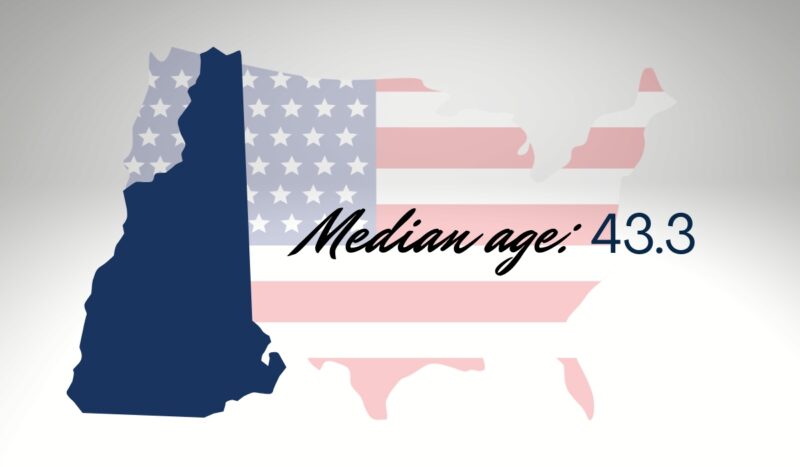
- Median age: 43.3 in one source, 43.1 in another
- Residents age 65 and older: 19.75%
- Residents age 75 and older: 7.76%
- Residents age 85 and older: 1.99%
- Difference above the U.S. median age of 38.5: about 4.6 years
New Hampshire follows right behind Maine and keeps the New England pattern going.
Both sources place it second, which strengthens the argument that older populations are heavily concentrated in that part of the country.
Figures are close across the two references, with only a slight difference in the reported median age.
Age-group data show that New Hampshire is not simply older on paper. A sizable share of residents are already in senior age brackets, which helps explain why its overall median age remains well above the national figure.
Statewide aging here looks broad and established rather than temporary.
New Hampshire’s gap over the national median confirms that it belongs near the very top of the list. Nearly one in five residents are at least 65, and almost 2% are already 85 or older.
Combined with its placement in both rankings, New Hampshire helps push the story away from isolated cases and toward a broader regional pattern centered in New England.
Vermont
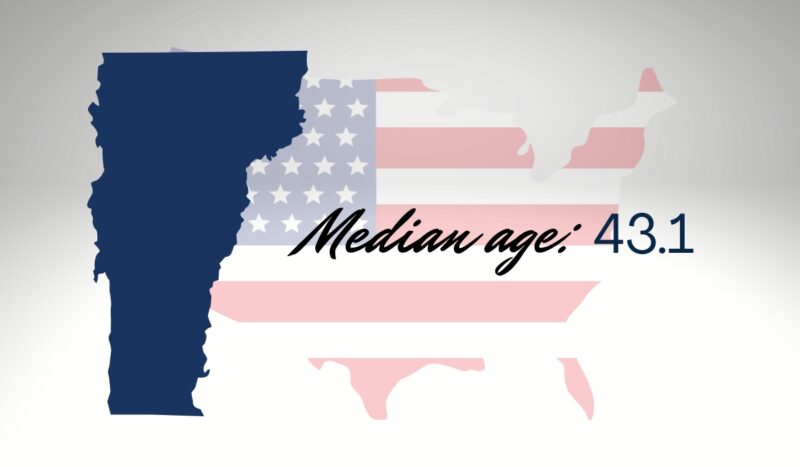
- Median age: 43.1 in one source, 42.9 in another
- Residents age 65 and older: 21.57%
- Residents age 75 and older: 8.52%
- Residents age 85 and older: 2.17%
- Difference above the U.S. median age of 38.5: about 4.4 years
Vermont continues that regional story and adds even stronger evidence of aging at the upper end of the population.
Both sources rank it third, and both place its median age just above 43 or just under it. Either way, Vermont clearly belongs among the oldest states in the country.
A closer look at the age shares shows why Vermont deserves special attention. M
ore than 21% of residents are 65 or older, placing it among the strongest states in the list on that measure.
Shares for people 75 and older and 85 and older are also substantial, which points to a population with many residents already in advanced senior age groups.
Vermont’s numbers help deepen the larger story. Maine may lead the nation, but Vermont shows that Maine is not alone.
Another New England state also has a very old median age and a very high 65-plus share. That makes Vermont an important part of the broader cluster at the top of the rankings.
West Virginia
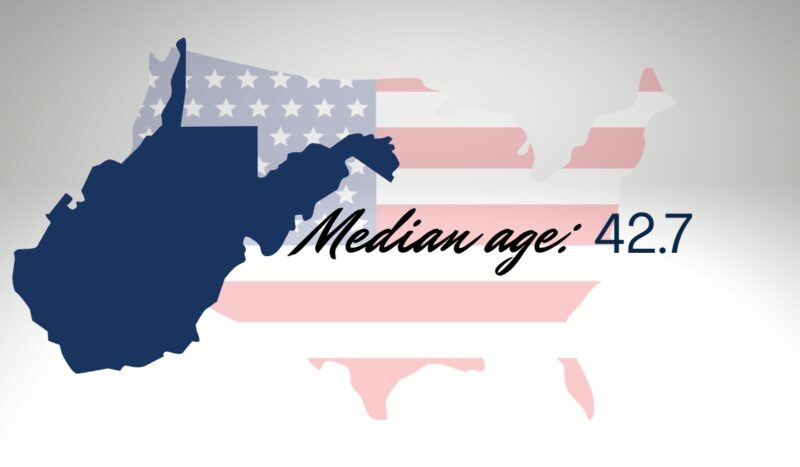
- Median age: 42.7 in one source, 42.6 in another
- Residents age 65 and older: 21.2%
- Residents age 75 and older: 8.51%
- Residents age 85 and older: 2.08%
- Difference above the U.S. median age of 38.5: about 4.1 years
West Virginia shifts the geographic story away from New England while keeping the aging pattern intact.
Both rankings place it fourth, which makes it one of the clearest examples of an older state outside the Northeast core.
Its position matters because it shows that population aging is not limited to one small section of the country.
Age data reinforce that point. More than 21% of West Virginia residents are 65 or older, placing it very close to Maine and Vermont on that measure.
Shares in the 75-plus and 85-plus groups also remain high, showing that older age brackets make up a major part of the state’s population profile.
West Virginia’s numbers make it one of the strongest aging examples in Appalachia.
Its median age is more than four years above the national figure, and its senior shares are high across several brackets.
For the outline’s story, West Virginia widens the map while still supporting the same central point: older populations are concentrated in a limited group of states with long-standing demographic patterns.
Arizona
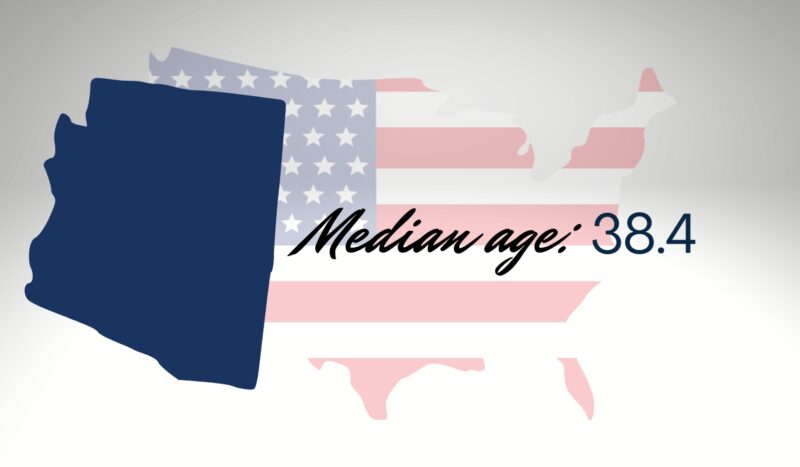
- Median age: 38.4
- Residents age 65 and older: 18.17%
- Residents age 75 and older: 7.8%
- Residents age 85 and older: 1.86%
Public discussion often links Arizona with retirement communities and older residents, so many readers might expect it to rank much higher.
Data in these rankings tells a more nuanced story. Arizona has a meaningful senior population, but its overall median age is not high enough to place it among the nation’s oldest states.
In a large metro area like Phoenix, that demand still shows up in practical ways, as families often look for in-home care services in Phoenix when older adults want extra support while remaining at home. Arizona, in other words, looks older in its senior share than its overall median age alone might suggest.
A closer look at the numbers helps explain that contrast. One source lists Arizona with a 2024 median age of 39.0, which puts it only slightly above the national figure.
At the same time, its senior shares remain notable, especially in the 65-and-older category. Another source places Arizona at 38.4, which is just under the U.S. median age of 38.5 and far outside the national top tier by rank.
Arizona’s profile makes it a useful contrast case in the outline.
Senior shares show that older adults make up a substantial part of the population, yet the statewide median age stays close to the national norm.
Strong retirement associations are real, but they do not automatically push a state into the very oldest tier. Arizona, in other words, looks older in its senior share than its overall median age alone might suggest.
Florida
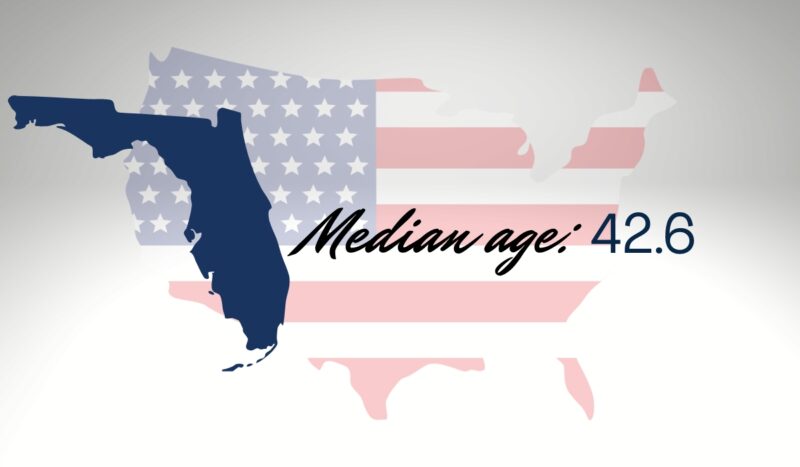
- Median age: 42.6 in one source, 42.4 in another
- Residents age 65 and older: 20.21%
- Residents age 75 and older: 9.09%
- Residents age 85 and older: 2.42%
- Difference above the U.S. median age of 38.5: about 3.9 years
Florida enters the list with a different kind of aging story.
Like the states above it, Florida ranks near the top in both references. Unlike much of New England and Appalachia, though, Florida’s older age profile is closely tied to retirement migration.
That gives it a different demographic character even when its numbers place it in the same group.
Older age shares make Florida especially notable. Its 65-plus share is already high, but its 75-plus and 85-plus shares are even more striking.
Among the states in this outline, Florida is one of the strongest examples of a place with a large concentration of older seniors, not just younger retirees.
Florida helps balance the regional story.
New England and parts of Appalachia dominate the list, but Florida shows that migration into retirement-friendly states also plays a major role in shaping age structure.
High shares of residents age 75 and older and 85 and older make Florida especially important in that discussion.
Delaware
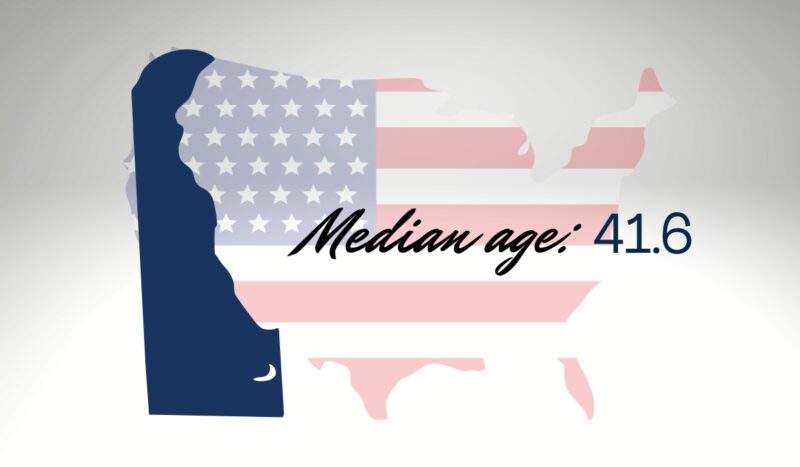
- Median age: 41.6 in one source, 41.4 in another
- Residents age 65 and older: 19.64%
- Residents age 75 and older: 7.71%
- Residents age 85 and older: 1.92%
- Difference above the U.S. median age of 38.5: about 2.9 years
Delaware sits sixth in both references and keeps the Northeast corridor well represented near the top of the rankings.
Its median age is lower than the first five states, yet it still remains clearly older than the national average.
That gives Delaware an important middle position in the outline, showing that the group of oldest states extends past the most extreme cases.
Senior shares support that placement. Nearly one in five Delaware residents are age 65 or older, and the state also posts solid shares in the 75-plus and 85-plus categories.
Numbers like these show that Delaware belongs in the same aging tier even if its profile is slightly less pronounced than Maine’s or Vermont’s.
Delaware’s place in the ranking helps the story stay cohesive.
Not every state in the top group reaches the same extreme level, yet all of them remain meaningfully older than the nation as a whole. Delaware shows how broad that upper tier really is.
Connecticut
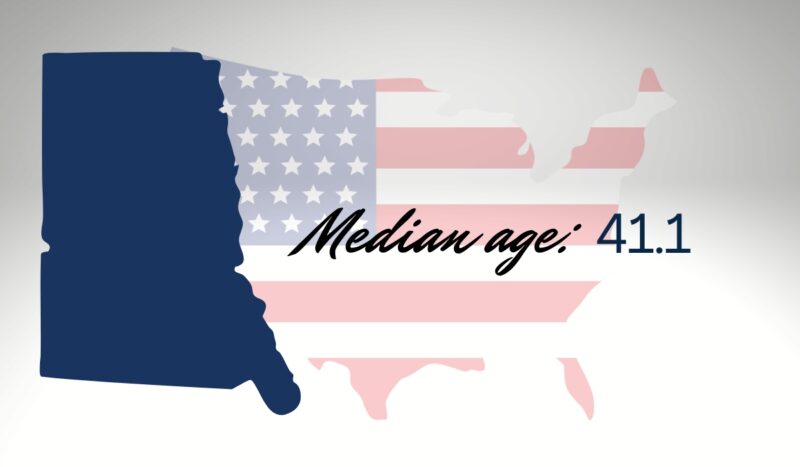
- Median age: 41.1 in one source, 40.9 in another
- Residents age 65 and older: 18.11%
- Residents age 75 and older: 7.68%
- Residents age 85 and older: 2.38%
- Difference above the U.S. median age of 38.5: about 2.4 years
Connecticut follows as another Northeastern state with an older-than-average population profile. Both sources rank it seventh, and both place its median age around 41.
That keeps it well above the U.S. figure and reinforces the concentration of older states in the Northeast.
Breakdowns by age group give Connecticut added importance. Its 65-plus share is the lowest among the states in this outline, but it still remains high in national terms.
More notable is its 85-plus share, which is one of the strongest in the group. That suggests a sizable oldest-old population even compared with other aging states.
Connecticut helps round out the upper tier. Even near the lower end of this list, a state can still post a median age well above the national level and hold a strong share of very old residents.
That point matters because it shows that aging in these states is not shallow or isolated to a single age band.
Pennsylvania
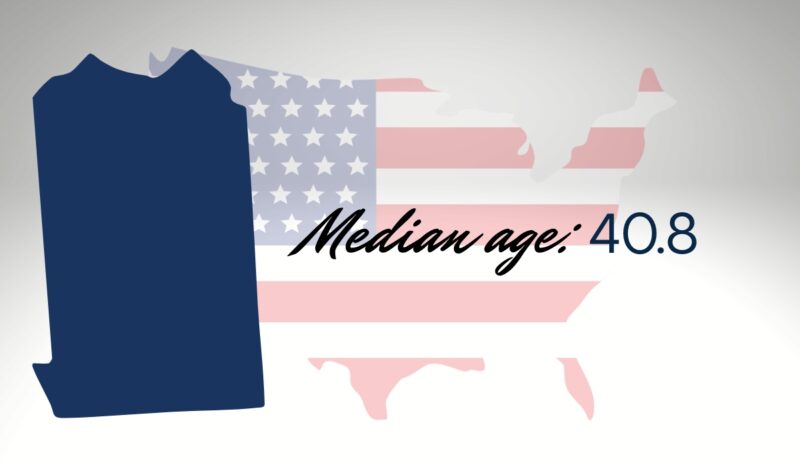
- Median age: 40.8 in one source, 40.9 in another
- Residents age 65 and older: 19.39%
- Residents age 75 and older: 8.06%
- Residents age 85 and older: 2.4%
- Difference above the U.S. median age of 38.5: about 2.3 years
Pennsylvania closes the list as a large state with a clearly older-than-average age structure.
One source ranks it eighth with a median age of 40.8, while another places it at 40.9, tied with Hawaii.
That makes Pennsylvania a strong final entry because it shows that large-population states can also sit near the top of aging rankings.
Age shares confirm that Pennsylvania belongs here. Nearly one in five residents are age 65 or older, more than 8% are age 75 or older, and 2.4% are age 85 or older. Those are not marginal figures. They place Pennsylvania solidly within the nation’s older state group.
Pennsylvania works well as the closing state because it shows how far the pattern extends.
Even at the bottom of this eight-state outline, the median age still sits more than two years above the U.S. median.
Close placement with Hawaii also shows how tightly grouped these older states are near the edge of the top rankings.
Common Patterns Across These States
Taken together, these eight states form a clear regional and demographic story.
New England appears again and again near the top, the broader Northeast adds more entries, Appalachia is represented by West Virginia, and Florida appears as the major retirement center. Fast-growth younger states do not dominate this list. Older states are concentrated in a narrower set of places with long-standing age patterns.
Range across the list also matters. Maine sits 6.3 years above the national median age, while Pennsylvania still sits 2.3 years above it. That means every state in this outline is not just older than average, but clearly older than average.
Several states also carry especially large 65-plus populations, which strengthens the case that these are deeply aging states rather than states with only slightly elevated median ages.
| Metric | Value |
|---|---|
| U.S. median age | 38.5 |
| Maine above national median | +6.3 years |
| Pennsylvania above national median | +2.3 years |
| Maine residents age 65 and older | 21.84% |
| Vermont residents age 65 and older | 21.57% |
| West Virginia residents age 65 and older | 21.2% |
| Florida residents age 65 and older | 20.21% |
| Florida residents age 75 and older | 9.09% |
| Florida residents age 85 and older | 2.42% |
Florida’s profile deserves special notice within the group because its older senior shares are especially strong.
Pennsylvania and Hawaii also sit close to the top cluster in one ranking, which suggests that movement within the lower part of the top tier is very tight.
Why It Matters
Older states often face heavier pressure on health care systems, retirement services, long-term care, and age-friendly housing because a large share of residents are already seniors.
Families often also look for in-home care services in Phoenix and similar local support options when older adults want to remain safely at home.
Current figures show that each state in this group has at least 18.11% of residents age 65 or older, while several rise above 20%.
Age gaps in this list are not small. Pennsylvania, the lowest-ranked state in this outline, still sits more than two years older than the national median, while Maine is more than six years older.
High median ages and large senior shares also suggest a smaller relative base of younger residents and workers in many of these states.
That pattern can affect labor supply, tax bases, and caregiving demand over time.
FAQs
Summary
Maine remains the clearest leader among the nation’s oldest-population states, and the larger picture stays consistent across the main accessible rankings.
Taken together, these states show that America’s aging story is concentrated in a handful of regions.
Florida remains the major retirement-based outlier, while New England continues as the most persistent cluster of older populations.