
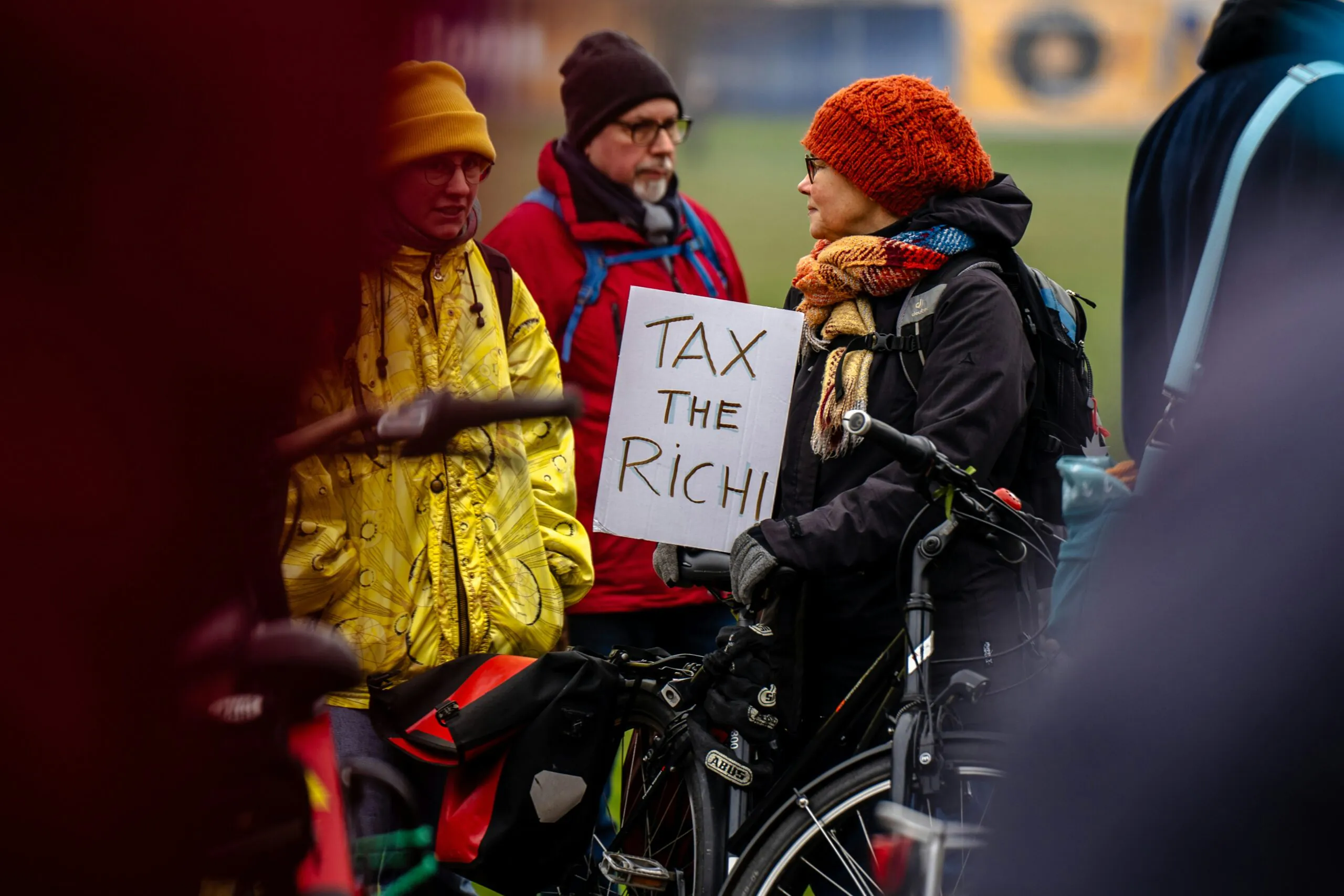
California voters may soon decide whether the state should place a one-time billionaire tax on its wealthiest residents to fund health care, food assistance and education programs.
The proposal, known as the 2026 Billionaire Tax Act, has cleared the signature hurdle for the November 2026 ballot, according to reporting from The Associated Press.
Supporters still face a June 25 deadline that could determine whether the measure moves ahead in its current form or gets withdrawn as part of a political deal.
At the center of the fight is a simple question with complicated consequences: should California tax billionaire wealth once, rather than only taxing income when it gets realized?
What Could Be the Effects of Billionaire Tax?
The ballot version would impose a one-time tax on California residents with net worth of at least $1 billion, as measured under the initiative rules.
The tax applies to people who were California residents on January 1, 2026. The wealth amount would be measured as of December 31, 2026. The tax would generally be due with the 2026 California income tax return in 2027.
For the highest-value taxpayers, the rate would be 5% of net worth. The measure includes a phase-in for people between $1 billion and $1.1 billion, so the full 5% rate would begin at $1.1 billion.
That detail is important. The proposal is not written as a simple 5% tax only on dollars above $1 billion. The legal text taxes net worth, with a phase-in near the threshold.
How Much Would Billionaires Pay?
The exact bill would depend on asset values, debts, exclusions and state rules. A simple example shows the scale.
| Estimated Net Worth | Approximate Tax Treatment | Simple Example |
|---|---|---|
| $1 billion | Phase-in starts near the threshold | Tax can phase down to zero at the lower edge |
| $1.05 billion | Phase-in rate applies | Roughly 2.5%, or about $26.25 million before exclusions and adjustments |
| $1.1 billion | Full 5% rate starts | About $55 million before exclusions and adjustments |
| $5 billion | Full 5% rate | About $250 million before exclusions and adjustments |
| $20 billion | Full 5% rate | About $1 billion before exclusions and adjustments |
The initiative also allows taxpayers to spread payment over five annual installments, but the unpaid balance would carry a 7.5% annual deferral charge.
What Assets Would Be Taxed?
The billionaire tax focuses on wealth, not yearly income. That means stock holdings, private company stakes and other property interests matter even when the billionaire has not sold the asset.
The California Attorney General summary says covered assets include businesses, securities, art, collectibles and intellectual property. The proposal excludes directly held real property and some pensions and retirement accounts.
The full initiative text also gives the Franchise Tax Board a major role in valuation and enforcement. Publicly traded assets would generally be valued at market price on the valuation date. Private business interests would need reporting and valuation rules, which could become one of the hardest parts of enforcement.
Would Trusts Be Covered?
Yes, certain trusts are part of the proposal.
The initiative is written to prevent billionaires from avoiding the tax by transferring assets into certain trusts. The legal text includes rules for applicable trusts, transfers made before the valuation date and trust assets that are distributable to beneficiaries.
That section matters because much billionaire wealth sits in company shares, investment vehicles, foundations, trusts and other structures rather than in cash.
Where Would The Money Go?
The measure would create a 2026 Billionaire Tax Reserve Fund in the state treasury.
After administrative costs, 90% of the money would go to health care. The remaining 10% would go to education and food assistance programs.
The official title and summary says the money could not be used to replace existing funding for those purposes. Supporters say the measure is needed because California faces pressure from federal cuts to health care and safety-net programs.
How Much Money Could It Raise?
Backers have described the billionaire tax as a way to raise about $100 billion. The nonpartisan California Legislative Analyst Office uses more cautious language, saying the tax would probably raise tens of billions of dollars over several years.
The final amount is hard to estimate because billionaire wealth changes quickly. Much of it sits in stocks, private companies and other assets that move in value. Wealthy residents also could take legal, financial or residency steps that reduce the tax collected.
Why Supporters Want It?
The measure is backed by SEIU-United Healthcare Workers West and the Billionaire Tax Now coalition. Supporters argue that many billionaires hold huge gains in assets that can rise for years without producing taxable income.
The campaign says the tax would make a small group of ultrawealthy residents pay toward health care, food assistance and education at a time when state programs face pressure.
Supporters also point to California wealth concentration. The LAO says California has a few hundred people with net worth above $1 billion, many tied to technology companies.
Why Opponents Are Fighting It?
Opponents say a state-only wealth tax could push billionaires to leave California, reducing future income tax collections and hurting public budgets in later years.
Gov. Gavin Newsom opposes the current measure. His office told AP that scaling the plan back would not fix what it sees as design flaws. Critics also include the California Medical Association, the California School Boards Association and major tech donors funding opposition campaigns.
The fiscal summary from the Attorney General says the tax would bring a temporary revenue increase, probably tens of billions of dollars over several years, but also likely an ongoing drop in state income tax revenue of hundreds of millions of dollars or more per year.
A 2% Version Is Now Being Discussed
After the measure cleared the signature hurdle, the union behind it offered to abandon the 5% ballot proposal if Newsom supported a smaller 2% tax through the Legislature.
That compromise would avoid a statewide ballot fight, but AP reported that the offer was not enough to win Newsom support. The current ballot version remains the 5% proposal unless backers withdraw it or a separate deal changes the path.
What Voters Would Decide
A yes vote would support the one-time billionaire tax and direct the money mostly to health care, with smaller funding for food assistance and education-related programs.
A no vote would reject the tax and leave California without that new wealth-tax revenue source.
The measure would need a simple majority if it appears on the statewide ballot and goes to voters in November 2026.
Why The Billionaire Tax Is Different From A Normal Income Tax?
California already taxes income, including wages, business income and capital gains. The billionaire tax would be different because it targets net worth.
Income is money earned during a period. Wealth is the value of what a person owns after debts are subtracted. A billionaire can have huge wealth in company stock while reporting much less taxable income in a given year.
That distinction is the reason supporters want a wealth tax and the reason critics call the plan difficult to administer. Valuing public stocks is straightforward. Valuing private companies, intellectual property, art and complex trust interests can lead to disputes.
The Bottom Line
The California billionaire tax would be a one-time 2026 wealth tax aimed at residents with net worth of at least $1 billion. The full ballot version would charge up to 5%, direct most revenue to health care and allow payment over five years with a deferral charge.
The measure has enough signatures to move toward the November 2026 ballot, but political negotiations are still active. Supporters say the tax would protect health care and safety-net programs. Opponents say it could drive wealthy taxpayers out of California and reduce revenue later.
For voters, the decision comes down to a tradeoff: a large short-term revenue source from a small group of billionaires, weighed against the risk that some of those taxpayers leave or restructure their wealth before California collects what supporters expect.
Related Posts:
- Electric Vehicle Fee Bill Would Add $130 Annual…
- Plane Tickets in the U.S. Are 26.5 Percent More…
- US Software Jobs Are Set to Grow 15 Percent by 2034…
- Anxiety and Depression Statistics - CBT Effective…
- Green Card Applicants Could Face $100,000 Bond Under…
- Social Security Raising Retirement Age to 70? The…