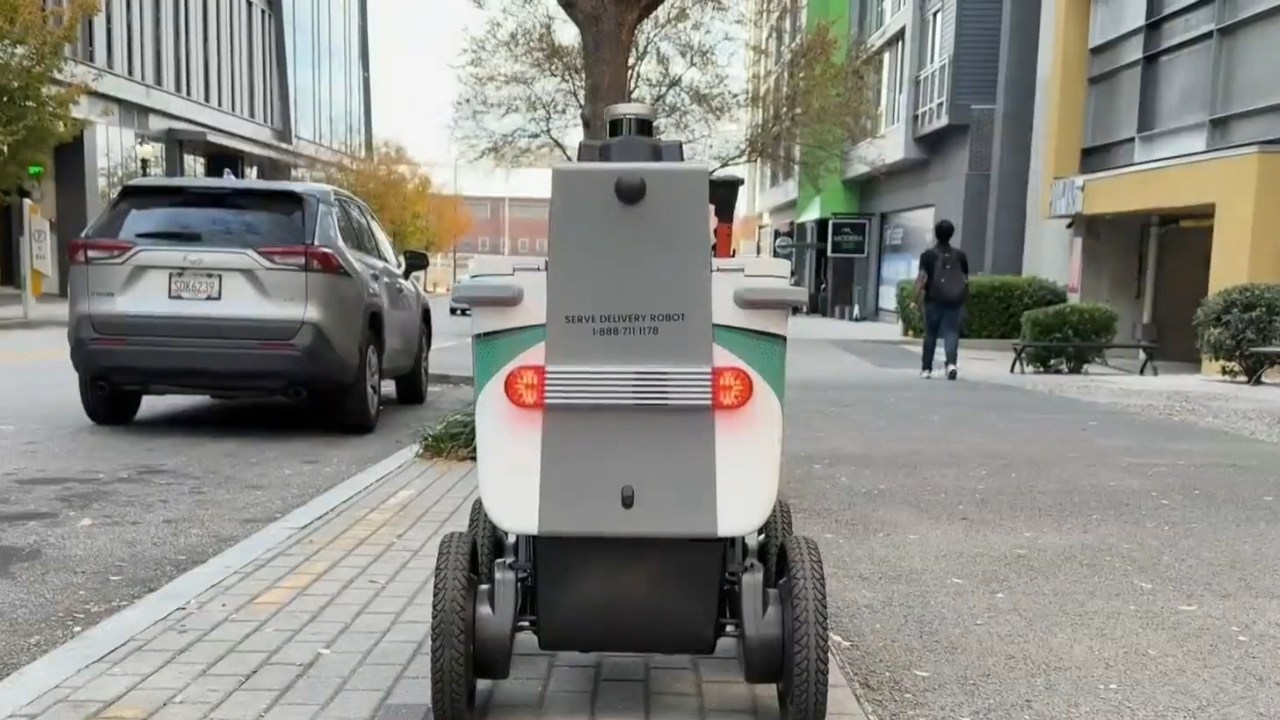

Delivery robots in Atlanta gained a higher legal speed limit on July 1, 2026. Georgia House Bill 986 raises the maximum speed for a personal delivery device on sidewalks, shared-use paths, safety zones, and crosswalks from 4 mph to 7 mph.
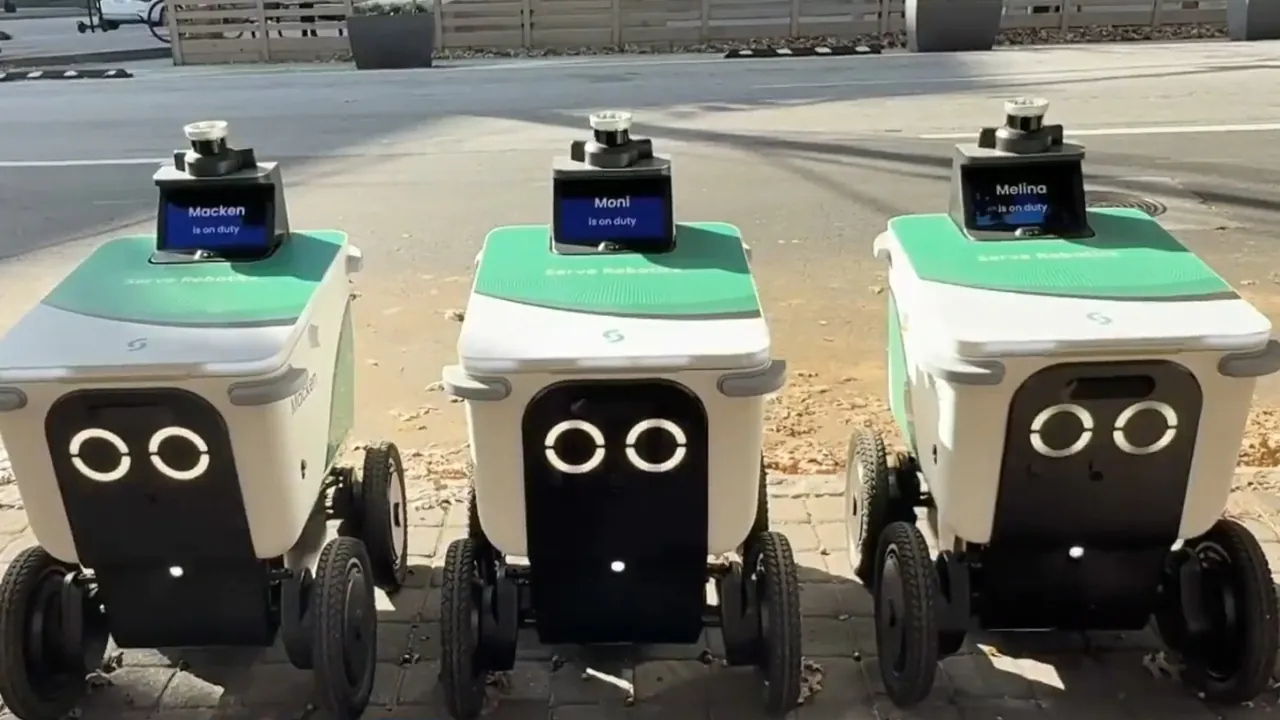
The statewide change will be especially visible in Atlanta, where Serve Robotics delivers Uber Eats orders in Midtown, Downtown, and Old Fourth Ward. A 7 mph ceiling is 75 percent higher than the former limit, giving operators room to shorten trips on clear routes.
Robots still must yield to pedestrians, follow local rules, and emit a sound while moving within six feet of people, wheelchair users, or vehicles. The law permits faster travel. It does not require every robot to reach 7 mph.
What Did Georgia House Bill 986 Change?

HB 986 made two focused amendments to the Georgia traffic law. According to the enrolled bill text, the sidewalk and crosswalk maximum increased from 4 mph to 7 mph.
The law also requires a personal delivery device to emit a sound when it is moving within six feet of a vehicle, pedestrian, or wheelchair user. Pedestrians retain the right of way.
Operating Area
Before July 1, 2026
From July 1, 2026
Sidewalk
4 mph maximum
7 mph maximum
Shared-use path or safety zone
4 mph maximum
7 mph maximum
Crosswalk
3.5 feet per second minimum, 4 mph maximum
3.5 feet per second minimum, 7 mph maximum
Bicycle lane, shoulder, or roadway
20 mph maximum
20 mph maximum
Governor Brian Kemp signed the measure as Act 442 on May 11, 2026. The HB 986 legislative record shows that it passed the Georgia House 162-3 and the Senate 44-2 before taking effect on July 1.
Why Atlanta Will Feel the Change Quickly
Atlanta already has a commercial robot-delivery network. Serve Robotics launched service with Uber Eats in 2025 across Midtown, Old Fourth Ward, and Downtown.
Restaurants available at launch included Rreal Tacos, Ponko Chicken, and Shake Shack. Serve said the Atlanta delivery area reached more than 50,000 residents.
Customers order through Uber Eats and open the robot’s cargo compartment using a phone at delivery. During a CBS Atlanta field test, a Serve robot completed a little over one mile in Midtown in 16 minutes and 10 seconds, excluding restaurant preparation.
Serve said its average pickup-to-drop-off time was around 18 minutes and that its completion rate exceeded 99.8 percent. Both figures came from the company rather than an independent city audit.
The higher cap may improve travel on open sidewalk segments. Intersections, crowds, construction, curb ramps, damaged pavement, and required yielding still shape actual speed.
Local reporting has documented robots pausing near obstructions or waiting between orders. An Atlanta robot-delivery report illustrates why the legal maximum will not produce a constant 7 mph journey.
How Much Faster Could a Delivery Be?
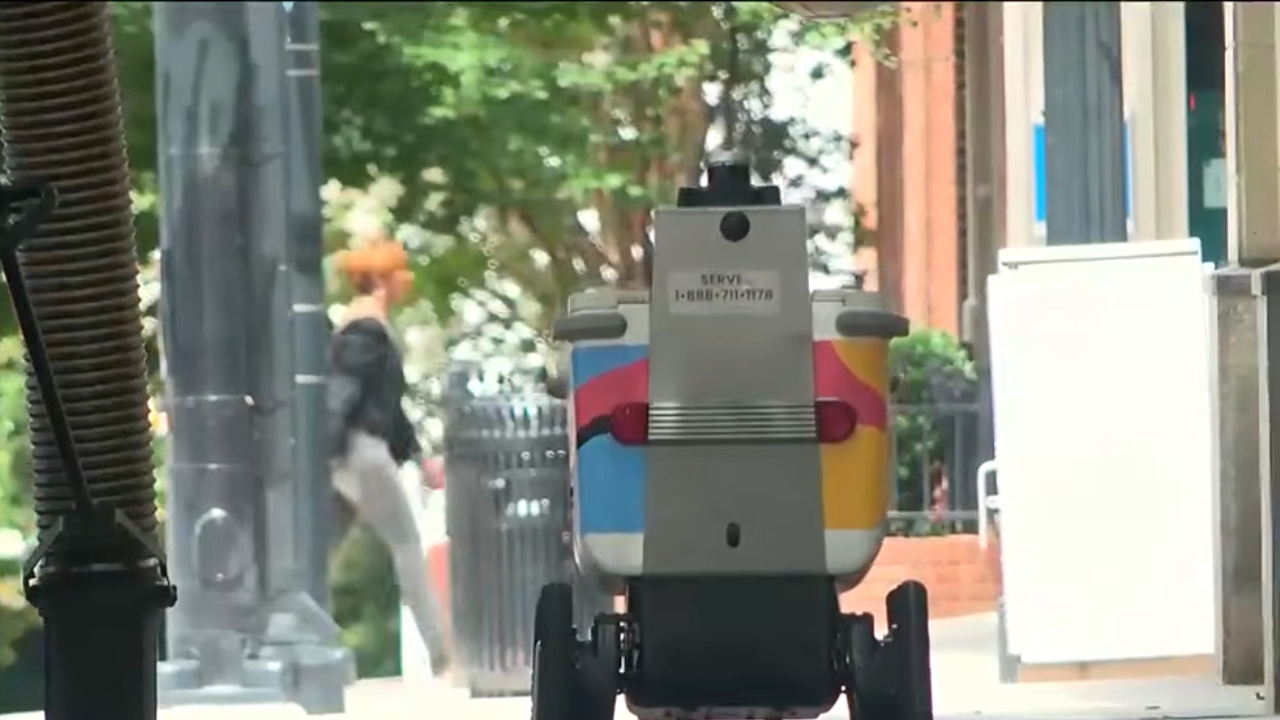
At a steady 4 mph, one mile takes 15 minutes. At 7 mph, the same distance takes about 8 minutes and 34 seconds. The theoretical saving is roughly 6 minutes and 26 seconds per uninterrupted mile.
Real routes include traffic signals, crossings, course corrections, and slow movement around pedestrians. A robot that spends much of a trip waiting or yielding will save far less.
Even two or three minutes can matter during lunch and dinner peaks because a unit may become available for another order sooner.
Serve reported about 2,000 robots across its combined outdoor and hospital operations in the first quarter of 2026, spanning 44 cities in 14 states. In its first-quarter results, the company said its combined fleet was approaching two million cumulative deliveries.
Atlanta’s change arrives as robotic delivery moves into larger commercial networks.
What Safety Rules Still Apply?
View this post on Instagram
The faster cap leaves core pedestrian protections in place. Operators must exercise due care, avoid collisions, and yield to people traveling on foot.
Georgia’s wider framework, adopted in 2022, regulates where personal delivery devices may operate. A Georgia Public Broadcasting overview explains that local governments retain authority over operating hours and geographic zones.
Municipalities may restrict robots around schools, hospitals, stadiums, and government buildings. Violations can bring civil penalties rather than criminal charges.
Regulatory penalties are separate from any personal injury or insurance claim that might follow a collision. Resources from The Wilson PC provide additional context on negligence and compensation claims arising from Atlanta traffic incidents.
A 7 mph limit is a ceiling, not a priority over sidewalk users. People should avoid lifting or repositioning a stopped unit because it may be waiting for an order or assessing a route.
Why Accessibility Remains a Major Test
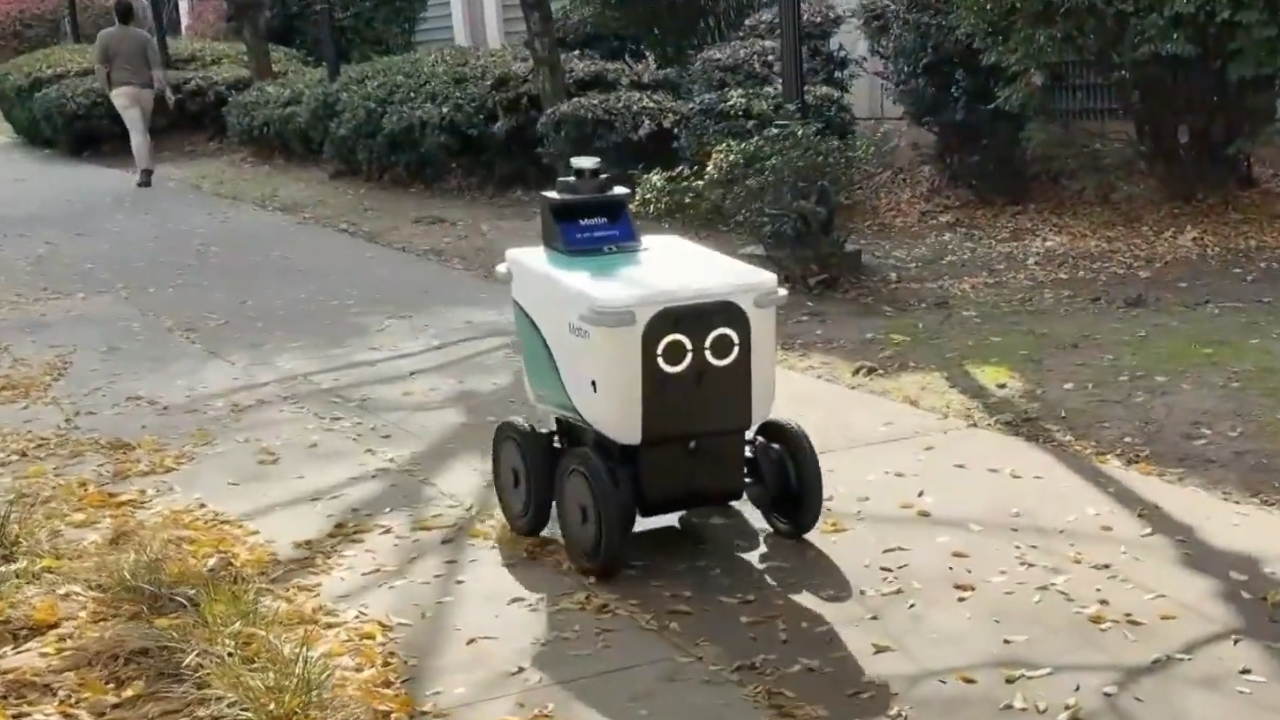
A faster robot can shorten delivery time while reducing reaction time in a narrow space. The audible-warning rule may help people who cannot rely on visual cues. Sound alone cannot resolve blocked curb ramps, inconsistent yielding, or uncertainty about a robot’s direction.
Research involving visually impaired users identified concerns about accessible feedback, safety, privacy, and difficulty locating or tracking mobile service robots.
The study did not measure Atlanta’s fleet, although its findings show why predictable behavior and useful audio cues matter.
HB 986 does not create a public reporting system for collisions, near misses, blocked sidewalks, delivery times, or disability-related complaints. Its wording changes speed and audible-warning requirements, leaving broader measurement to operators, local officials, and later regulation.
What Atlanta Residents Should Watch
Useful evidence after July 1 will show whether the higher limit improves service without creating new sidewalk problems.
Results will depend on software settings, route design, remote supervision, sidewalk conditions, pedestrian traffic, and local enforcement. Georgia’s July 1, 2026, law allows delivery robots on Atlanta sidewalks and crosswalks to move as fast as 7 mph, up from 4 mph. The higher ceiling may shorten trips and improve fleet efficiency for Serve Robotics and Uber Eats. Pedestrian right of way, audible warnings, local restrictions, and existing operating rules remain in force. Delivery robots already operate in major in-town neighborhoods. Atlanta’s next question is whether greater speed produces reliably faster service without making sidewalks less predictable for pedestrians and people with disabilities.
Bottom Line