

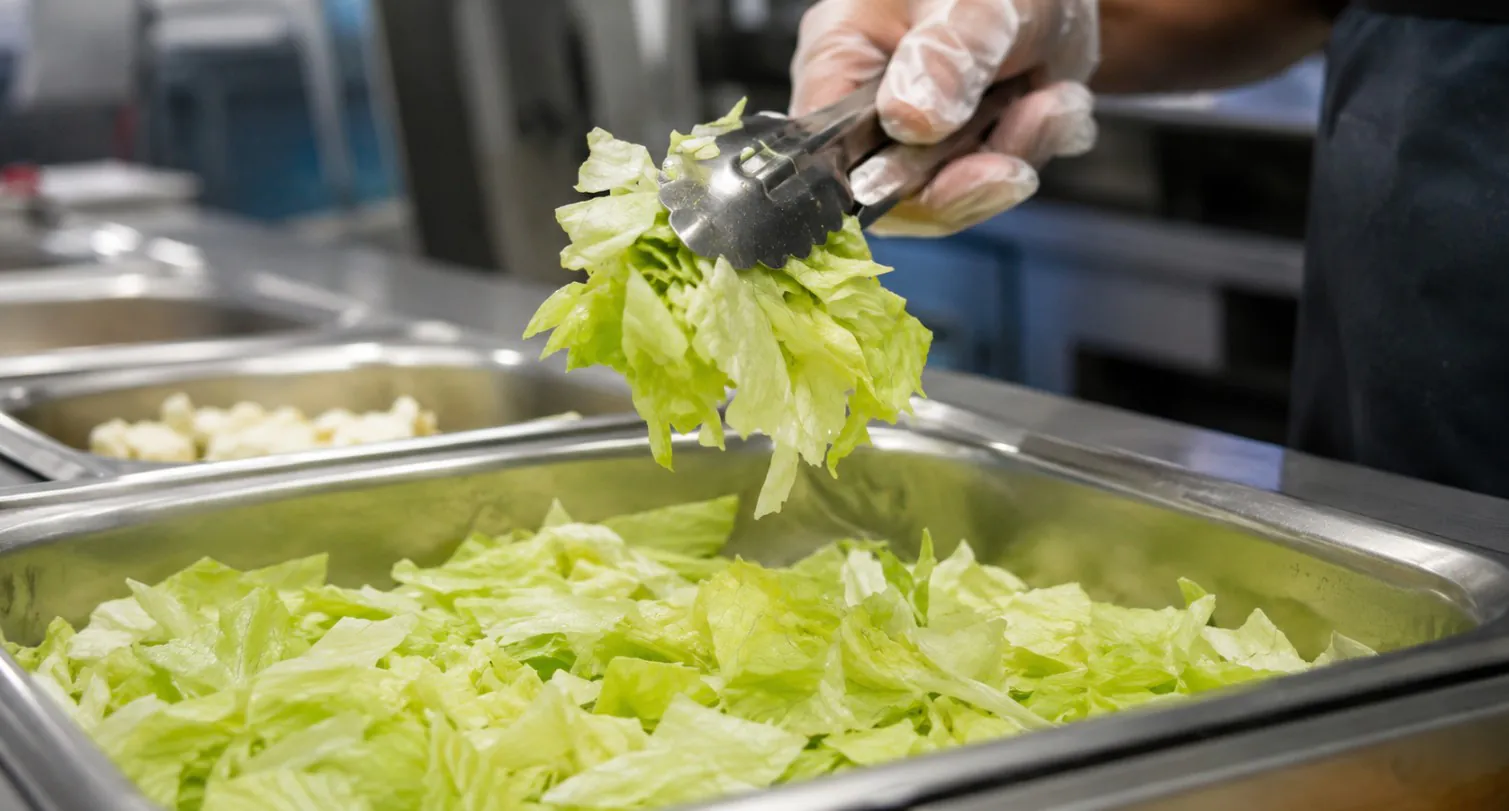
Shredded iceberg lettuce served at Taco Bell restaurants has been linked to 1,644 Cyclospora cases in Indiana, Kentucky, Michigan, Ohio and West Virginia. The finding provides the first strong explanation for part of the sharp rise in cyclosporiasis cases that we reported earlier in July.
The evidence is substantial, but the investigation is not finished. Federal officials have linked the lettuce to a specific five-state outbreak and Taylor Farms. They have not established that the same product caused every Cyclospora infection reported nationwide.
Latest update: FDA said that the Taylor Farm cyclospora findings were a false positive.
Table of Contents
ToggleIceberg Lettuce Emerges as the Common Ingredient
The breakthrough came after Michigan investigators reviewed the meals eaten by people who became sick after visiting Taco Bell.
Food histories were available for 190 patients. According to the FDA outbreak investigation, 90% of those patients reported eating iceberg lettuce.
Investigators then traced lettuce shipments supplied to Taco Bell locations where customers had eaten before becoming ill. The records converged on one supplier handling iceberg lettuce grown in Mexico.
The five-state outbreak includes more than 1,644 illnesses and 94 hospitalizations. No deaths have been reported. Patients began becoming sick between May 13 and July 13.
Not every Taco Bell restaurant in the affected states received the suspected lettuce. Product distribution has been confirmed in all five states, but federal investigators said additional destinations may be identified.
Taylor Farms Was Named in News Reports but Not by the FDA
The FDA has publicly confirmed that investigators identified a single supplier, but the agency did not name that company in its advisory.
CNN reported that the supplier was Taylor Farms, citing a source familiar with the investigation. The company supplies fresh produce to restaurants and retailers across North America.
Taylor Farms had not publicly confirmed its role when the initial reports appeared. That distinction matters because a supplier being investigated is not the same as a completed finding that identifies where or how contamination occurred.
The FDA is working with the supplier and collecting product samples. Border screening has also been increased for lettuce connected to the investigation.
Taco Bell agreed to stop using lettuce from the identified supplier. The restaurant chain said potentially affected lettuce would be removed from its supply system and replaced at selected locations.
No formal recall had been announced when the federal advisory was published. Investigators were still determining if any potentially contaminated product remained available through restaurants, retailers or other distribution channels.
The Lettuce Finding Does Not Explain Every US Case
The Taco Bell investigation concerns one outbreak concentrated in five states. Cyclospora cases have been reported much more widely.
The CDC recorded 1,645 laboratory-confirmed domestic cases across 34 states through July 13. Another 5,100 reports required additional analysis before they could be counted as confirmed domestically acquired infections.
At least 141 people in the national surveillance count were hospitalized. No deaths were reported.
Federal health officials are investigating several clusters at the same time. Some may be connected to the shredded iceberg lettuce. Others may involve different produce, separate suppliers or unrelated exposures.
North Carolina is one place where the answer remains uncertain. The state has reported hundreds of illnesses, with a large concentration in Wake County. However, WRAL reported that investigators had not connected the North Carolina cases to the Taco Bell lettuce.
Residents outside Indiana, Kentucky, Michigan, Ohio and West Virginia should not assume that the federal lettuce advisory explains local cases. State health departments may issue separate findings as their investigations progress.
Why the Source Took So Long to Find
Cyclospora outbreaks are particularly difficult to investigate because symptoms rarely begin immediately after a contaminated meal.
Most patients become sick about one week after exposure. The delay can range from two days to two weeks or longer. By the time an investigator asks what someone ate, the patient may have visited several restaurants and consumed numerous salads, herbs, toppings or prepared meals.
Shredded lettuce is also easy to overlook. It may appear as a topping on tacos, burritos and other menu items rather than as a separate side dish. Patients may remember eating at a restaurant without remembering every ingredient in the meal.
Fresh produce has a short shelf life. Suspected lettuce may have been eaten or discarded before investigators identify a pattern. Few samples remain available for laboratory testing.
The parasite creates another complication. Cyclospora usually does not spread directly between people. It must spend time in the environment before becoming infectious. A large group of cases therefore points investigators toward contaminated food or water rather than ordinary transmission inside homes, schools or workplaces.
What Consumers in the Five States Should Do Now?
The CDC advises consumers not to eat shredded iceberg lettuce served at Taco Bell locations in Indiana, Kentucky, Michigan, Ohio and West Virginia.
People who recently received food containing the lettuce should clean containers and surfaces that came into contact with it. Not every restaurant in the five states received the implicated product, but consumers may not be able to identify the supplier from a receipt or food package.
Washing produce remains a good food safety practice, but rinsing cannot guarantee the removal of Cyclospora. The parasite can cling to folds and damaged areas on leafy vegetables. Common disinfectants and produce washes may not kill it.
Cooking produce to at least 158°F can kill the parasite. That advice is less practical for lettuce, which is normally eaten raw.
Symptoms May Continue for Weeks
The main symptom is frequent watery diarrhea. Patients may also experience stomach cramps, bloating, gas, nausea, fatigue, reduced appetite and weight loss.
Symptoms can improve and then return. Untreated illness may continue for a month or longer. Severe diarrhea can cause dehydration, particularly in children, older adults and people with weakened immune systems.
Anyone who ate shredded iceberg lettuce at a Taco Bell in one of the five named states and developed persistent diarrhea should contact a healthcare provider. Patients should mention the possible lettuce exposure and ask about Cyclospora testing. Routine stool panels do not always include the parasite.
The Investigation Has Found a Lead but Not the Full Answer
The lettuce connection is the strongest result investigators have produced since cases began rising in May. Meal interviews identified a common ingredient. Shipping records led to one supplier. Taco Bell removed the implicated lettuce, and federal agencies issued direct consumer advice.
Several major questions remain. Investigators still need to determine where the contamination occurred, if lettuce reached other businesses, and if any affected product remains available.
Laboratory testing may also show if the parasite can be detected in retained samples. A negative sample would not necessarily clear the product because contamination can be uneven across a shipment.
For now, shredded iceberg lettuce from Mexico appears to explain the five-state Taco Bell outbreak. It may account for a large share of the national surge. It cannot yet be treated as the source of every Cyclospora case reported across the country.
Related Posts:
- US Cyber Command Lost Five People to Suicide in One…
- Bipolar Disorder Hospitalizations 2025 - Which…
- Air Quality and Asthma Hospitalizations – Which U.S.…
- Five States Could Become New US Nuclear Waste Hubs,…
- Population Decline in the US by State - Latest 2026…
- Latest On Ebola Cases In Congo - Over 1,000 Cases,…