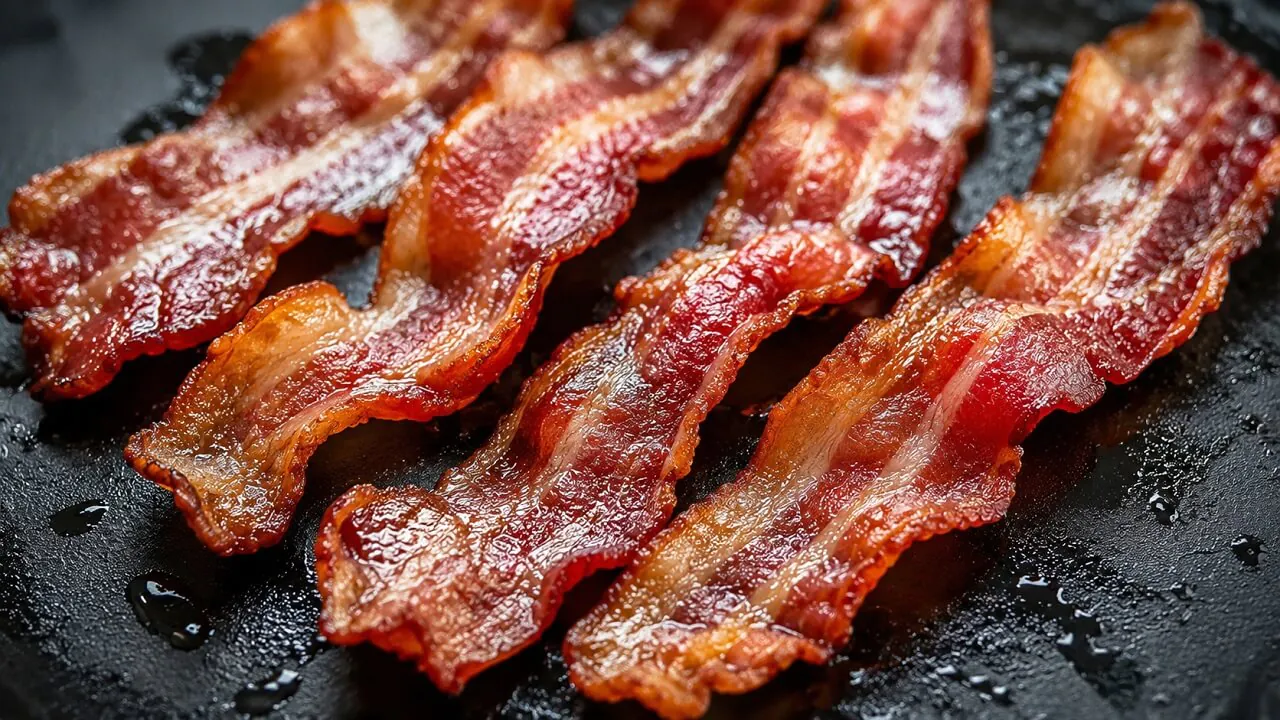
More than 12,000 pounds of smoked bacon sold in Idaho, Oregon and Washington are being recalled after the products entered the United States without the required federal import inspection.
Maple Leaf Foods is recalling 12,036 pounds of Royale Natural and Top Valu bacon distributed through Grocery Outlet retailers and distributors. The products came from Canada and were produced on five dates in June.
No illnesses or injuries have been reported. Federal inspectors have also not announced that bacteria, metal or another contaminant was found in the bacon. The problem is that a required safety checkpoint was skipped before the products entered U.S. stores.
The bacon recall gained wider attention after shoppers were urged to search their refrigerators and freezers for packages carrying September 2026 sell-by dates.
Which Bacon Products Are Recalled?
Only two products are included. Both were sold in 12-ounce vacuum-sealed packages.
| Brand and product | Sell-by dates | Package code |
|---|---|---|
| Royale Natural Applewood Smoked All Natural Uncured Bacon, Product of Canada | September 1 and September 7, 2026 | Canadian establishment number EST. 1 |
| Top Valu Uncured Hardwood Smoked Bacon, Product of Canada | September 1, 2, 4, 5 and 7, 2026 | Canadian establishment number EST. 1 |
The sell-by date and establishment number are printed on the side of the package. Shoppers should not rely only on the brand name or the picture on the front.
A Royale Natural or Top Valu package with a different sell-by date is not included in the current recall. The official product label photographs show what both packages look like and where identifying information appears.
Master shipping boxes also carry health certificate number 2026-S732971612. Most household shoppers will not see that number because it appears on the larger cases used for distribution.
Where Was the Recalled Bacon Sold?
The bacon was sent to Grocery Outlet distributors and retail locations in:
- Idaho
- Oregon
- Washington
No other states were named in the initial USDA recall announcement.
Customers who bought bacon from another retailer should still check the complete package details. Store location alone is not as reliable as matching the brand, product name, sell-by date and EST. 1 establishment number.
Why Is the Bacon Being Recalled?
The bacon entered the country without import reinspection by the U.S. Department of Agriculture’s Food Safety and Inspection Service.
Canadian meat plants exporting to the United States operate under a system considered equivalent to U.S. inspection standards. Shipments must still pass through a federal checkpoint after reaching the country.
During USDA import reinspection, inspectors check documents, labels, packaging and the general condition of a shipment. The agency may also order laboratory tests based on the product, country, plant and past compliance record.
Skipping that stage does not prove that the bacon contains a harmful substance. It means federal officials cannot confirm that the shipment completed every check required before entering U.S. commerce.
FSIS discovered the problem during routine inspection work. Maple Leaf Foods then began recalling the affected packages.
The Recall Is Not Linked to a Known Outbreak
The distinction matters. Some recalls begin after laboratory testing detects Salmonella, Listeria or another pathogen. Others begin after people become sick and investigators identify a shared food source.
Our recent report on nearly 19 million eggs recalled over a possible Salmonella risk involved a suspected contamination problem. The current bacon recall involves an inspection failure. No pathogen has been identified.
Consumers should still follow the recall. A missed inspection removes a safety control that exists to catch labeling problems, damaged packages and possible contamination before food reaches stores.
Why Is It Listed as a Class I Recall?
FSIS lists the action as a Class I recall, the agency’s highest recall category. That classification can sound alarming, especially since no illness or specific contaminant has been reported.
The classification means federal officials believe consumers should not eat the product. It does not mean that anyone who already ate the bacon will become seriously ill.
USDA guidance on meat and poultry recall classifications explains how the agency considers potential health consequences when assigning each level.
Anyone who has already eaten the bacon and feels well does not need to assume an illness is developing. People who develop unusual stomach symptoms or other health problems should contact a healthcare provider and mention the recalled product.
What Should You Do With a Matching Package?
Do not cook or eat bacon that matches all the recall details. Throw it away or return it to the store where it was purchased.
Cooking does not cancel a recall. Heat can kill many pathogens, but it cannot replace the inspection that should have taken place or correct every possible packaging and labeling problem.
Take a photograph of the front, side code and sell-by date before returning or discarding the package. Keep the receipt when it is still available.
People who removed the bacon from its original packaging may not be able to confirm the brand or date. Anyone who believes unpackaged bacon came from one of the affected products should contact the retailer or Maple Leaf Foods before eating it.
The Bacon Is Not Ready to Eat
Both recalled products are described as not ready to eat. They require cooking even when the package uses terms such as smoked or uncured.
The USDA’s bacon safety guidance explains that most pork bacon sold in the United States remains raw unless the label clearly states that it is fully cooked.
Raw bacon should be kept cold and separated from food that will be eaten without further cooking. Hands, utensils, counters and cutting boards should be washed after contact with the meat or its juices.
Those precautions apply to ordinary bacon. They do not mean that a recalled package can safely be kept and eaten.
How to Report an Illness or Product Problem?
Consumers with questions can contact the USDA Meat and Poultry Hotline at 1-888-674-6854.
The hotline handles questions involving meat, poultry and processed egg products.
Anyone who becomes ill or notices a problem with the bacon can use the USDA’s food complaint reporting service. Keep the original package, remaining food and proof of purchase when possible because investigators may request product codes and store information.
Maple Leaf Foods can also be contacted at 416-518-5131 or adam.emery@mapleleaf.com, according to the recall notice.
Check the Codes, Not Just the Brand
The most important step is simple. Look at bacon purchased from Grocery Outlet in Idaho, Oregon or Washington and check the side of the package.
A recalled package will carry one of the two product names, a listed September sell-by date and Canadian establishment number EST. 1.
Recent food recalls have included products sold under familiar store and national labels. The brand alone rarely provides enough information.
No illnesses have been connected to the bacon recall. The products still need to be removed because the required U.S. inspection never happened. Shoppers who find a matching package should not eat it, even when it looks and smells normal.
Related Posts:
- Nearly 30,000 Pounds of Beef From Argentina Recalled…
- Trump Unveils New Health Care Plan Focused on Direct…
- Blood Pressure Medication Chlorthalidone Recalled…
- Two Georgia Residents Monitored After Cruise Ship…
- The Average Weight of Americans - Men in Their 30s…
- Halloween Chocolate Eyeballs Recalled in 13 States…