
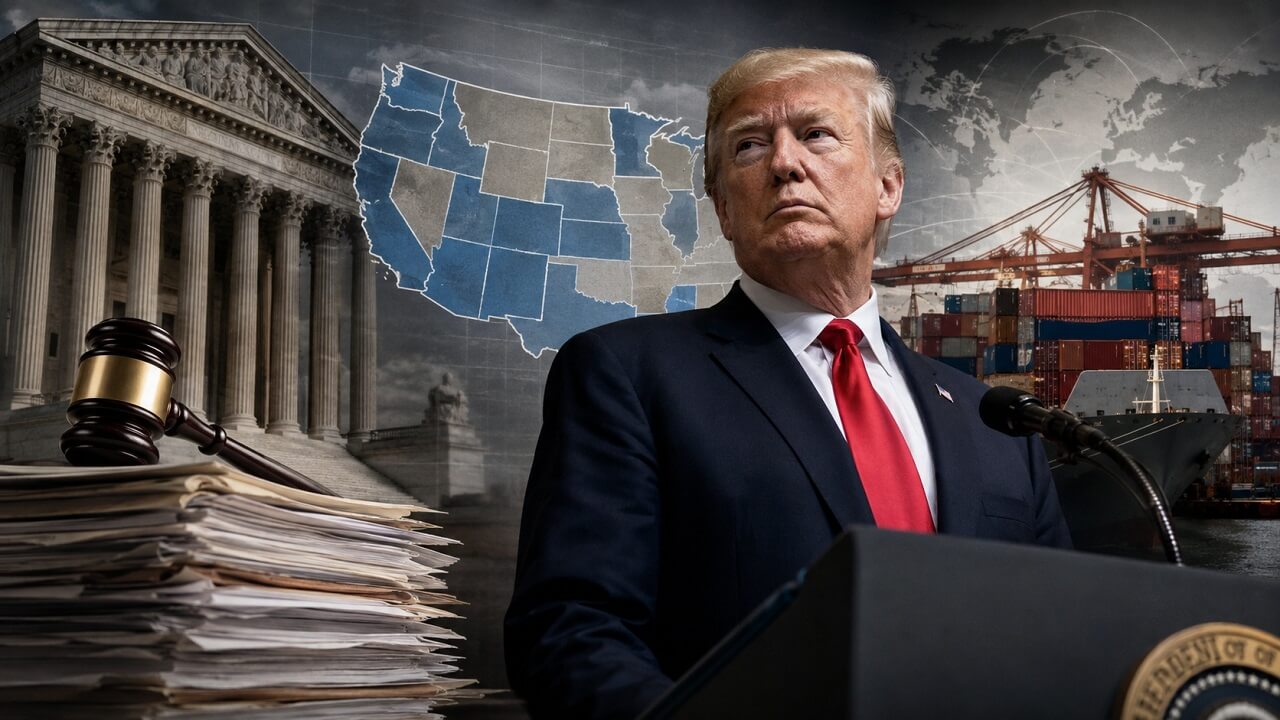
Twenty-five states have sued the Trump administration over a new round of tariffs covering imports from 59 countries and the European Union.
The duties range from 10% to 12.5% and apply to most goods arriving from the affected trading partners. The administration says the tariffs are intended to pressure foreign governments to block products made with forced labor from entering their markets.
The states argue that forced labor is being used as a legal justification for a much broader trade policy. Their lawsuit asks the U.S. Court of International Trade to declare the tariffs unlawful, stop their collection and order refunds for duties already paid by state governments.
The case represents the administration’s third attempt to maintain broad import tariffs after courts rejected two earlier legal approaches.
Latest Update: Liberation Day Tariffs Are Being Refunded
Which States Joined the Lawsuit?
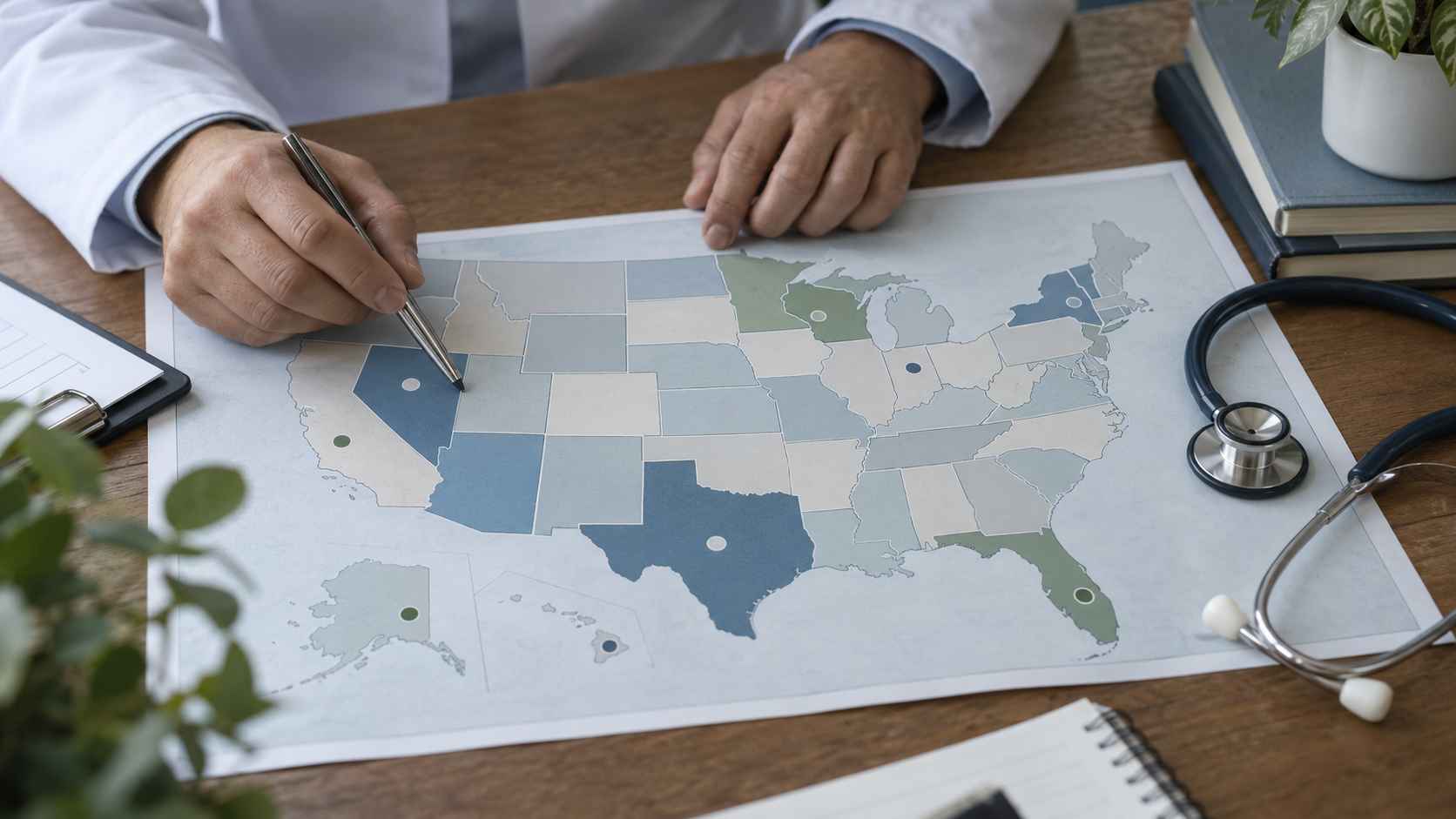
The coalition includes New York, California, Colorado, Connecticut, Delaware, Illinois, Maine, Maryland, Massachusetts, Michigan, Minnesota, Nevada, New Jersey, New Mexico, North Carolina, Oregon, Rhode Island, Vermont, Virginia, Washington and Wisconsin.
The governors of Kentucky and Pennsylvania also joined the case, along with officials from additional states named in the complaint.
New York Attorney General Letitia James is leading the challenge. She said the new tariffs operate as taxes on goods purchased by state agencies, businesses and ordinary consumers.
The full 43-page legal complaint was filed on August 3 in the U.S. Court of International Trade.
What Tariffs Are the States Challenging?
The tariffs took effect on July 24 under Section 301 of the Trade Act of 1974.
View this post on Instagram
Goods from countries including Canada, India, Mexico and the United Kingdom generally face a 10% tariff. Imports from many other economies face a 12.5% rate.
Products from the European Union and Taiwan are treated differently. Their existing tariff and the new Section 301 duty are generally combined to reach a total rate of 10%. A similar system sets a total rate of 12.5% for many goods from Japan, South Korea and Switzerland.
Our earlier report lists the 60 trading partners and the tariff rates applied to their goods.
The affected economies account for 99.4% of goods imported into the United States, according to the administration. Some raw materials, goods already covered by national-security tariffs and products considered important to domestic supply are exempt.
The precise rules and exemptions appear in the official tariff notice published in the Federal Register.
The Administration Says the Tariffs Are Legal
Section 301 allows the U.S. trade representative to respond to foreign policies considered unreasonable, discriminatory or harmful to American commerce.
The Office of the U.S. Trade Representative opened investigations into 60 economies in March. Officials examined whether each government had introduced and enforced restrictions on imports made with forced labor.
USTR said the process included government consultations, public hearings and more than 2,100 public comments. It later concluded that all 60 economies had policies or enforcement failures that placed a burden on U.S. commerce.
The administration says the tariffs will encourage those governments to adopt controls similar to the U.S. ban on goods made through forced labor.
Its official explanation of the Section 301 action says countries that adopted bans or made commitments generally received the lower 10% rate.
The States Say the Forced-Labor Argument Is a Pretext
The states do not challenge the goal of stopping forced labor. Their case focuses on whether the tariffs are connected closely enough to that goal and whether USTR followed the law.
The complaint says the administration highlighted only a small number of examples, including tobacco from Malawi, rice from Myanmar and beef from Brazil, before placing broad duties on imports from dozens of economies.
The lawsuit also notes that frozen beef from Brazil was exempted, even though Brazilian beef was cited in the administration’s forced-labor discussion.
According to the states, countries with forced-labor import controls were treated similarly to countries without comparable systems. Raw materials and finished products were also placed under the same broad tariff rates regardless of the apparent risk that they involved forced labor.
The states argue that USTR did not explain how rates of 10% or 12.5% were calculated or what foreign governments must do to have the duties removed.
New York officials described those weaknesses in their announcement of the multistate lawsuit.
This Is the Third Major Tariff Court Fight
President Trump initially used the International Emergency Economic Powers Act to impose broad tariffs. The Supreme Court ruled in February that the emergency-powers law did not authorize those duties.
The administration then turned to Section 122 of the Trade Act and imposed another temporary worldwide tariff. The Court of International Trade later rejected that approach as well.
The latest duties rely on Section 301, a law that has previously been used against individual countries and defined trade practices. The states say it was never intended to support nearly worldwide tariffs with only a limited connection to the conduct under investigation.
The administration has a stronger legal argument under Section 301 than it had under the emergency-powers law because the statute explicitly authorizes trade action. The court will now decide whether the government followed Section 301’s required process and remained within its limits.
Why States Say the Tariffs Harm Their Budgets
State governments purchase imported vehicles, machinery, medical supplies, technology, construction materials and equipment. Importers pay tariffs to the federal government and frequently pass part or all of that cost to buyers.
That means state agencies can face higher contract prices even when they do not import products directly.
The states also argue that repeated changes in tariff policy create administrative costs. Officials must review contracts, adjust budgets and determine which purchases are affected whenever rates or exemptions change.
The pressure differs across the country because state economies depend on different industries and trading partners. Our analysis of how money moves between states and the federal government provides a wider picture of why federal tax and spending decisions affect state budgets differently.
American companies face similar uncertainty. Many have already changed suppliers, prices and investment plans in response to ongoing U.S.-China trade tensions and tariff risks.
What Happens Next?
The states want the Court of International Trade to block enforcement of the tariffs and declare the administration’s action unlawful under Section 301 and the Administrative Procedure Act.
They are also seeking refunds for tariff costs paid by state governments. Refunds for private companies would depend on the outcome of this case and other legal challenges.
A separate lawsuit filed by small businesses raises similar claims about the administration’s authority.
The new tariffs remain in effect as the cases proceed. Importers must continue paying the duties unless the court issues an order suspending them.
The immediate dispute concerns 10% and 12.5% tariffs, but the larger question is how much freedom a president has to reshape U.S. trade policy without new approval from Congress. The latest lawsuit gives federal judges another chance to define that boundary.
Related Posts:
- Trump Imposes New Tariffs on Imports From 60 Trading…
- Trump Administration Asks Supreme Court to Allow New…
- Trump Administration Sought Phone Records From New…
- Trump Imposes 50% Tariffs on Canadian Goods…
- Can You Still Get Citizenship Through Marriage?…
- Federal Judge Blocks Trump Administration $100,000…