
Mail-in voting rules for the 2026 midterm elections remain unsettled after two major court decisions landed within days of each other.
On August 24, the Supreme Court allowed the Trump administration to move forward with parts of its election order while the legal fight continues. One day later, a federal judge in Massachusetts ruled that the administration had violated an existing injunction involving a new U.S. Postal Service mail-ballot rule.
The two decisions do not mean voters suddenly have new mail-voting requirements. Existing state procedures remain in place for now, but the federal government is still trying to introduce new rules before the November election.
What the Supreme Court Allowed?
The Supreme Court ruling in Trump v. California lifted part of a lower-court order that had blocked sections of President Donald Trump’s March election directive.
The executive order tells federal agencies to pursue several changes tied to federal elections.
Among them are state-level citizenship lists and new Postal Service procedures for federal mail ballots.
The Supreme Court order issued August 24 emphasized that the presidential directive itself does not directly require states or voters to change anything. It instructs federal agencies to develop policies within existing law.
The Court did not decide that the entire election order is constitutional.
Instead, the decision allows parts of the administration plan to continue while lower courts consider the broader challenge.
NCHStats previously covered the administration request in our report on the Supreme Court fight over federal mail-ballot rules.
A Second Judge Says the Administration Violated an Injunction
The legal picture became more complicated on August 25.
U.S. District Judge Indira Talwani ruled that the Trump administration violated a nationwide injunction when the Postal Service finalized a new rule affecting mail ballots.
According to Axios, the judge said the government could not reasonably claim that it misunderstood her earlier order.
The Postal Service can publish the rule, but it remains blocked from implementing the disputed changes while the injunction is in force.
That means the Supreme Court decision did not immediately clear every obstacle facing the administration.
What the New USPS Rule Would Change?
The Postal Service rule is tied to the broader election order and would create new procedures for federal mail ballots.
According to Associated Press reporting, the plan includes new ballot-envelope requirements, electronic tracking and additional information that states would need to provide before ballots move through the postal system.
One proposed requirement involves unique barcodes on ballot envelopes.
The rule also calls for states to provide voter information that could be checked against federal data.
We wrote about those requirements earlier in our report on the USPS mail-ballot proposal.
Nothing Has Changed for Voters Yet
The most important point for voters is that current mail-voting procedures have not suddenly been replaced.
People planning to vote by mail should continue following the rules issued by their state and local election offices.
Every state allows at least some voters to cast ballots by mail, but the rules vary considerably.
Eight states and Washington, D.C., conduct elections largely through automatically mailed ballots. Another 29 states allow voters to request absentee ballots without giving a reason. Thirteen states generally require an approved excuse.
Our state-by-state guide to mail voting in 2026 explains which system applies in each state.
The Timing Is Becoming a Major Problem
The court fight is happening very close to the start of voting.
North Carolina is scheduled to begin sending ballots to military and overseas voters on September 4, according to the Associated Press.
That leaves election officials little time to redesign envelopes, change computer systems or meet new Postal Service requirements if the rules are eventually allowed to take effect.
Election officials in other states have raised similar concerns.
Changing ballot procedures only weeks before voting begins creates practical problems even before the courts decide who has the legal authority to impose those changes.
The Dispute Goes Beyond Mail Ballots
The executive order also directs federal officials to develop state-by-state lists of U.S. citizens who will be old enough to vote in upcoming federal elections.
States would not be required to use those lists under the language discussed by the Supreme Court, but the administration says the federal data could help states identify potentially ineligible registrations.
Opponents argue that federal databases were not designed to function as complete voter-registration systems and could contain missing or outdated information.
NCHStats has covered that separate fight in our report on the Trump administration plan for state citizenship lists.
Mail Voting Is a Major Part of the 2026 Election
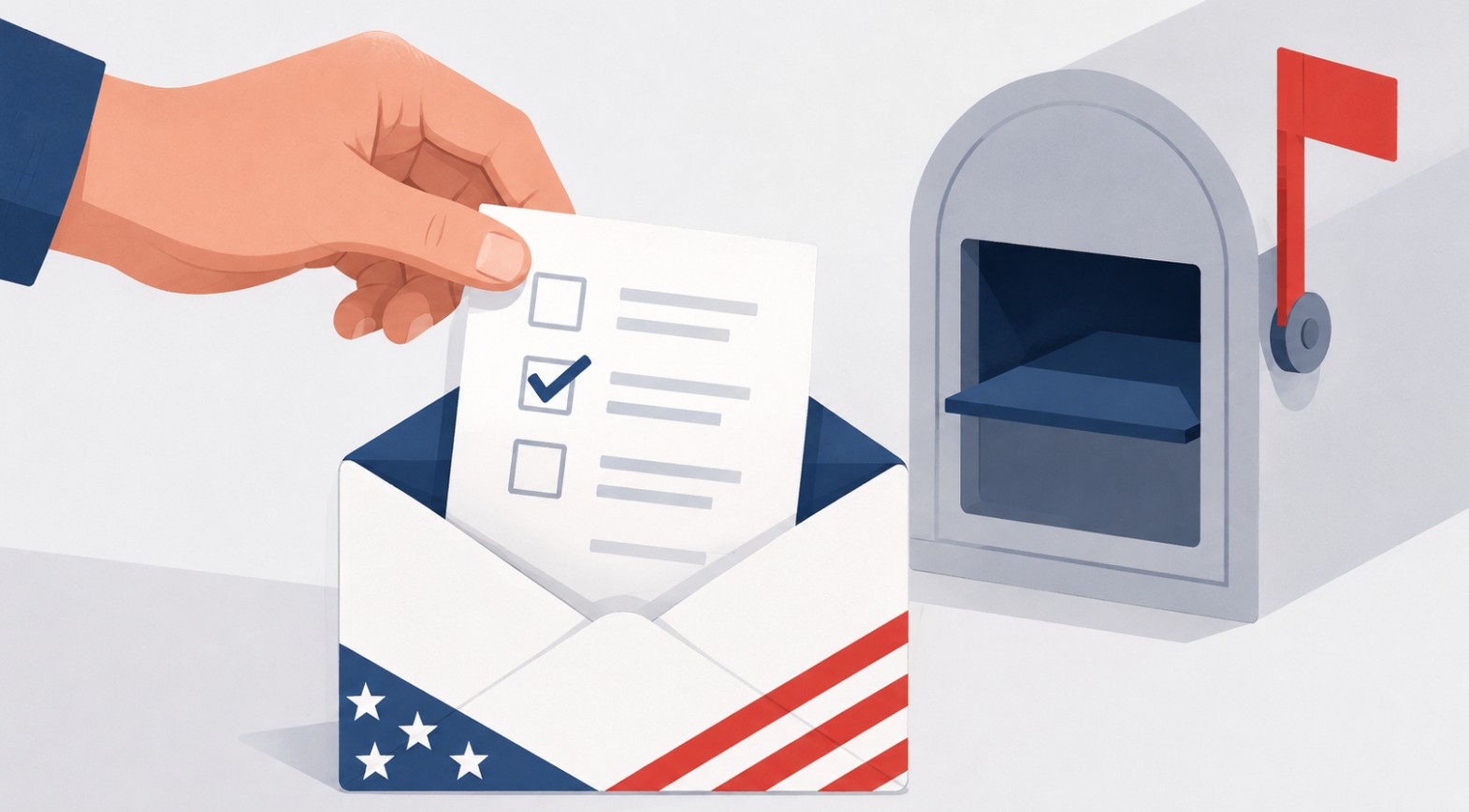
Any nationwide change to mail-ballot processing could affect a large number of voters.
The United States has about 204.6 million registered voters in 2026, according to our compilation of current state election records.
Mail voting also remains deeply embedded in election systems across the country.
California, Oregon, Washington, Colorado and several other states routinely send ballots to registered voters, while millions of voters elsewhere use absentee ballots.
That is why even technical rules involving barcodes, mailing lists or envelope designs can become significant when they are introduced shortly before a federal election.
Bottom Line
The legal fight is not over.
The Supreme Court decision allows parts of the administration plan to move forward, but separate injunctions still affect what the Postal Service can actually implement.
Additional lawsuits are expected once the final USPS rule is published.
States challenging the administration argue that the Constitution gives states and Congress primary authority over election administration. The administration argues that federal agencies have authority over federal records, law enforcement and postal procedures connected to federal elections.
For voters, the safest course remains straightforward.
Check registration information directly with the state election office, request a mail ballot early if one is required, and follow the deadlines and instructions already published by local election officials.
Until another court ruling or official state notice says otherwise, existing state mail-voting rules remain the ones voters should follow.
References
- Supreme Court of the United States, Trump v. California order, August 24, 2026
- Supreme Court of the United States, Trump v. California docket
- Associated Press, US Postal Service issues new rule for mail ballots
- Associated Press, Nothing changes yet with the Supreme Court order on elections
- Axios, Trump administration violated court order on mail-voting rules, judge says