Wyoming is the least populated state in 2026, with 588,753 residents in the latest official U.S. Census Bureau estimate. Vermont follows with 644,663 residents, while Alaska ranks third with 737,270.
The figures come from the July 1, 2025 Vintage 2025 population estimates, the latest complete state-level figures available in 2026.
The 12 least populated states have a combined 13,053,488 residents, representing about 3.8% of the national population. California alone has 39,355,309 residents, more than three times the combined population of all 12 states in this ranking.
The United States reached 341,784,857 residents in the latest estimate after adding about 1.8 million people between July 2024 and July 2025. National growth slowed to 0.5%, according to the U.S. Census Bureau population report.
Here Are the States With Fewest People in 2026
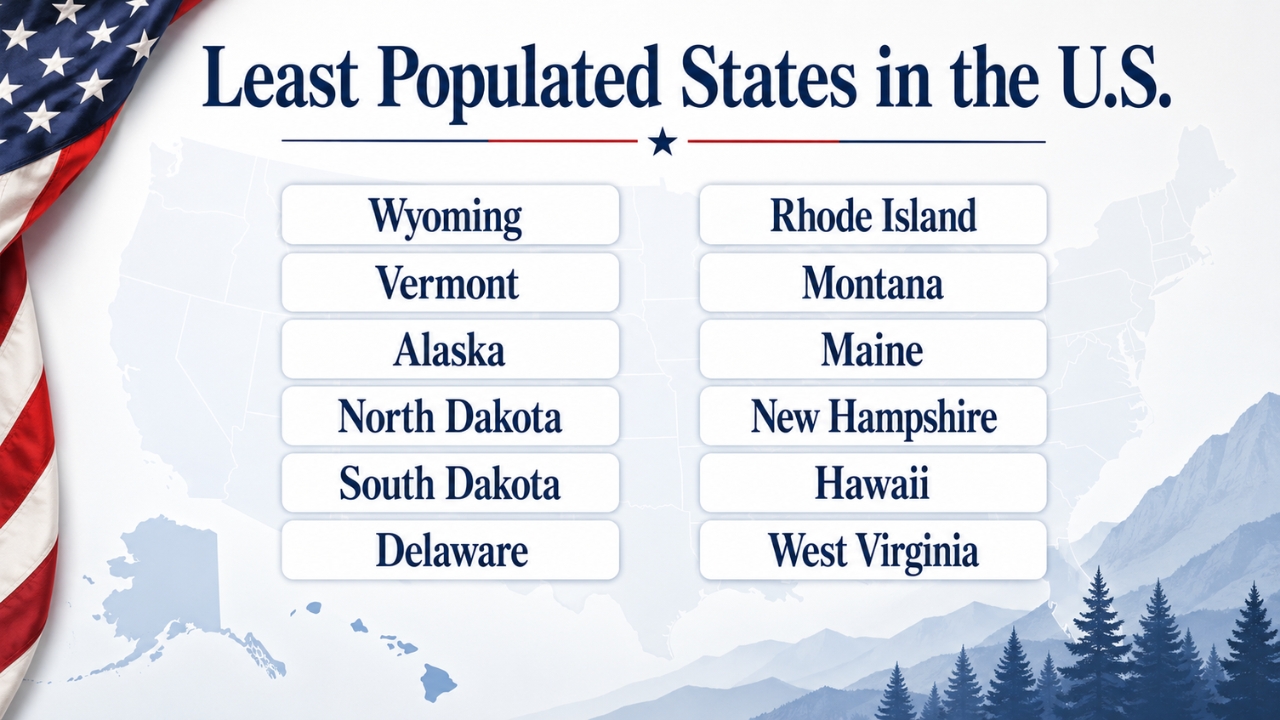
The table ranks the 12 least populated states using official Census Bureau estimates. Density figures use state land-area measurements from the same agency.
The complete estimate series appears in the Census Bureau table for state population totals and components of change from 2020 to 2025.
| Rank | State | 2025 Population | Change From 2024 | Change Rate | Share of U.S. Population | People per Square Mile |
|---|---|---|---|---|---|---|
| 1 | Wyoming | 588,753 | +2,031 | +0.35% | 0.17% | 6.1 |
| 2 | Vermont | 644,663 | -1,858 | -0.29% | 0.19% | 69.9 |
| 3 | Alaska | 737,270 | +733 | +0.10% | 0.22% | 1.3 |
| 4 | North Dakota | 799,358 | +5,971 | +0.75% | 0.23% | 11.6 |
| 5 | South Dakota | 935,094 | +7,984 | +0.86% | 0.27% | 12.3 |
| 6 | Delaware | 1,059,952 | +9,829 | +0.94% | 0.31% | 543.8 |
| 7 | Rhode Island | 1,114,521 | +4,106 | +0.37% | 0.33% | 1,077.9 |
| 8 | Montana | 1,144,694 | +7,137 | +0.63% | 0.33% | 7.9 |
| 9 | Maine | 1,414,874 | +6,436 | +0.46% | 0.41% | 45.9 |
| 10 | New Hampshire | 1,415,342 | +6,824 | +0.48% | 0.41% | 158.1 |
| 11 | Hawaii | 1,432,820 | -2,132 | -0.15% | 0.42% | 223.1 |
| 12 | West Virginia | 1,766,147 | -1,255 | -0.07% | 0.52% | 73.5 |
Wyoming remains well below every other state, with about 55,900 fewer residents than Vermont. The difference between New Hampshire and Maine is far narrower. New Hampshire holds tenth place by only 468 residents.
Nine states in the ranking added population during the latest estimate period. Vermont, Hawaii and West Virginia recorded declines. Delaware posted the fastest percentage growth at 0.94%, followed by South Dakota at 0.86% and North Dakota at 0.75%.
Total population also tells only part of the story. Alaska has about 1.3 residents per square mile, while Rhode Island has more than 1,000. Both appear on the list, although their settlement patterns bear little resemblance to one another.
1. Wyoming Remains the Least Populated State
Wyoming has a smaller population than the other 49 states combined pic.twitter.com/4sB0ZRkiYS
— Terrible Maps (@TerribleMaps) June 15, 2026
Wyoming has 588,753 residents, an increase of 2,031 from the previous estimate. Despite that gain, the state remains far below Vermont and is likely to stay at the bottom of the national population ranking for years.
Its residents are spread over more than 97,000 square miles of land. That leaves Wyoming with about 6.1 people per square mile and no metropolitan area comparable in scale with Denver, Phoenix or Salt Lake City.
Cheyenne is the capital and largest city, while Casper serves as another regional center. Smaller communities depend on energy production, ranching, tourism, government employment and access to public lands.
Why Does Wyoming Have the Smallest Population?
Wyoming has few large cities, long travel distances and an economy built around industries that employ fewer people than major manufacturing or service centers. Large portions of the state are federally owned, mountainous or devoted to agriculture and resource production.
The latest increase shows that Wyoming continues to attract residents. Its starting population is simply too small for moderate annual gains to alter its national position quickly.
2. Vermont Has Fewer Than 650,000 Residents
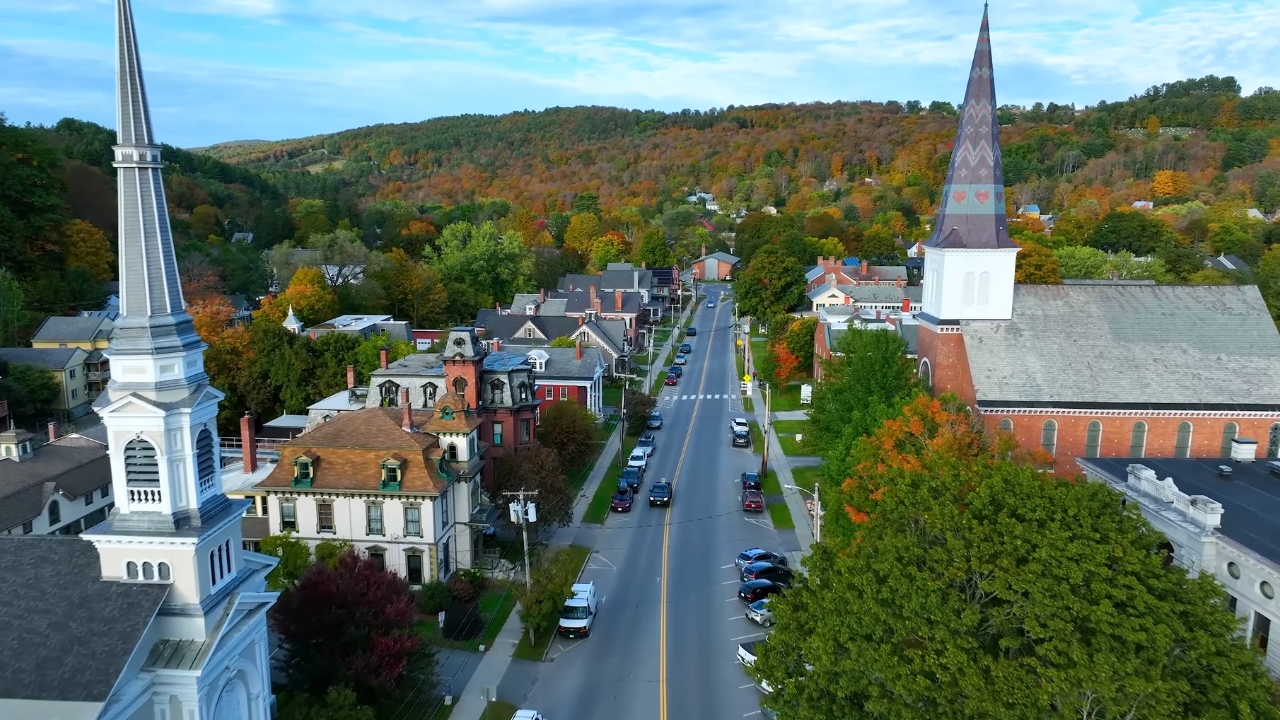
Vermont ranks second with 644,663 residents. Its population fell by 1,858, or 0.29%, between 2024 and 2025.
The state covers far less land than Wyoming and has a higher density of about 69.9 residents per square mile. Burlington is the largest city, while Montpelier serves as the state capital.
Vermont has an older population and limited housing construction. Those conditions influence school enrollment, health-care staffing and the ability of employers to fill jobs.
A loss of fewer than 2,000 residents would barely register in a much larger state. In Vermont, the same decline carries greater consequences because every county and labor market operates from a smaller base.
3. Alaska Has the Lowest Population Density
Alaska ranks third with 737,270 residents, an increase of 733. It is the largest state by area and the least densely populated, with only about 1.3 residents per square mile.
Most residents live in Anchorage, the Matanuska-Susitna Borough, Fairbanks, Juneau and a limited number of regional centers. Numerous communities remain separated by mountains, water, weather and the absence of road connections.
That geography makes Alaska expensive to serve. Schools, hospitals, airports, energy networks and supply systems operate over vast distances for a relatively small number of residents.
Alaska is therefore small only when measured by population. Its land area and logistical challenges exceed those of every other state.
4. North Dakota Is Approaching 800,000 Residents
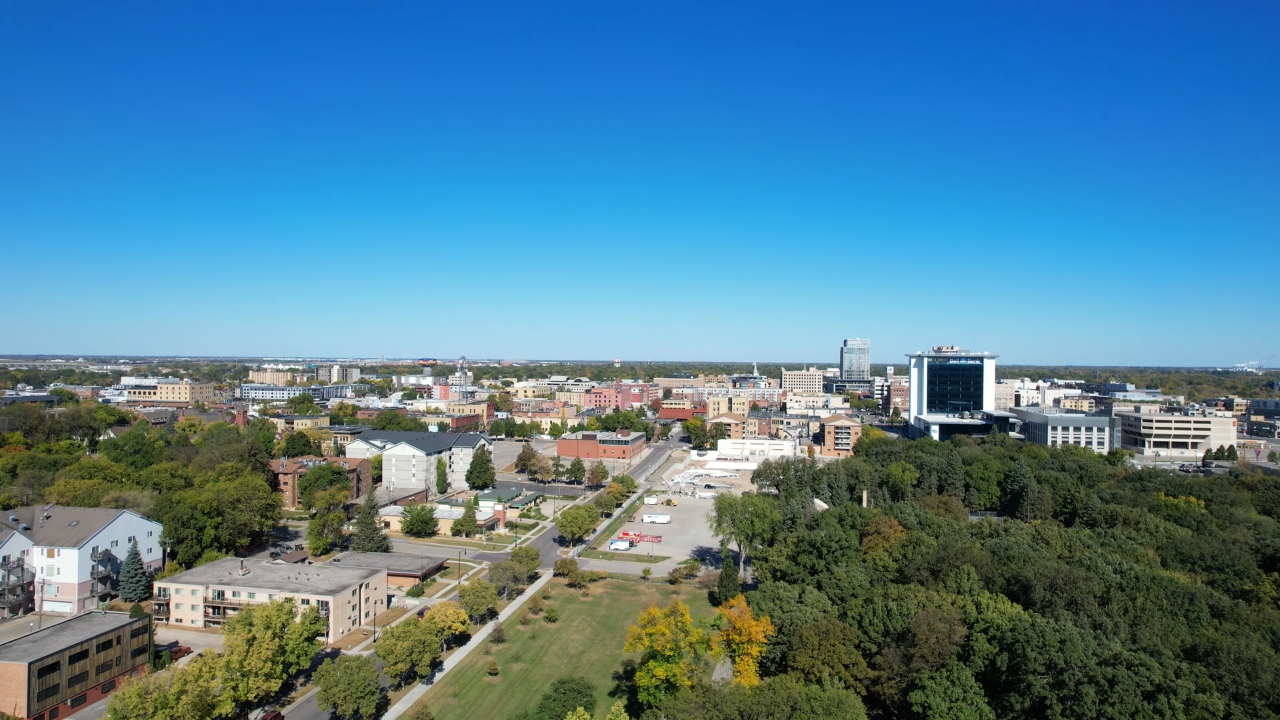
North Dakota reached 799,358 residents after adding 5,971 people in one year. The 0.75% growth rate was one of the highest among the states in this ranking.
Fargo remains the largest city, followed by Bismarck, Grand Forks and Minot as major employment and service centers.
The state economy benefits from energy production, agriculture, higher education and regional health care. Growth around Fargo has also given North Dakota a durable urban center that several other sparsely populated states lack.
North Dakota still has only about 11.6 residents per square mile. Its recent population path, however, is more positive than the pattern recorded in several older rural states.
5. South Dakota Continues to Add Residents
South Dakota has 935,094 residents after adding 7,984 in one year. Its 0.86% growth rate was the second highest among the 12 least populated states.
Sioux Falls accounts for a large share of the increase. Rapid City, the Black Hills region and several eastern counties also contribute to statewide growth.
The state remains below one million residents, although continued gains are bringing that milestone closer. South Dakota now follows a different path from Vermont, Hawaii and West Virginia, all of which lost population in the latest estimate.
Sioux Falls provides South Dakota with a larger urban anchor than many readers expect from a state of fewer than one million people. Employment and housing growth in the city and surrounding counties have helped offset losses in more rural areas.
6. Delaware Is Small by Area, but Has More Than One Million Residents
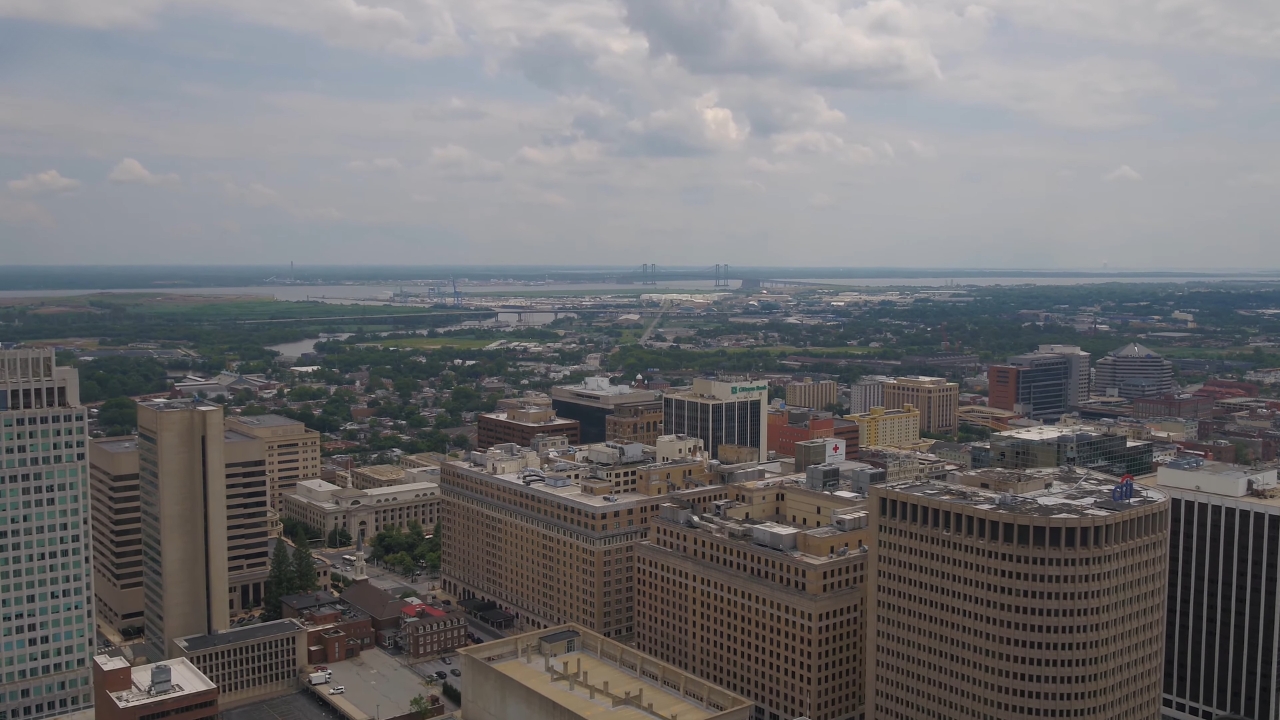
Delaware had 1,059,952 residents in the latest estimate. The state added 9,829 people, the largest numerical gain among the 12 states listed here.
Although Delaware is small by land area, it is not sparsely populated. Its density of about 543.8 residents per square mile is far higher than the density in Wyoming, Alaska, Montana or the Dakotas.
New Castle County and Wilmington are connected to the larger economic corridor running through Philadelphia, Baltimore and Washington. Sussex County has also attracted retirees and new housing development.
Delaware demonstrates that a state can rank near the bottom in total population while still experiencing substantial housing demand, commuter traffic and development pressure.
7. Rhode Island Is Small by Area and Dense by Population
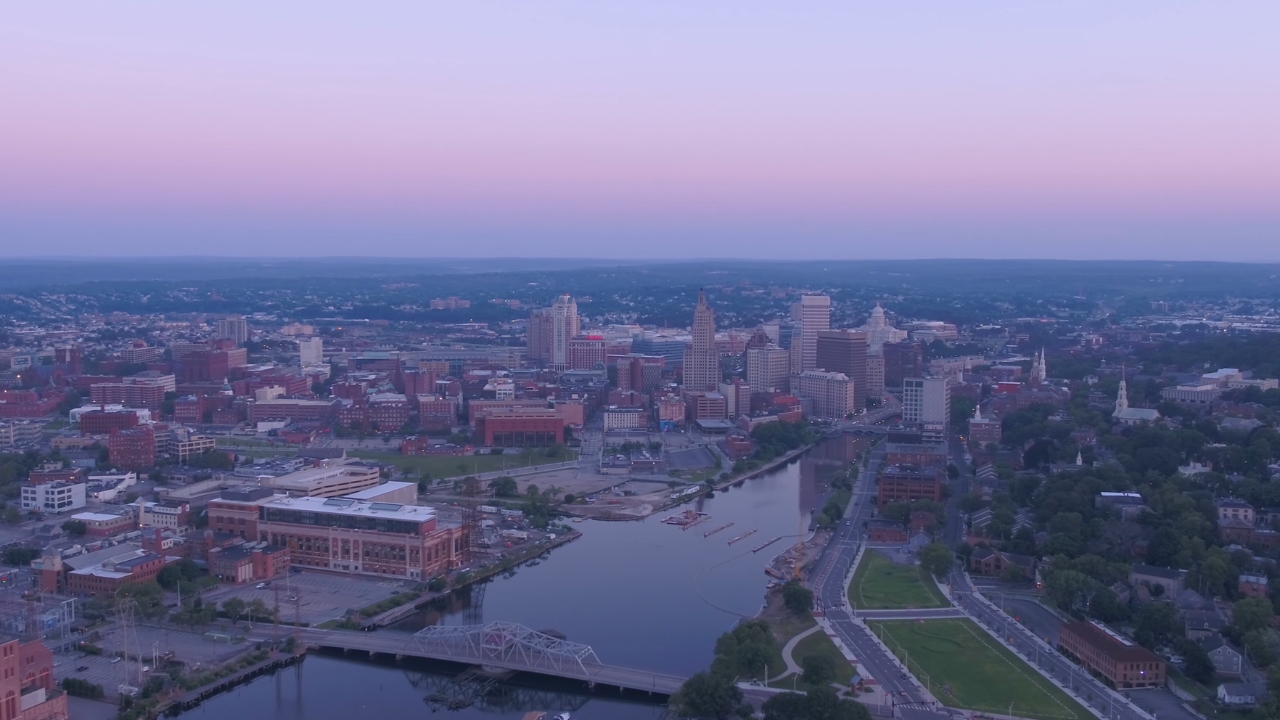
Rhode Island had 1,114,521 residents in the latest estimate, up 4,106 from the previous year.
The state is the smallest by land area, although it is densely settled. Providence, Warwick, Cranston and Pawtucket sit inside a compact urban and suburban corridor connected with southeastern Massachusetts.
Rhode Island has about 1,077.9 residents per square mile, the highest density among the states in this ranking.
The state shows why population rank and density rank can point in opposite directions. Rhode Island has fewer total residents than most states, yet people and development are concentrated within a small geographic area.
8. Montana Has Vast Land and a Small Population
Montana had 1,144,694 residents in the latest estimate, an increase of 7,137.
The state is the fourth largest by land area, yet its population remains smaller than that of several individual U.S. counties. Montana has about 7.9 residents per square mile.
Billings is the largest city. Missoula, Bozeman, Great Falls and Helena serve as additional population and employment centers.
Growth has been concentrated in western and south-central Montana. Rural counties remain lightly populated, while places such as Bozeman have experienced housing pressure and rising costs.
A gain of about 7,100 residents appears modest nationally. In Montana, growth concentrated in a handful of cities can place considerable pressure on roads, schools, housing and public utilities.
9. Maine Continues to Grow Slowly
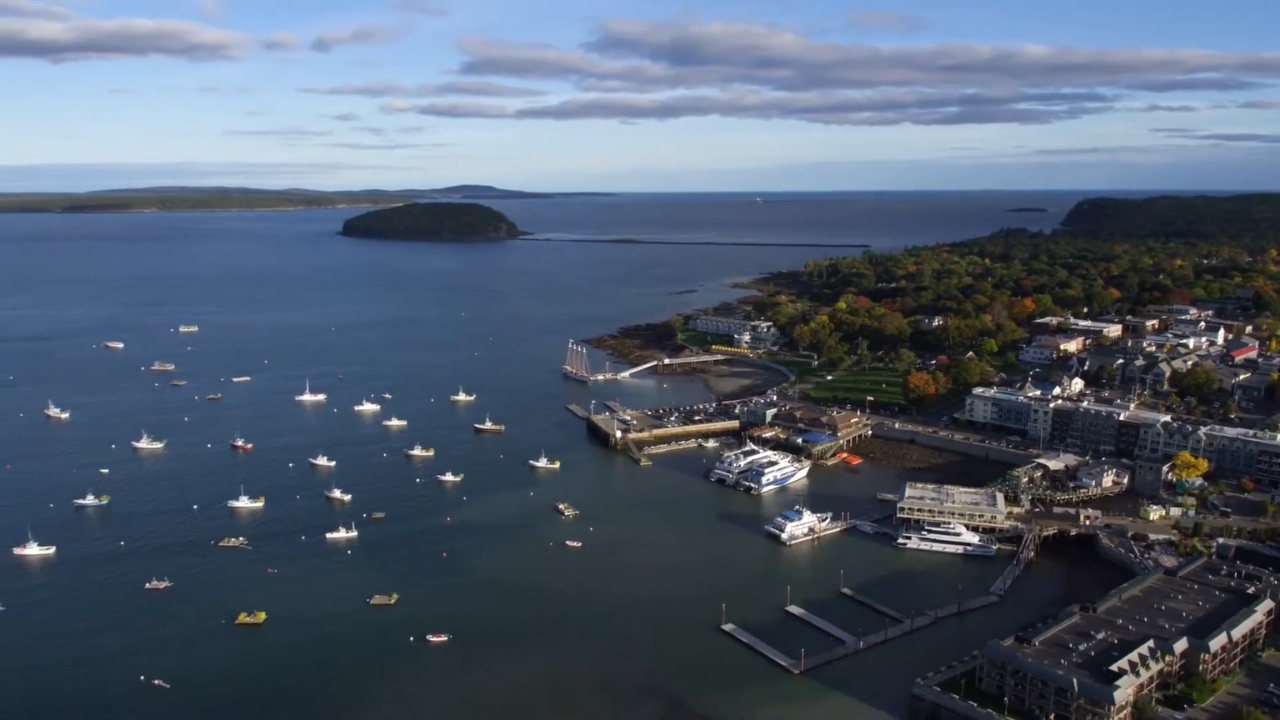
Maine had 1,414,874 residents in the latest estimate, an increase of 6,436 from 2024.
Portland and Cumberland County remain the main population anchors. Much of northern and inland Maine is rural, forested and lightly settled.
The state has about 45.9 residents per square mile. That is considerably higher than Alaska, Wyoming or Montana, yet still low compared with most northeastern states.
Maine has one of the oldest populations in the country. Recent migration has supported population growth, although aging continues to shape labor supply, health care and housing demand.
10. New Hampshire Holds a Narrow Lead Over Maine
Report: New Hampshire population has increased, with some areas seeing more growth than others | Click on the image to read the full story https://t.co/BSutzwarXE
— WMUR TV (@WMUR9) June 23, 2026
New Hampshire had 1,415,342 residents in the latest estimate, an increase of 6,824. That places the state only 468 residents ahead of Maine.
Manchester is the largest city, while Nashua, Concord, Derry and Dover anchor the more heavily populated southern region. Northern counties remain far less densely settled.
The state has about 158.1 residents per square mile, substantially higher than Maine and every western state in the ranking.
New Hampshire benefits from its proximity to the Boston metropolitan economy. Southern communities attract commuters, businesses and households seeking access to Massachusetts employment without living inside the state.
11. Hawaii Recorded Another Population Decline

Hawaii had 1,432,820 residents in the latest estimate, a decline of 2,132.
Most residents live on Oahu, where Honolulu remains the largest population center. The other major islands have much smaller resident totals and distinct housing and employment patterns.
Hawaii has experienced persistent domestic out-migration. High housing costs, limited land, the distance from the mainland and a narrow employment base all influence household decisions to leave.
The state has about 223.1 residents per square mile. Hawaii therefore ranks near the bottom in total population while remaining much denser than western states with larger land areas.
12. West Virginia Remains Below 1.8 Million Residents
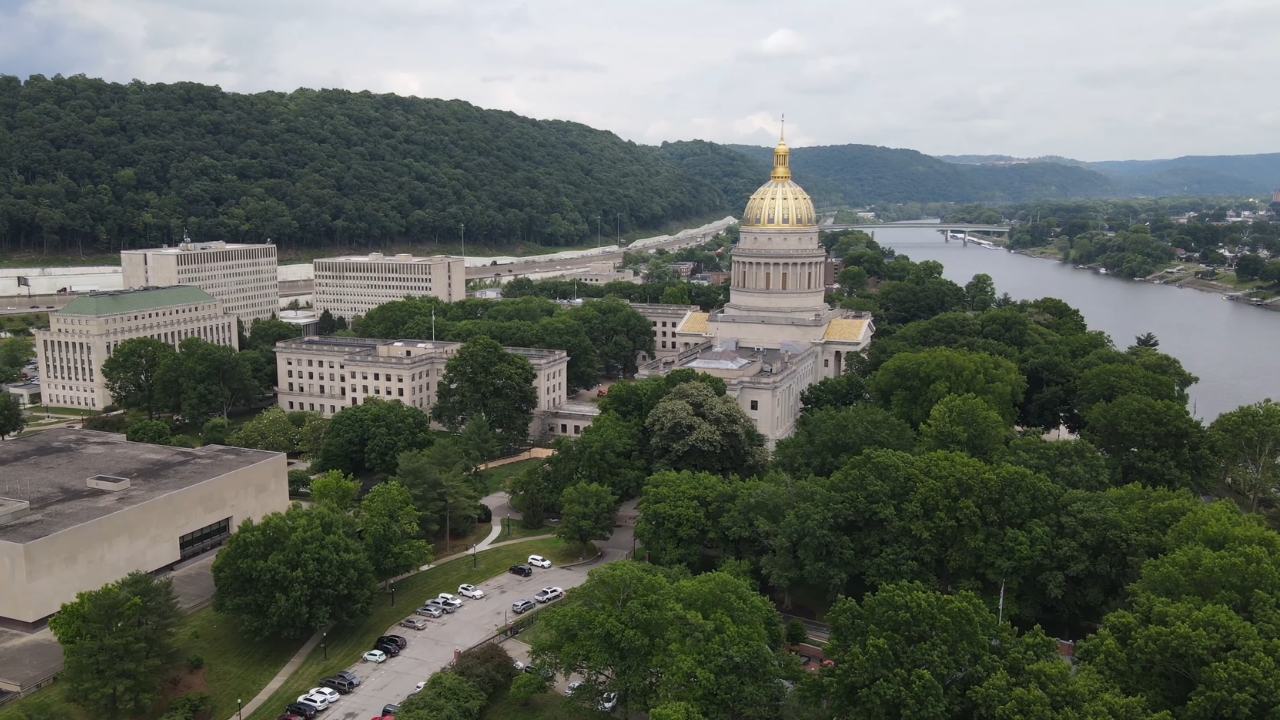
West Virginia had 1,766,147 residents in the latest estimate, down 1,255 from the previous year.
The state remains below 1.8 million and continues to face long-running demographic pressure. Population aging, natural decrease, rural decline and limited job growth in several regions continue to affect the total.
Charleston remains the capital and one of the main population centers. Huntington, Morgantown, Parkersburg and communities in the Eastern Panhandle also shape the state population map.
The latest decline is small in numerical terms, although it continues a pattern that has lasted for decades. Our report on population decline in the U.S. by state provides a broader comparison of states facing similar pressures.
Why Do the Least Populated States Carry Major Political Influence?
Population determines representation in the U.S. House of Representatives and affects federal funding, infrastructure planning and congressional district boundaries.
The Senate follows a different structure. Every state receives two senators, regardless of population. Wyoming therefore has the same number of senators as California, despite having fewer than 600,000 residents.
That arrangement gives residents of Wyoming, Vermont, Alaska and the Dakotas far greater Senate representation per person than residents of California, Texas or Florida.
The difference also affects national elections, legislative negotiations and debates over the relationship between population and representation. Our review of voter registration and party affiliation in the U.S. provides additional context on how state populations shape electoral politics.
National Population Growth Slowed in 2025
The latest Census release showed a pronounced slowdown in national growth. The country added about 1.8 million residents from July 2024 to July 2025, considerably fewer than during the previous estimate period.
A major factor was the decline in net international migration. Many states now depend heavily on domestic and international migration because birth rates remain low and the population continues to age.
Pew Charitable Trusts reported that growth slowed in 48 states during 2025. Its analysis of slower state population growth and declining international migration shows how dependent many states have become on migration.
The national slowdown carries particular consequences for states with small populations. A decline of only several thousand residents can affect school enrollment, labor supply, housing demand and state revenue projections.
Least Populated Does Not Mean Smallest by Area
The least populated state and the smallest state by land area are different places. Wyoming has the fewest residents, while Rhode Island occupies the least land.
Alaska provides the clearest contrast. It has the third-smallest state population and the largest land area in the country.
Population density therefore provides information that a total count cannot. Alaska has about 570,641 square miles of land and only 1.3 residents per square mile. Rhode Island has roughly 1,034 square miles of land and more than 1,000 residents per square mile.
The Census Bureau publishes the underlying measurements in its state land-area table.
Why Small States Have Different Population Stories
Large and Sparse Western and Northern States
Wyoming, Alaska, Montana, North Dakota and South Dakota cover large areas and have low population density. Long travel distances make hospitals, schools, roads and emergency services expensive to provide.
Small and Dense Northeastern States
Delaware and Rhode Island have small land areas and relatively high density. Their population challenges center on housing, commuting, aging infrastructure and pressure from nearby metropolitan areas.
Older States With Slow Natural Growth
Vermont, Maine, New Hampshire and West Virginia have older age profiles and low natural growth. Maine and New Hampshire added residents through migration, while Vermont and West Virginia lost population.
Island Geography
Hawaii faces a separate set of pressures tied to limited land, high housing costs, transportation expenses and population concentration on Oahu.
How Small Populations Affect Schools, Health Care and Housing

A small population affects public services in ways that vary by geography.
Rural states need hospitals, schools, roads and emergency response systems even when residents are spread over vast areas. Maintaining those networks can be expensive because fewer taxpayers and customers support each facility.
Declining child populations can force school districts to merge classrooms, close buildings or cut programs. Rural hospitals face similar financial strain when the number of patients falls below the level needed to support specialized care.
Housing presents a different problem. A small statewide population does not prevent shortages when growth is concentrated in a few cities, university centers or resort communities. Bozeman, Sioux Falls and parts of Delaware illustrate how local housing demand can rise even in states with relatively few residents.
The Congressional Budget Office expects the national population to continue aging. Deaths are projected eventually to exceed births, leaving immigration as the main source of future growth. The CBO demographic outlook explains the long-term consequences for the workforce and federal programs.
FAQs
Bottom Line
@lukepingu Least Populated States in America? 🧠@megarobbieknox ♬ original sound – LukePingu
Wyoming remains the least populated state in 2026, with 588,753 residents. Vermont follows with 644,663, while Alaska ranks third with 737,270.
The ranking includes states with very different population patterns. Alaska and Montana cover enormous areas and remain sparsely settled. Rhode Island and Delaware occupy little land but have high population density. Vermont, Hawaii and West Virginia lost residents, while Delaware and South Dakota recorded comparatively fast growth.
Population size, density and land area answer separate questions. Wyoming has the fewest residents. Alaska has the most land and the lowest density. Rhode Island has the smallest land area and the highest density among the states listed here.
Together, the 12 least populated states show how unevenly Americans are distributed and why a small population can produce very different economic, political and public-service challenges from one state to another.